. 2012:2012:147893.
doi: 10.1155/2012/147893. Epub 2011 Dec 21.

Genetics of isolated hypogonadotropic hypogonadism: role of GnRH receptor and other genes

Affiliations

Genetics of isolated hypogonadotropic hypogonadism: role of GnRH receptor and other genes

Karges Beate et al. Int J Endocrinol. 2012.

Abstract

Hypothalamic gonadotropin releasing hormone (GnRH) is a key player in normal puberty and sexual development and function. Genetic causes of isolated hypogonadotropic hypogonadism (IHH) have been identified during the recent years affecting the synthesis, secretion, or action of GnRH. Developmental defects of GnRH neurons and the olfactory bulb are associated with hyposmia, rarely associated with the clinical phenotypes of synkinesia, cleft palate, ear anomalies, or choanal atresia, and may be due to mutations of KAL1, FGFR1/FGF8, PROKR2/PROK2, or CHD7. Impaired GnRH secretion in normosmic patients with IHH may be caused by deficient hypothalamic GPR54/KISS1, TACR3/TAC3, and leptinR/leptin signalling or mutations within the GNRH1 gene itself. Normosmic IHH is predominantly caused by inactivating mutations in the pituitary GnRH receptor inducing GnRH resistance, while mutations of the β-subunits of LH or FSH are very rare. Inheritance of GnRH deficiency may be oligogenic, explaining variable phenotypes. Future research should identify additional genes involved in the complex network of normal and disturbed puberty and reproduction.


Figures
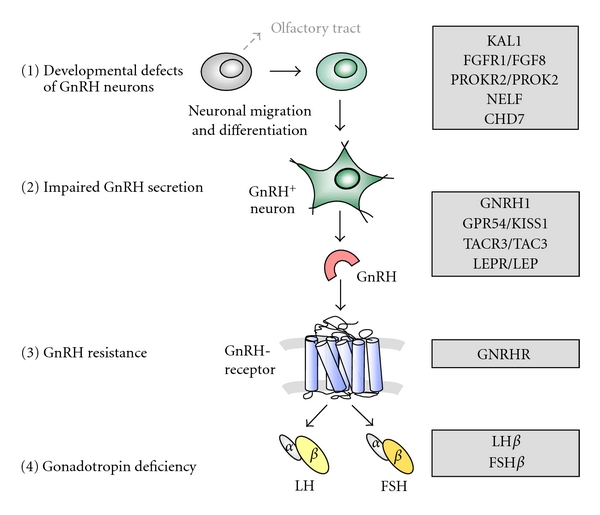
Figure 1
Figure 1
Genetic control of pubertal development. Different levels of GnRH and gonadotropin deficiency due to genetic disorders. (1) Developmental defects of GnRH neurons due to disturbed neuronal migration and differentiation cause aplasia of GnRH neurons and olfactory tract. (2) Impaired GnRH synthesis or secretion is found in the context of functional disorders within the hypothalamus or the GnRH neuron itself. (3) GnRH resistance is caused by inactive GnRH receptor variants localised within the anterior pituitary gland. (4) Gonadotropin deficiency may be due to defect synthesis of LH or FSH β-subunits.
Figure 2
Figure 2
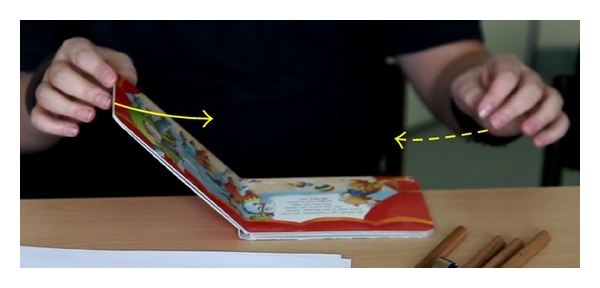
Kallmann's Syndrome. Synkinesia in a patient with KAL1 mutation (c.120_121insC; 122_127del, p.Ala41Glyfs43). When closing a book with one hand (arrow), typical involuntary mirror movement (synkinesia) of the other hand is observed (dotted arrow). This 15-year-old boy presented because of absent puberty. There was orchidopexy at the age of 2 years, disturbed spatial orientation, retarded fine-motor developmental milestones, and anosmia. Tanner P1, G1. LH <0.1 U/L, FSH 0.4 U/L, testosterone 0.2 ng/mL. During GnRH stimulation test, LH 0.5 U/L, FSH 2.1 U/L after 60 minutes. Cranial MRI revealed agenesis of olfactory bulbs and a normal-sized pituitary gland.
Figure 3
Figure 3
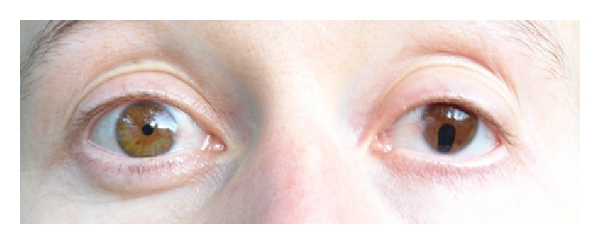
Iris coloboma as a typical characteristic of CHARGE syndrome. A woman with hypogonadotropic hypogonadism and CHARGE syndrome (CHD7 mutation c.4787A>G, p.Asp1596Gly) initially presented at the age of 16 years because of absent puberty. There was a history of choanal atresia, deafness, learning disorders, and anosmia. Tanner B1, P2. LH 0.2 U/L, FSH 0.54 U/L, estradiol 24 pg/mL. During GnRH stimulation test, LH 1.61 U/L, FSH 1.86 U/L.

References

    1. De Roux N, Young J, Misrahi M, et al. A family with hypogonadotropic hypogonadism and mutations in the gonadotropin-releasing hormone receptor. New England Journal of Medicine. 1997;337(22):1597–1602. - PubMed
    1. De Roux N, Genin E, Carel JC, Matsuda F, Chaussain JL, Milgrom E. Hypogonadotropic hypogonadism due to loss of function of the KiSS1-derived peptide receptor GPR54. Proceedings of the National Academy of Sciences of the United States of America. 2003;100(19):10972–10976. - PMC - PubMed
    1. Seminara SB, Messager S, Chatzidaki EE, et al. The GPR54 gene as a regulator of puberty. New England Journal of Medicine. 2003;349(17):1614–1627. - PubMed
    1. Dodé C, Levilliers J, Dupont JM, et al. Loss-of-function mutations in FGFR1 cause autosomal dominant Kallmann syndrome. Nature Genetics. 2003;33(4):463–465. - PubMed
    1. Dodé C, Teixeira L, Levilliers J, et al. Kallmann syndrome: mutations in the genes encoding prokineticin-2 and prokineticin receptor-2. PLoS genetics. 2006;2(10, article e175) - PMC - PubMed

LinkOut - more resources