


BH3 profiling--measuring integrated function of the mitochondrial apoptotic pathway to predict cell fate decisions
- PMID: 22230093
- PMCID: PMC3770266
- DOI: 10.1016/j.canlet.2011.12.021
BH3 profiling--measuring integrated function of the mitochondrial apoptotic pathway to predict cell fate decisions
Abstract
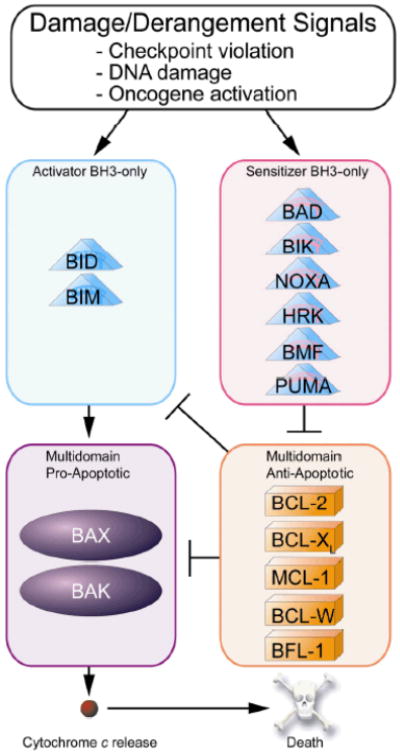
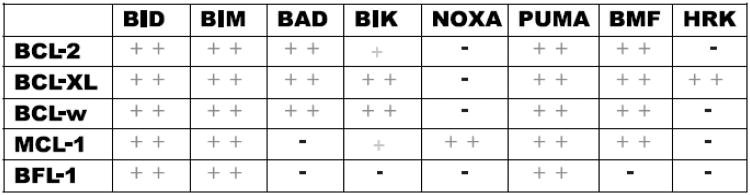
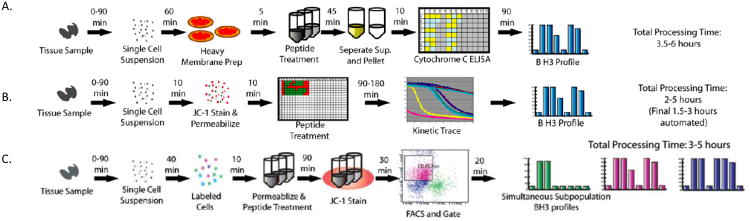
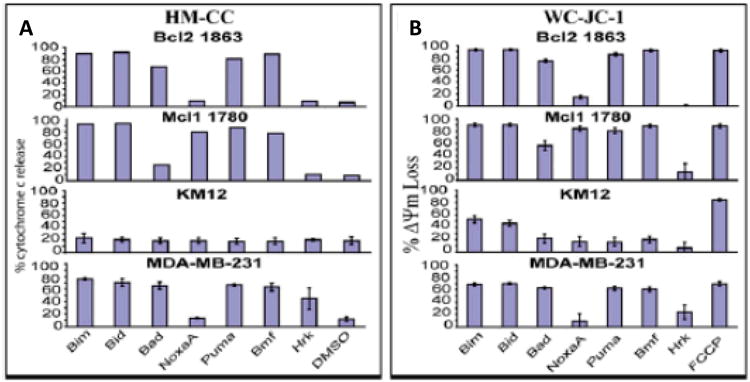
Apoptosis is a form of programmed cell death that is controlled at the mitochondrion by the BCL-2 family of proteins. While much has been learned about the structure and function of these proteins over the past two decades, the important goal of predicting cell fate decisions in response to toxic stimuli is largely unrealized. BH3 profiling is a functional approach that can be used to predict cellular responses to stimuli based on measuring the response of mitochondria to perturbation by a panel of BH3 domain peptides. BH3 profiling has proven useful in identifying and understanding cellular dependence on individual anti-apoptotic proteins like BCL-2 or MCL-1. Consequently, it can also be used to predict cellular response to chemotherapy agents such as ABT-737 that target these individual proteins.
Copyright © 2012. Published by Elsevier Ireland Ltd.
Figures
References
-
- Bakhshi A, Jensen JP, Goldman P, Wright JJ, McBride OW, Epstein AL, Korsmeyer SJ. Cloning the chromosomal breakpoint of t(14;18) human lymphomas: clustering around JH on chromosome 14 and near a transcriptional unit on 18. Cell. 1985;41:899–906. - PubMed
-
- Cleary ML ML, Sklar J. Nucleotide sequence of a t(14;18) chromosomal breakpoint in follicular lymphoma and demonstration of a breakpoint-cluster region near a transcriptionally active locus on chromosome 18. Proceedings of the National Academy of Sciences of the United States of America. 1985;82:7439–7443. - PMC - PubMed
-
- Tsujimoto Y, Gorham J, Cossman J, Jaffe E, Croce CM. The t(14;18) chromosome translocations involved in B-cell neoplasms result from mistakes in VDJ joining. Science. 1985;229:1390–1393. - PubMed
-
- Green DR, Evan GI GI. A matter of life and death. Cancer cell. 2002;1:19–30. - PubMed
Publication types
MeSH terms
Substances
Grants and funding
LinkOut - more resources
Full Text Sources
Other Literature Sources
Miscellaneous
