


Comment
doi: 10.4161/cbt.12.12.18856.
Epub 2011 Dec 15.
Glutamine and the tumor microenvironment: understanding the mechanisms that fuel cancer progression
Affiliations
- PMID: 22236873
- PMCID: PMC3335943
- DOI: 10.4161/cbt.12.12.18856
Item in Clipboard
Comment
Glutamine and the tumor microenvironment: understanding the mechanisms that fuel cancer progression
Cancer Biol Ther.
.
No abstract available
Figures
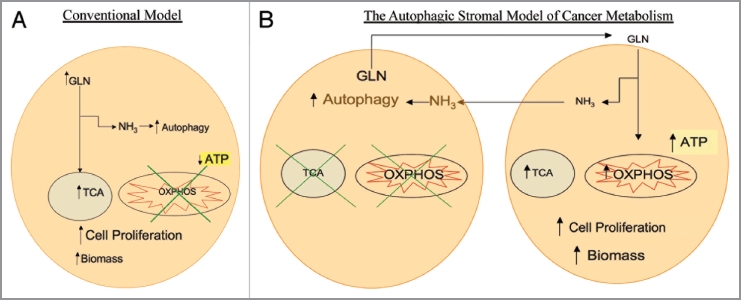
(A) Conventional model of cancer metabolism. Cancer cells utilize glutamine (GLN) to replenish tricarboxylic acid (TCA) cycle intermediates, a process termed anaplerosis, and to increase cellular biomass. The catabolism of glutamine generates ammonia (NH3), inducing autophagy. It has been postulated that cancer cells have impaired oxidative phosphorylation (OXPHOS) with low ATP generation with high autophagy which promotes cell proliferation. (B) The autophagic stromal model of cancer metabolism as proposed by the authors. Cancer associated stromal cells possess high levels of autophagy and impaired mitochondrial activity, leading to release of catabolites including glutamine which are taken up by cancer cells. Glutamine in the cancer cells not only leads to high ammonia generation that drives autophagy in stromal cells, but also increases the mitochondrial TCA cycle and oxidative phosphorylation, leading to high levels of ATP production, increased biomass and proliferation of cancer cells. This reciprocal feed-forward communication supports both tumor progression and continued activation of the surrounding stroma, compromising cancer therapy.
Comment on
-
Glutamine fuels a vicious cycle of autophagy in the tumor stroma and oxidative mitochondrial metabolism in epithelial cancer cells: implications for preventing chemotherapy resistance.Cancer Biol Ther. 2011 Dec 15;12(12):1085-97. doi: 10.4161/cbt.12.12.18671. Epub 2011 Dec 15. Cancer Biol Ther. 2011. PMID: 22236876 Free PMC article.
References
-
- Martinez-Outschoorn UE, Whitaker-Menezes D, Pavlides S, Chiavarina B, Bonuccelli G, Casey T, et al. The autophagic tumor stroma model of cancer or “battery-operated tumor growth”: A simple solution to the autophagy paradox. Cell Cycle. 2010;9:4297–4306. doi: 10.4161/cc.9.21.13817. - DOI - PMC - PubMed
Publication types
MeSH terms
Substances
Grants and funding
LinkOut - more resources
Full Text Sources
