


Racial and ethnic differences in the relationship between HbA1c and blood glucose: implications for the diagnosis of diabetes
- PMID: 22238408
- PMCID: PMC3319188
- DOI: 10.1210/jc.2011-1894
Racial and ethnic differences in the relationship between HbA1c and blood glucose: implications for the diagnosis of diabetes
Abstract
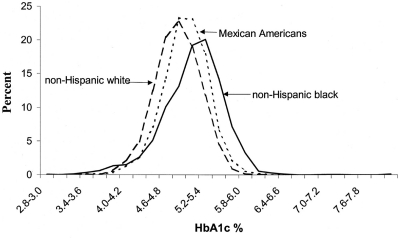
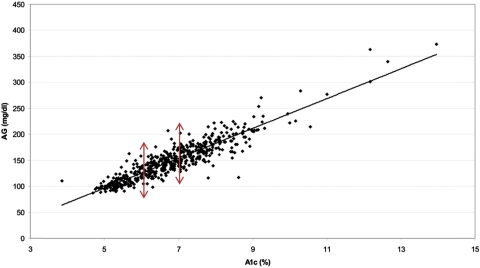
Hemoglobin A1c (HbA1c) is widely used as an index of mean glycemia in diabetes, as a measure of risk for the development of diabetic complications, and as a measure of the quality of diabetes care. In 2010, the American Diabetes Association recommended that HbA1c tests, performed in a laboratory using a method certified by the National Glycohemoglobin Standardization Program, be used for the diagnosis of diabetes. Although HbA1c has a number of advantages compared to traditional glucose criteria, it has a number of disadvantages. Hemoglobinopathies, thalassemia syndromes, factors that impact red blood cell survival and red blood cell age, uremia, hyperbilirubinemia, and iron deficiency may alter HbA1c test results as a measure of average glycemia. Recently, racial and ethnic differences in the relationship between HbA1c and blood glucose have also been described. Although the reasons for racial and ethnic differences remain unknown, factors such as differences in red cell survival, extracellular-intracellular glucose balance, and nonglycemic genetic determinants of hemoglobin glycation are being explored as contributors. Until the reasons for these differences are more clearly defined, reliance on HbA1c as the sole, or even preferred, criterion for the diagnosis of diabetes creates the potential for systematic error and misclassification. HbA1c must be used thoughtfully and in combination with traditional glucose criteria when screening for and diagnosing diabetes.
Figures
References
-
- Rahbar S. 1968. An abnormal hemoglobin in red cells of diabetics. Clin Chim Acta 22:296–298 - PubMed
-
- Koenig RJ, Peterson CM, Kilo C, Cerami A, Williamson JR. 1976. Hemoglobin A1c as an indicator of the degree of glucose intolerance in diabetes. Diabetes 25:230–232 - PubMed
-
- Koenig RJ, Peterson CM, Jones RL, Saudek C, Lehrman M, Cerami A. 1976. Correlation of glucose regulation and hemoglobin A1c in diabetes mellitus. N Engl J Med 295:417–420 - PubMed
Publication types
MeSH terms
Substances
Grants and funding
LinkOut - more resources
Full Text Sources
Other Literature Sources
Medical
