


Pattern-recognition receptors in human eosinophils
- PMID: 22242941
- PMCID: PMC3372752
- DOI: 10.1111/j.1365-2567.2012.03556.x
Pattern-recognition receptors in human eosinophils
Abstract
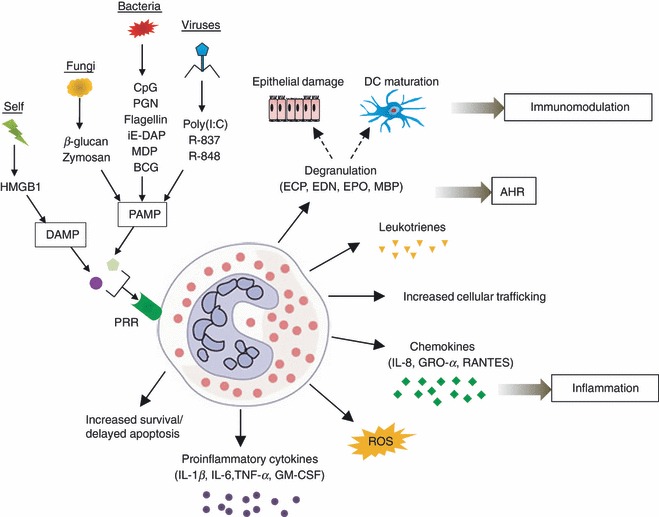
The pattern-recognition receptor (PRR) family includes Toll-like receptors (TLRs), nucleotide-binding oligomerization domain (NOD) -like receptors (NLRs), RIG-I-like receptors (RLRs), C-type lectin receptors (CLRs) and the receptor for advanced glycation end products (RAGE). They recognize various microbial signatures or host-derived danger signals and trigger an immune response. Eosinophils are multifunctional leucocytes involved in the pathogenesis of several inflammatory processes, including parasitic helminth infection, allergic diseases, tissue injury and tumour immunity. Human eosinophils express several PRRs, including TLR1-5, TLR7, TLR9, NOD1, NOD2, Dectin-1 and RAGE. Receptor stimulation induces survival, oxidative burst, activation of the adhesion system and release of cytokines (interleukin-1β, interleukin-6, tumour necrosis factor-α and granulocyte-macrophage colony-stimulating factor), chemokines (interleukin-8 and growth-related oncogene-α) and cytotoxic granule proteins (eosinophil cationic protein, eosinophil-derived neurotoxin, eosinophil peroxidase and major basic protein). It is also evident that eosinophils play an immunomodulatory role by interacting with surrounding cells. The presence of a broad range of PRRs in eosinophils indicates that they are not only involved in defence against parasitic helminths, but also against bacteria, viruses and fungi. From a clinical perspective, eosinophilic PRRs seem to be involved in both allergic and malignant diseases by causing exacerbations and affecting tumour growth, respectively.
© 2012 The Authors. Immunology © 2012 Blackwell Publishing Ltd.
Figures

References
-
- Hogan SP, Rosenberg HF, Moqbel R, et al. Eosinophils: biological properties and role in health and disease. Clin Exp Allergy. 2008;38:709–50. - PubMed
-
- Klion AD, Nutman TB. The role of eosinophils in host defense against helminth parasites. J Allergy Clin Immunol. 2004;113:30–7. - PubMed
-
- Broide D, Sriramarao P. Eosinophil trafficking to sites of allergic inflammation. Immunol Rev. 2001;179:163–72. - PubMed
Publication types
MeSH terms
Substances
LinkOut - more resources
Full Text Sources
