


Interspecies comparison of human and murine scleroderma reveals IL-13 and CCL2 as disease subset-specific targets
- PMID: 22245215
- PMCID: PMC3349888
- DOI: 10.1016/j.ajpath.2011.11.024
Interspecies comparison of human and murine scleroderma reveals IL-13 and CCL2 as disease subset-specific targets
Abstract
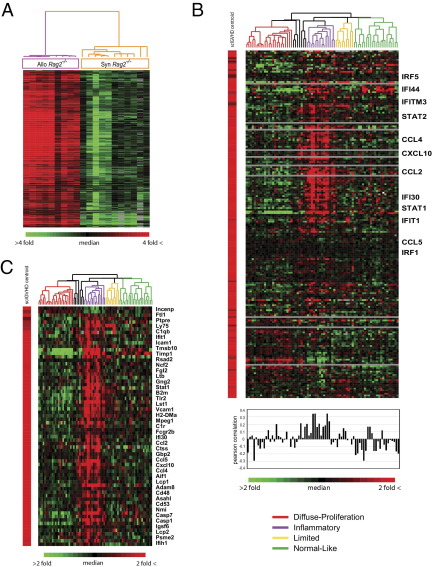
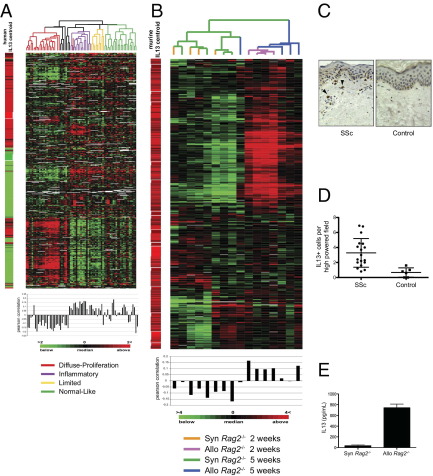
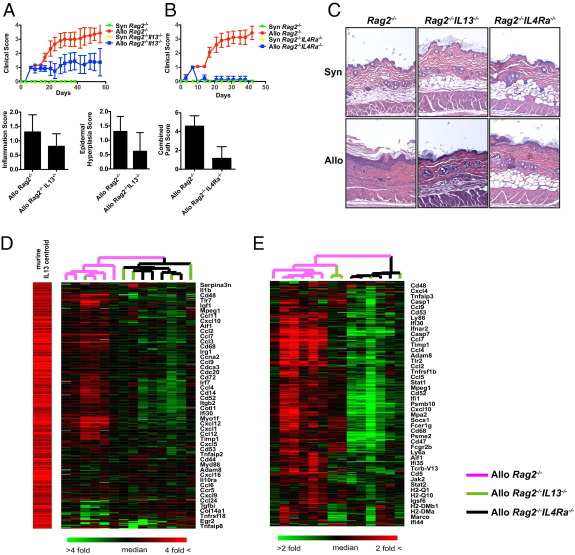
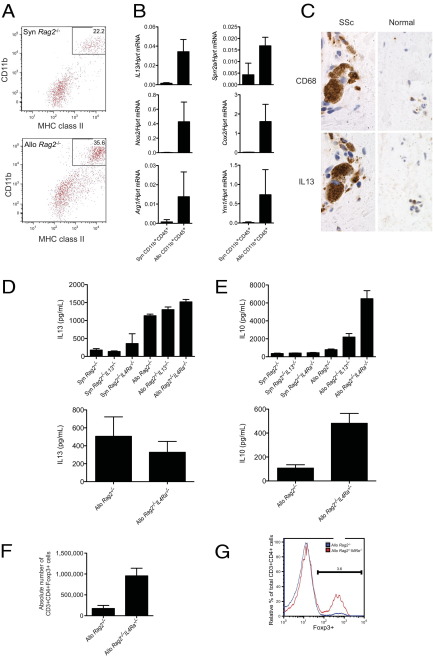
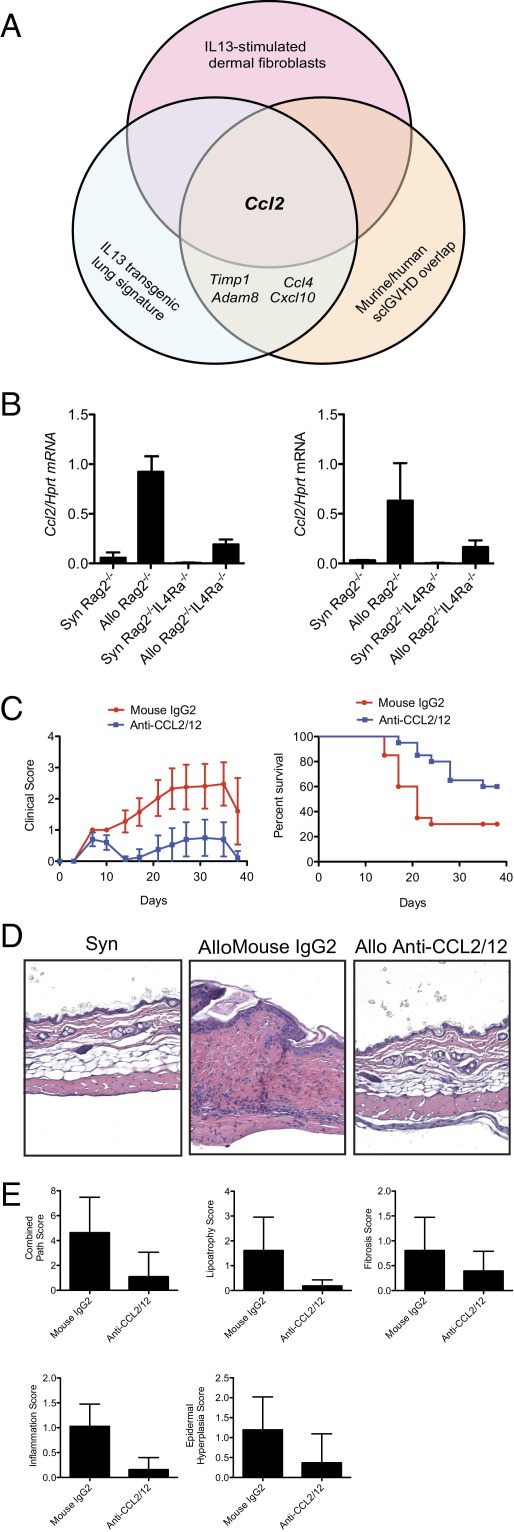
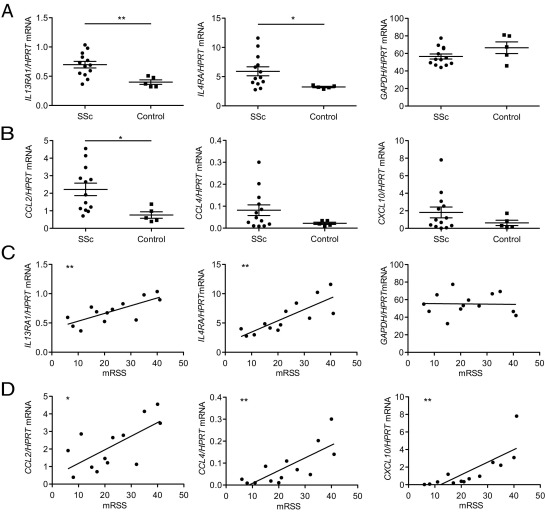
Development of personalized treatment regimens is hampered by lack of insight into how individual animal models reflect subsets of human disease, and autoimmune and inflammatory conditions have proven resistant to such efforts. Scleroderma is a lethal autoimmune disease characterized by fibrosis, with no effective therapy. Comparative gene expression profiling showed that murine sclerodermatous graft-versus-host disease (sclGVHD) approximates an inflammatory subset of scleroderma estimated at 17% to 36% of patients analyzed with diffuse, 28% with limited, and 100% with localized scleroderma. Both sclGVHD and the inflammatory subset demonstrated IL-13 cytokine pathway activation. Host dermal myeloid cells and graft T cells were identified as sources of IL-13 in the model, and genetic deficiency of either IL-13 or IL-4Rα, an IL-13 signal transducer, protected the host from disease. To identify therapeutic targets, we explored the intersection of genes coordinately up-regulated in sclGVHD, the human inflammatory subset, and IL-13-treated fibroblasts; we identified chemokine CCL2 as a potential target. Treatment with anti-CCL2 antibodies prevented sclGVHD. Last, we showed that IL-13 pathway activation in scleroderma patients correlated with clinical skin scores, a marker of disease severity. Thus, an inflammatory subset of scleroderma is driven by IL-13 and may benefit from IL-13 or CCL2 blockade. This approach serves as a model for personalized translational medicine, in which well-characterized animal models are matched to molecularly stratified patient subsets.
Copyright © 2012 American Society for Investigative Pathology. Published by Elsevier Inc. All rights reserved.
Figures
References
-
- Denton C.P., Black C.M., Abraham D.J. Mechanisms and consequences of fibrosis in systemic sclerosis. Nat Clin Pract Rheumatol. 2006;2:134–144. - PubMed
-
- Gu Y.S., Kong J., Cheema G.S., Keen C.L., Wick G., Gershwin M.E. The immunobiology of systemic sclerosis. Semin Arthritis Rheum. 2008;38:132–160. - PubMed
-
- Rogai V., Lories R.J., Guiducci S., Luyten F.P., Matucci Cerinic M. Animal models in systemic sclerosis. Clin Exp Rheumatol. 2008;26:941–946. - PubMed
-
- Milano A., Pendergrass S.A., Sargent J.L., George L.K., McCalmont T.H., Connolly M.K., Whitfield M.L. Molecular subsets in the gene expression signatures of scleroderma skin. PLoS One. 2008;3:e2696. [Erratum appeared in PLoS One 2008, 3(10). doi: 10.1371/annotation/05bed72c-c6f6-4685-a732-02c78e5f66c2] - PMC - PubMed
-
- Ruzek M.C., Jha S., Ledbetter S., Richards S.M., Garman R.D. A modified model of graft-versus-host-induced systemic sclerosis (scleroderma) exhibits all major aspects of the human disease. Arthritis Rheum. 2004;50:1319–1331. - PubMed
Publication types
MeSH terms
Substances
Grants and funding
LinkOut - more resources
Full Text Sources
Other Literature Sources
Medical
Molecular Biology Databases
