Increased PARP-1 association with DNA in alkylation damaged, PARP-inhibited mouse fibroblasts
- PMID: 22246237
- PMCID: PMC3307909
- DOI: 10.1158/1541-7786.MCR-11-0477
Increased PARP-1 association with DNA in alkylation damaged, PARP-inhibited mouse fibroblasts
Abstract
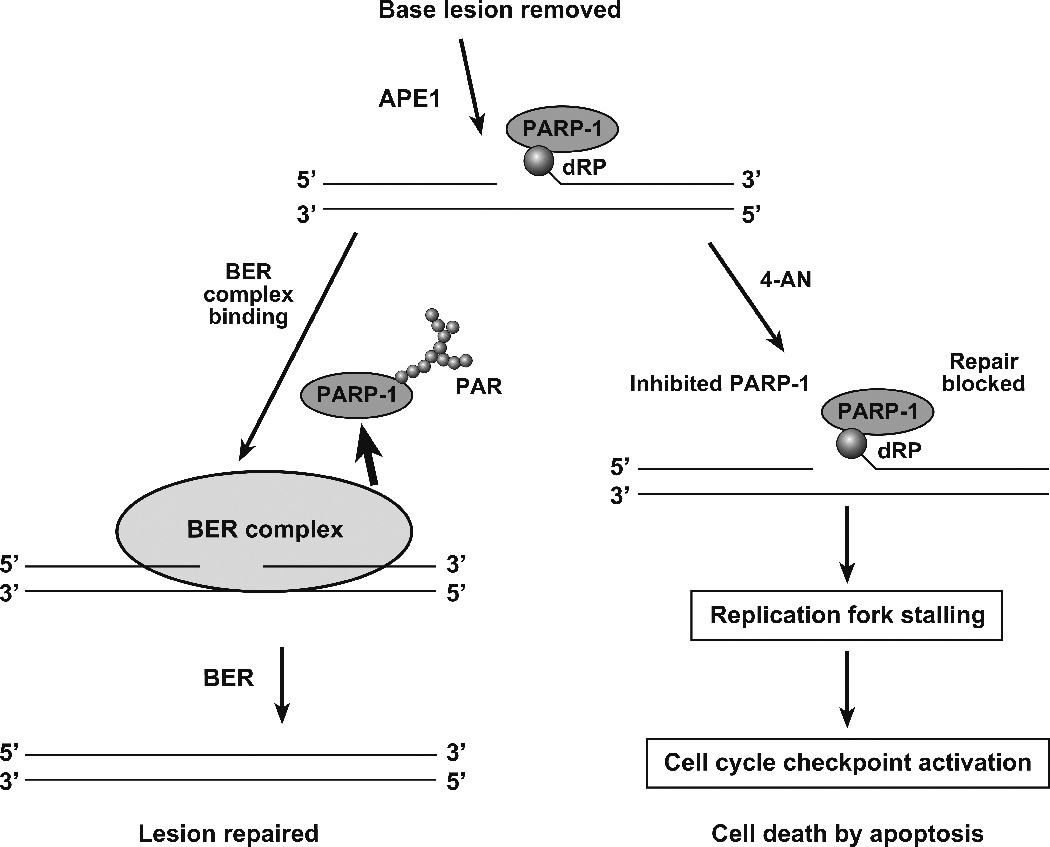
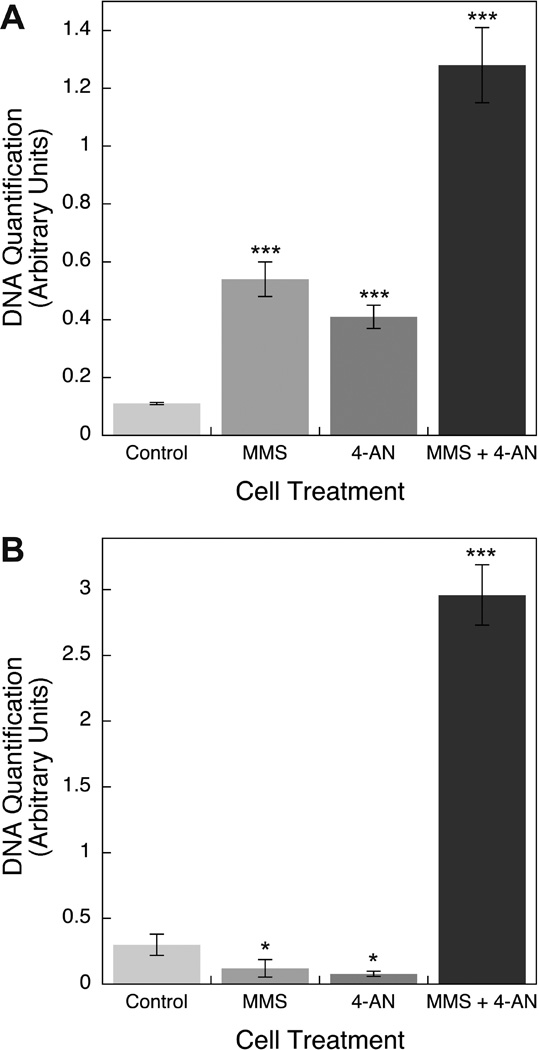
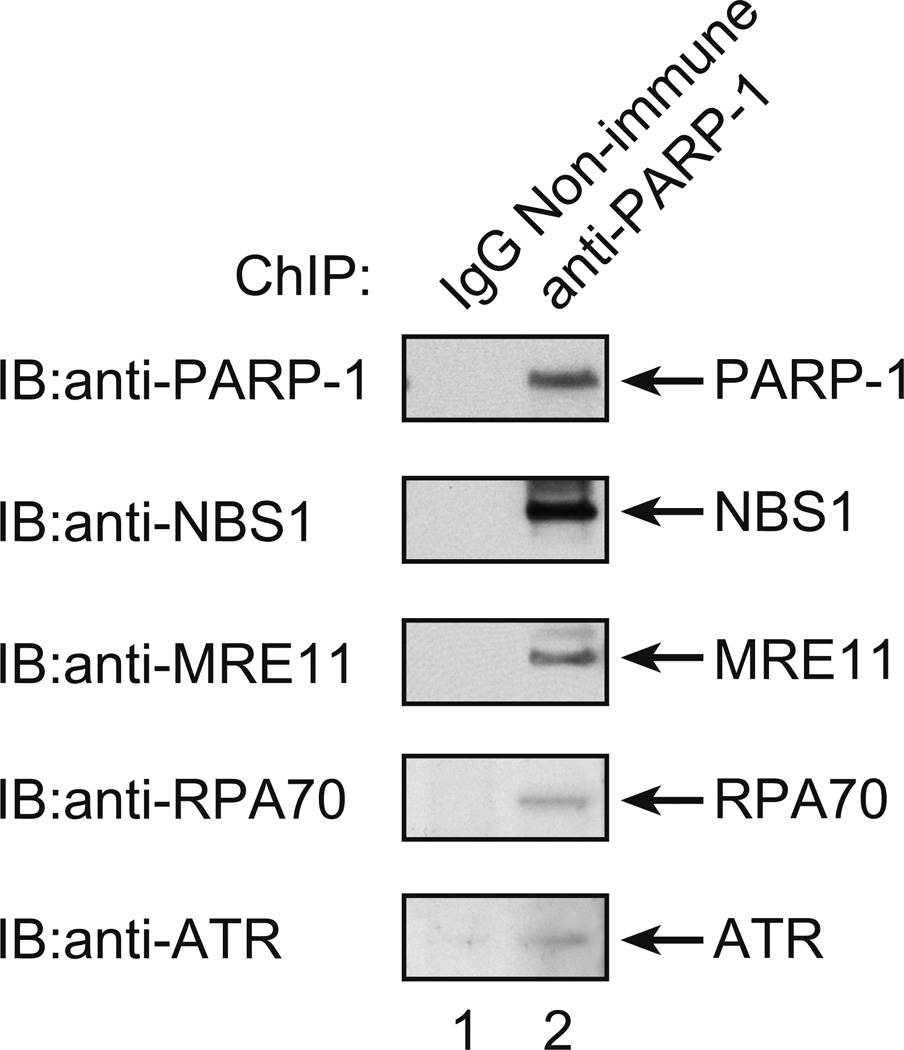
Treatment of base excision repair-proficient mouse fibroblasts with the DNA alkylating agent methyl methanesulfonate (MMS) and a small molecule inhibitor of PARP-1 results in a striking cell killing phenotype, as previously reported. Earlier studies showed that the mechanism of cell death is apoptosis and requires DNA replication, expression of PARP-1, and an intact S-phase checkpoint cell signaling system. It is proposed that activity-inhibited PARP-1 becomes immobilized at DNA repair intermediates, and that this blocks DNA repair and interferes with DNA replication, eventually promoting an S-phase checkpoint and G(2)-M block. Here we report studies designed to evaluate the prediction that inhibited PARP-1 remains DNA associated in cells undergoing repair of alkylation-induced damage. Using chromatin immunoprecipitation with anti-PARP-1 antibody and qPCR for DNA quantification, a higher level of DNA was found associated with PARP-1 in cells treated with MMS plus PARP inhibitor than in cells without inhibitor treatment. These results have implications for explaining the extreme hypersensitivity phenotype after combination treatment with MMS and a PARP inhibitor.
Conflict of interest statement
The authors declare no conflict of interest.
Figures
References
-
- Caldecott KW. Single-strand break repair and genetic disease. Nat Rev Genet. 2008;9:619–631. - PubMed
-
- Dantzer F, de La Rubia G, Ménissier-de Murcia J, Hostomsky Z, de Murcia G, Schreiber V. Base excision repair is impaired in mammalian cells lacking Poly(ADP-ribose) polymerase-1. Biochemistry. 2000;39:7559–7569. - PubMed
-
- Woodhouse BC, Dianova II, Parsons JL, Dianov GL. Poly(ADP-ribose) polymerase-1 modulates DNA repair capacity and prevents formation of DNA double strand breaks. DNA Repair. 2008;7:932–940. - PubMed
Publication types
MeSH terms
Substances
Grants and funding
LinkOut - more resources
Full Text Sources
Miscellaneous