


Programming human pluripotent stem cells into white and brown adipocytes
- PMID: 22246346
- PMCID: PMC3385947
- DOI: 10.1038/ncb2411
Programming human pluripotent stem cells into white and brown adipocytes
Abstract
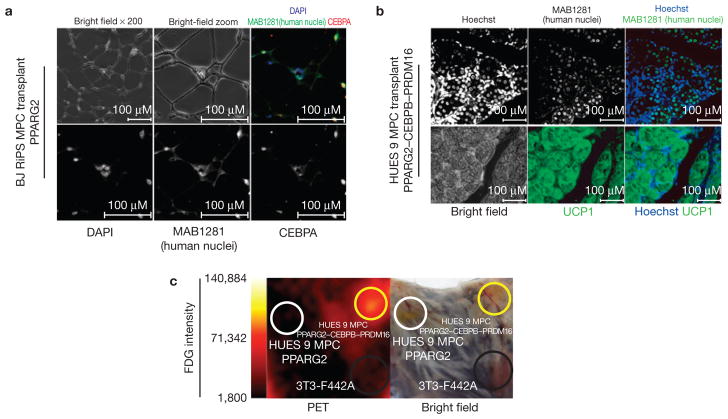
The utility of human pluripotent stem cells is dependent on efficient differentiation protocols that convert these cells into relevant adult cell types. Here we report the robust and efficient differentiation of human pluripotent stem cells into white or brown adipocytes. We found that inducible expression of PPARG2 alone or combined with CEBPB and/or PRDM16 in mesenchymal progenitor cells derived from pluripotent stem cells programmed their development towards a white or brown adipocyte cell fate with efficiencies of 85%-90%. These adipocytes retained their identity independent of transgene expression, could be maintained in culture for several weeks, expressed mature markers and had mature functional properties such as lipid catabolism and insulin-responsiveness. When transplanted into mice, the programmed cells gave rise to ectopic fat pads with the morphological and functional characteristics of white or brown adipose tissue. These results indicate that the cells could be used to faithfully model human disease.
Conflict of interest statement
The authors declare no competing financial interests.
Figures


Comment in
-
Making fat.Nat Rev Mol Cell Biol. 2012 Jan 18;13(2):62-3. doi: 10.1038/nrm3273. Nat Rev Mol Cell Biol. 2012. PMID: 22251902 No abstract available.
References
-
- Thomson JA, et al. Embryonic stem cell lines derived from human blastocysts. Science. 1998;282:1145–1147. - PubMed
-
- Takahashi K, et al. Induction of pluripotent stem cells from adult human fibroblasts by defined factors. Cell. 2007;131:861–872. - PubMed
-
- Yu J, et al. Induced pluripotent stem cell lines derived from human somatic cells. Science. 2007;318:1917–1920. - PubMed
Publication types
MeSH terms
Substances
Associated data
- Actions
Grants and funding
LinkOut - more resources
Full Text Sources
Other Literature Sources
Molecular Biology Databases
Research Materials
