


Characterizing and identifying risk for falls in the LEAPS study: a randomized clinical trial of interventions to improve walking poststroke
- PMID: 22246687
- PMCID: PMC3265675
- DOI: 10.1161/STROKEAHA.111.636258
Characterizing and identifying risk for falls in the LEAPS study: a randomized clinical trial of interventions to improve walking poststroke
Abstract
Background and purpose: Better understanding of fall risk poststroke is required for developing screening and prevention programs. This study characterizes falls in the Locomotor Experience Applied Post-Stroke (LEAPS) randomized clinical trial, describes the impact of 2 walking recovery interventions on falls, and examines the value of clinical assessments for predicting falls.
Methods: Community-dwelling ambulatory stroke survivors enrolled in LEAPS were assessed 2 months poststroke. Falls were monitored until 12 months poststroke and participants were characterized as multiple or injurious (M/I); single, noninjurious; or nonfallers. Incidence and time to M/I falls were compared across interventions (home exercise and locomotor training initiated 2 months [early-LTP] or 6 months [late-LTP] poststroke). Predictive value of 2-month clinical assessments for falls outcome was assessed.
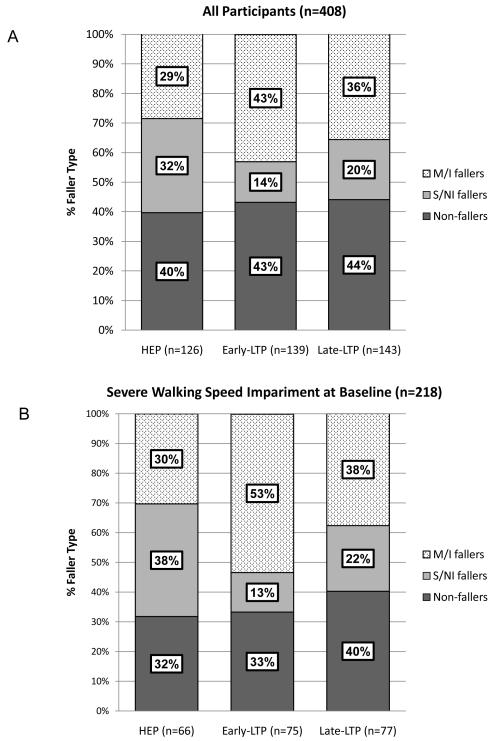
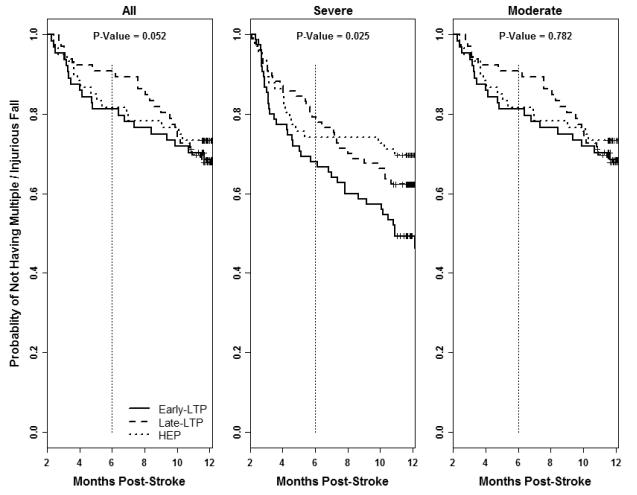
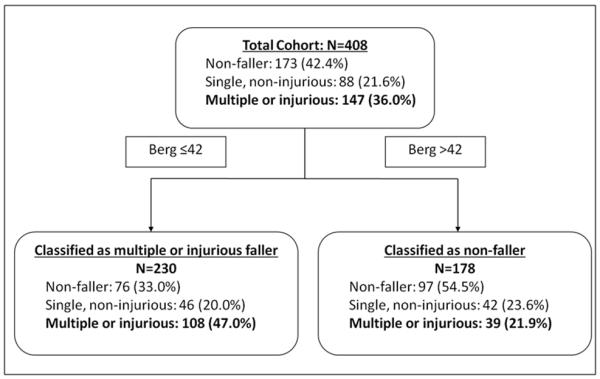
Results: Among the 408 participants, 36.0% were M/I, 21.6% were single, noninjurious, and 42.4% were nonfallers. Most falls occurred at home in the first 3 months after assessment. Falls incidence was highest for those with severe walking impairment who received early-LTP (P=0.025). Berg Balance Scale score ≤ 42/56 was the single best predictor of M/I falls.
Conclusions: As individuals with stroke improve in walking capacity, risk for M/I falls remains high. Individuals walking <0.4 m/s are at higher risk for M/I falls if they receive early-LTP training. Berg Balance Scale score at 2 months poststroke is useful for informing falls risk, but it cannot account for the multifactorial nature of the problem. Falls prevention in stroke will require multifactorial risk assessment and management provided concomitantly with exercise interventions to improve mobility.
Clinical trial registration: URL: http://www.clinicaltrials.gov. Unique identifier: NCT00243919.
Figures
References
-
- Davenport RJ, Dennis MS, Wellwood I, Warlow CP. Complications after acute stroke. Stroke. 1996;27:415–420. - PubMed
-
- Weerdesteyn V, de Niet M, van Duijnhoven HJ, Geurts AC. Falls in individuals with stroke. J Rehabil Res Dev. 2008;45:1195–1213. - PubMed
-
- Pouwels S, Lalmohamed A, Leufkens B, de Boer A, Cooper C, van Staa T, et al. Risk of hip/femur fracture after stroke: A population-based case-control study. Stroke. 2009;40:3281–3285. - PubMed
Publication types
MeSH terms
Associated data
Grants and funding
LinkOut - more resources
Full Text Sources
Medical
Research Materials
