


Plant species richness and ecosystem multifunctionality in global drylands
- PMID: 22246775
- PMCID: PMC3558739
- DOI: 10.1126/science.1215442
Plant species richness and ecosystem multifunctionality in global drylands
Abstract
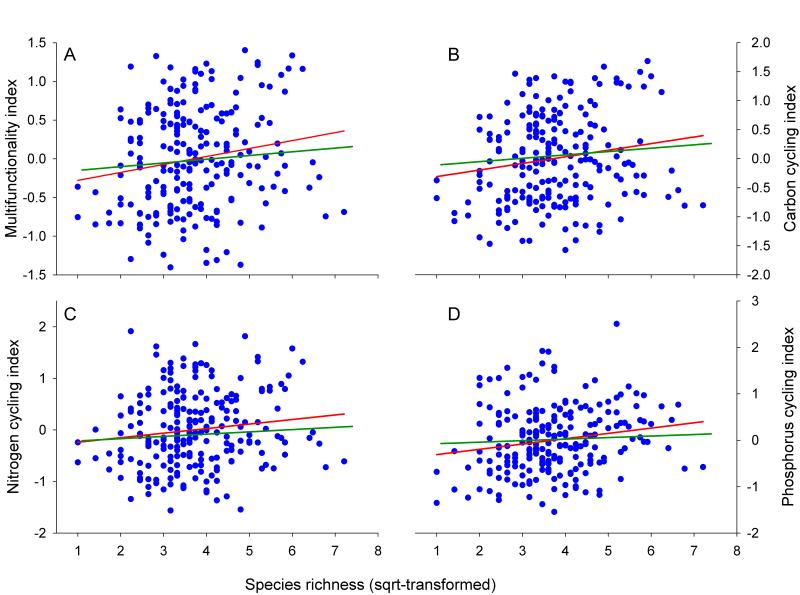
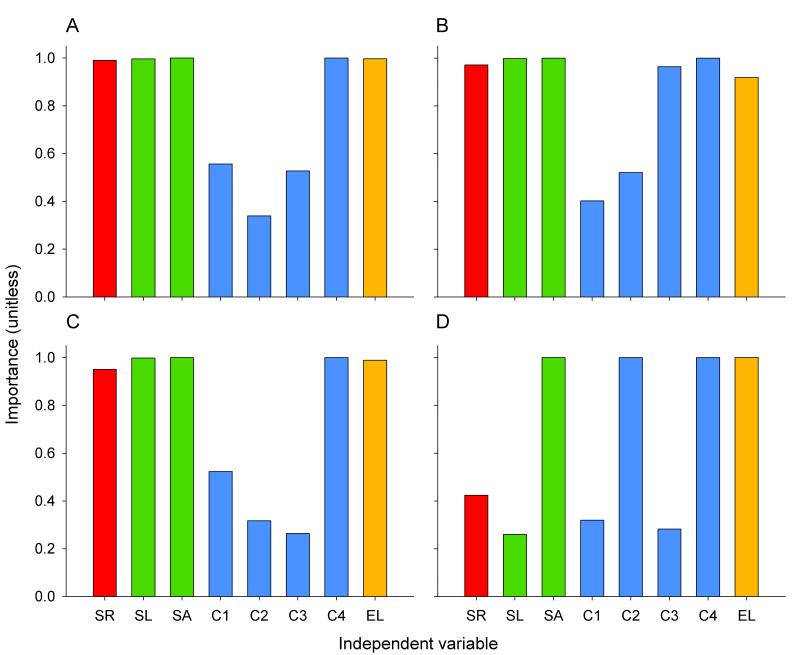
Experiments suggest that biodiversity enhances the ability of ecosystems to maintain multiple functions, such as carbon storage, productivity, and the buildup of nutrient pools (multifunctionality). However, the relationship between biodiversity and multifunctionality has never been assessed globally in natural ecosystems. We report here on a global empirical study relating plant species richness and abiotic factors to multifunctionality in drylands, which collectively cover 41% of Earth's land surface and support over 38% of the human population. Multifunctionality was positively and significantly related to species richness. The best-fitting models accounted for over 55% of the variation in multifunctionality and always included species richness as a predictor variable. Our results suggest that the preservation of plant biodiversity is crucial to buffer negative effects of climate change and desertification in drylands.
Figures
Comment in
-
Ecology. Biodiversity and ecosystem function.Science. 2012 Jan 13;335(6065):174-5. doi: 10.1126/science.1217245. Science. 2012. PMID: 22246761 No abstract available.
-
Comment on "Plant species richness and ecosystem multifunctionality in global drylands".Science. 2012 Jul 13;337(6091):155; author reply 155. doi: 10.1126/science.1220620. Science. 2012. PMID: 22798584
References
Publication types
MeSH terms
Grants and funding
LinkOut - more resources
Full Text Sources
Other Literature Sources
