


Knee extensor strength exhibits potential to predict function in sporadic inclusion-body myositis
- PMID: 22246869
- PMCID: PMC3874796
- DOI: 10.1002/mus.22321
Knee extensor strength exhibits potential to predict function in sporadic inclusion-body myositis
Abstract
Introduction: In this study we address the challenging issue of potential use of muscle strength to predict function in clinical trials. This has immediate relevance to translational studies that attempt to improve quadriceps strength in sporadic inclusion-body myositis (sIBM).
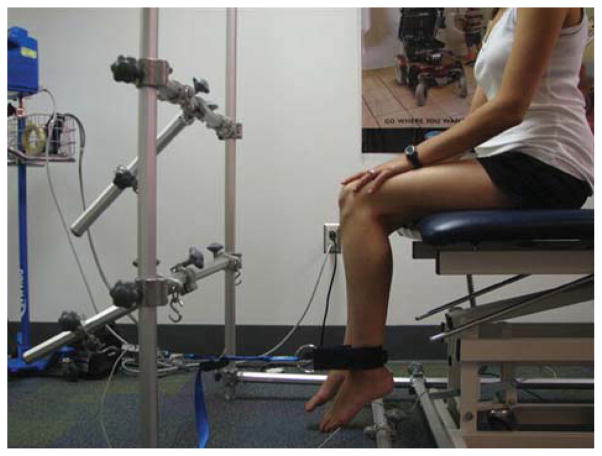
Methods: Maximum voluntary isometric contraction testing as a measure of muscle strength and a battery of functional outcomes were tested in 85 ambulatory subjects with sIBM.
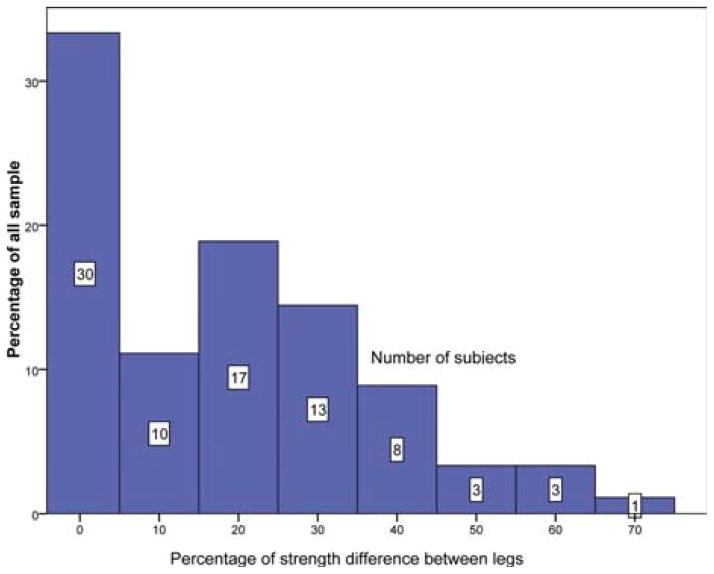
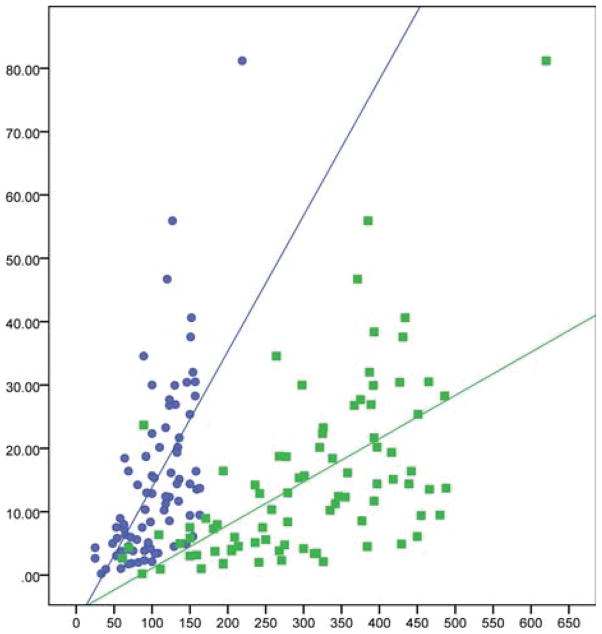
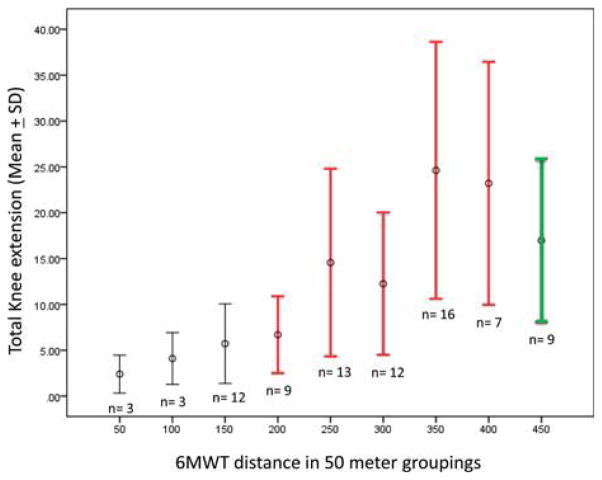
Results: Marked quadriceps weakness was noted in all patients. Strength was correlated with distance walked at 2 and 6 minutes. Additional correlations were found with time to get up from a chair, climb stairs, and step up on curbs.
Conclusions: Quadriceps (knee extensor) strength correlated with performance in this large cohort of sIBM subjects, which demonstrated its potential to predict function in this disease. These data provide initial support for use of muscle strength as a surrogate for function, although validation in a clinical trial is required.
Copyright © 2011 Wiley Periodicals, Inc.
Figures
References
-
- Griggs RC, Askanas V, DiMauro S, Engel A, Karpati G, Mendell JR, et al. Inclusion body myositis and myopathies. Ann Neurol. 1995;38:705–713. - PubMed
-
- Griggs RC. The current status of treatment for inclusion-body myositis. Neurology. 2006;66(suppl):S30–32. - PubMed
-
- Peng A, Koffman BM, Malley JD, Dalakas MC. Disease progression in sporadic inclusion body myositis: observations in 78 patients. Neurology. 2000;55:296–298. - PubMed
-
- Rose MR, McDermott MP, Thornton CA, Palenski C, Martens WB, Griggs RC. A prospective natural history study of inclusion body myositis: implications for clinical trials. Neurology. 2001;57:548–550. - PubMed
-
- Amato AA, Barohn RJ, Jackson CE, Pappert EJ, Sahenk Z, Kissel JT. Inclusion body myositis: treatment with intravenous immunoglobulin. Neurology. 1994;44:1516–1518. - PubMed
MeSH terms
Grants and funding
LinkOut - more resources
Full Text Sources
Medical
