


Mental state decoding abilities in young adults with borderline personality disorder traits
- PMID: 22247796
- PMCID: PMC3257028
- DOI: 10.1037/a0020011
Mental state decoding abilities in young adults with borderline personality disorder traits
Abstract
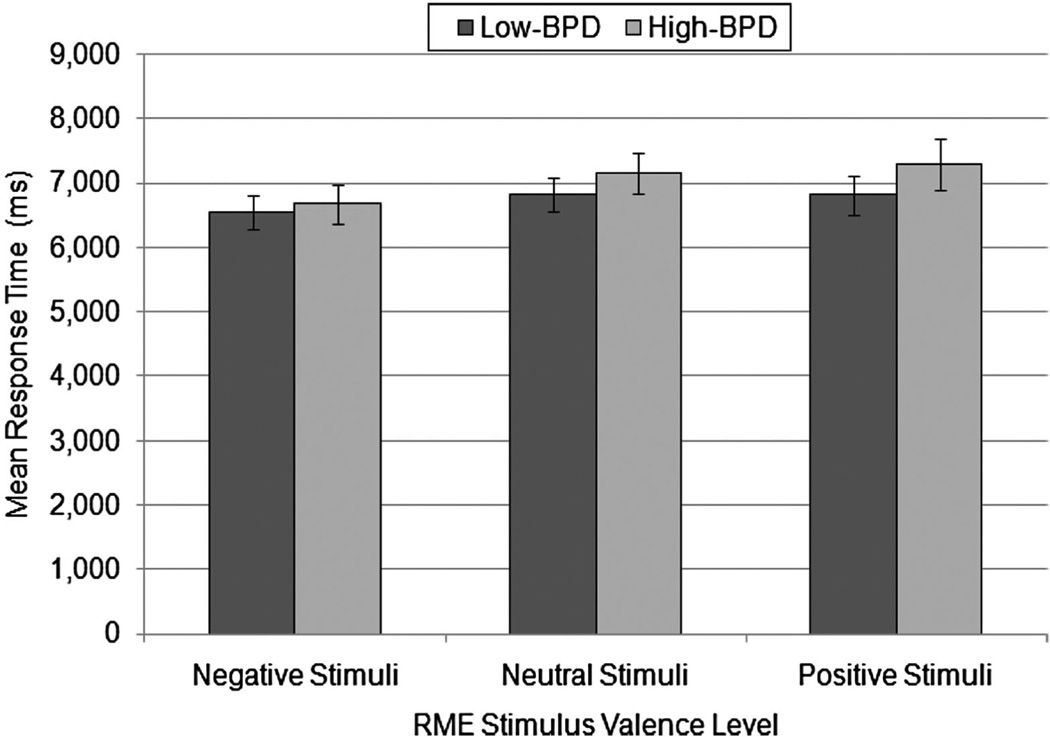
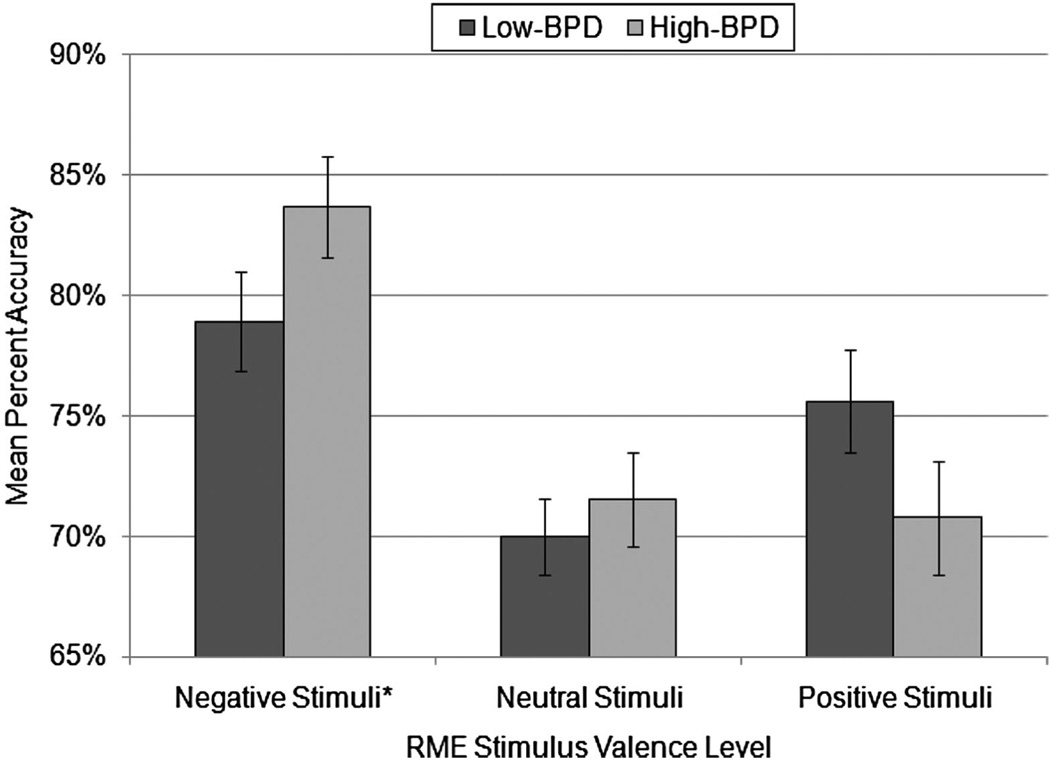
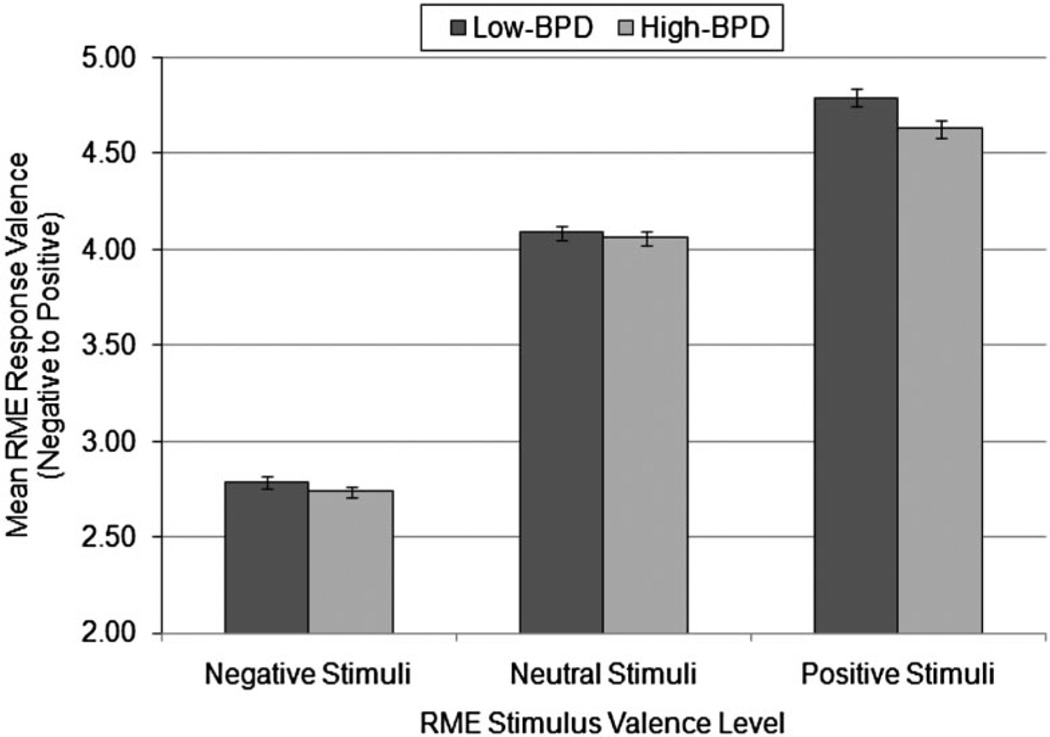
Previous studies have demonstrated that patients with borderline personality disorder (BPD) tend to misattribute malevolence to benign social stimuli, including facial expressions. Yet, facial emotion recognition studies examining those with BPD have yielded mixed results, with some studies showing impaired accuracy and others demonstrating enhanced accuracy in the recognition of emotions or mental states. The current study examined the ability to decode mental states from photographs of just the eye region of faces in a nonclinical sample of young adults who exhibited BPD traits (high BPD) compared with those who did not (low BPD). Group differences in mental state decoding ability depended on the valence of the stimuli. The high-BPD group performed better for negative stimuli compared with the low-BPD group, but did not perform significantly different from the low-BPD group for stimuli of neutral or positive valence. The high-BPD group also demonstrated a response bias for attributing negative mental states to facial stimuli. In addition, findings suggested that the group difference in accuracy for negative stimuli could not be explained by response bias, because the group difference in response bias for negative stimuli did not reach significance. These findings suggest that BPD traits may be associated with enhanced ability to detect negative emotions and a bias for attributing negative emotions to nonnegative social stimuli.
Keywords: Reading the Mind in the Eyes Test; borderline personality disorder; emotion recognition; mental state decoding; response bias.
Figures
References
-
- Annaz D, Karmiloff-Smith A, Johnson MH, Thomas MSC. A cross-syndrome study of the development of holistic face recognition in children with autism, Down syndrome, and Williams syndrome. Journal of Experimental Child Psychology. 2009;102:456–486. - PubMed
-
- Arntz A, Dietzel R, Dreessen L. Assumptions in borderline personality disorder: Specificity, stability and relationship with etiological factors. Behavior Research and Therapy. 1999;37:545–557. - PubMed
-
- Baron-Cohen S. The autistic child’s theory of mind: A case of specific developmental delay. Journal of Child Psychology and Psychiatry. 1989;30:285–297. - PubMed
-
- Baron-Cohen S, Wheelwright S, Hill J, Raste Y, Plumb I. The “Reading the Mind in the Eyes” Test revised version: A study with normal adults, and adults with Asperger syndrome or high-functioning autism. Journal of Child Psychology and Psychiatry. 2001;42:241–251. - PubMed
-
- Bateman A, Fonagy P. The development of an attachment-based treatment program for borderline personality disorder. Bulletin of the Menninger Clinic. 2003;67:187–211. - PubMed
MeSH terms
Grants and funding
LinkOut - more resources
Full Text Sources