. 2012 Nov 1;31(44):4709-17.
doi: 10.1038/onc.2011.622. Epub 2012 Jan 16.

A role for Mediator complex subunit MED13L in Rb/E2F-induced growth arrest

Affiliations

A role for Mediator complex subunit MED13L in Rb/E2F-induced growth arrest

S P Angus et al. Oncogene. .

Abstract

The Rb/E2F pathway is deregulated in virtually all human tumors. It is clear that, in addition to Rb itself, essential cofactors required for transcriptional repression and silencing of E2F target genes are mutated or lost in cancer. To identify novel cofactors required for Rb/E2F-mediated inhibition of cell proliferation, we performed a genome-wide short hairpin RNA screen. In addition to several known Rb cofactors, the screen identified components of the Mediator complex, a large multiprotein coactivator required for RNA polymerase II transcription. We show that the Mediator complex subunit MED13L is required for Rb/E2F control of cell growth, the complete repression of cell cycle target genes, and cell cycle inhibition.


Figures
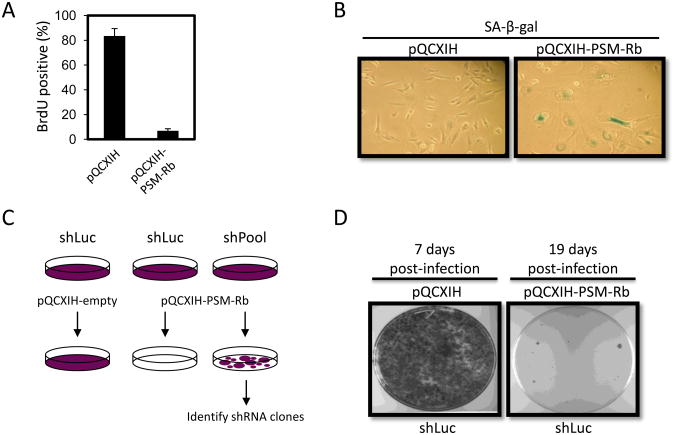
Figure 1
Figure 1. shRNA screen design: Active Rb expression induces stable cell cycle arrest and senescent phenotype
(A) T98G glioblastoma cells expressing the murine ecotropic receptor (T98G-EcoR) were infected with empty retrovirus or retrovirus producing a PSM-Rb. Three days post-selection in hygromycin, cells were labeled with BrdU for 16 h, fixed and BrdU incorporation was detected by immunofluorescence. At least 200 cells were counted per condition. Bar graphs represent mean ± S.D. from two independent experiments for PSM-Rb. (B) T98G-EcoR cells treated as in (A) were stained to detect SA-beta-galatosidase activity. (C) The shRNA screen was designed to identify cells resistant to PSM-Rb expression in the shPool populations as compared to the control, shLuc (luciferase). (D) T98G-EcoR cells stably producing shRNA targeting firefly luciferase were infected with empty retrovirus or retrovirus producing PSM-Rb. Either seven days (empty retrovirus) or 19 days (PSM-Rb retrovirus) post-selection in hygromycin, dishes were fixed in methanol, stained with crystal violet, and images were captured.
Figure 2
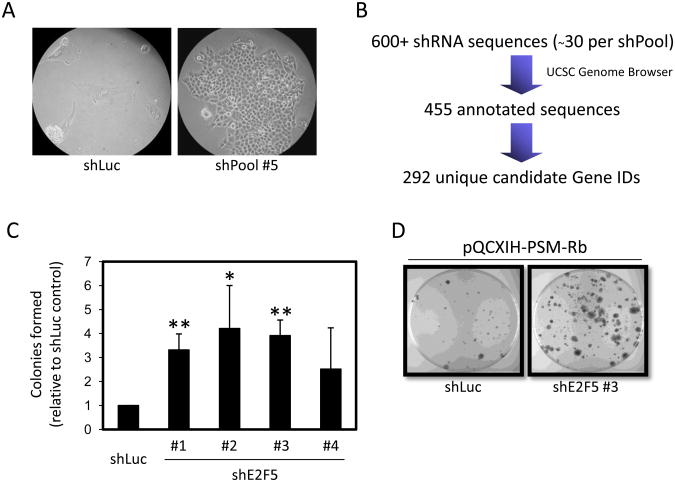
Figure 2. shRNA primary screen and validation identifies E2F5
(A) T98G-EcoR cells expressing shLuc or expressing a pool of shRNAs from the Open Biosystems human shRNA library were infected with retrovirus producing PSM-Rb. Nineteen days post-selection in hygromycin, representative images of shLuc cells and shPool #5 cells were collected. (B) Cells that bypassed growth arrest were collected from the shPool populations and the shRNAs were identified by sequencing. UC Santa Cruz Genome browser was used to confirm the identity and validity of each shRNA sequence. In sum, 293 unique genes were identified from the primary screen. (C) T98G-EcoR cells expressing unique shRNAs targeting E2F5 or an shRNA targeting luciferase (shLuc) were generated by retroviral infection and selection. Polyclonal populations were subsequently infected with retrovirus producing PSM-Rb, selected in hygromycin for 19 days, methanol fixed, and stained with crystal violet. Colonies were counted and graphed relative to the control shLuc population. The mean ± S.D. is shown for at least two independent experiments. * indicates p<0.05. ** indicates p<0.01. (D) Representative images of dishes of shLuc cells and shE2F5 #3 as described in (C).
Figure 3
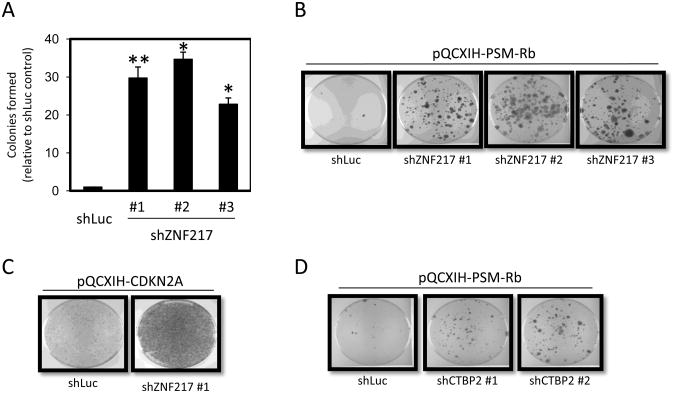
Figure 3. ZNF217 is required for Rb/E2F-mediated growth arrest
(A) T98G-EcoR cells expressing unique shRNAs targeting ZNF217 or shRNA targeting luciferase (shLuc) were generated by retroviral infection and selection. Polyclonal populations were subsequently infected with retrovirus producing PSM-Rb, selected in hygromycin for 19 days, fixed, and stained with crystal violet. Colonies were counted and graphed relative to the control shLuc population. The mean ± S.D. is shown for at least two independent experiments. * indicates p<0.05. ** indicates p<0.01. (B) Representative dishes of shLuc and shZNF217 populations as described in (A). (B) T98G-EcoR cells expressing an shRNA targeting luciferase (shLuc) or ZNF217 were generated by retroviral infection and selection. Polyclonal populations were subsequently infected with retrovirus producing p16ink4a, selected in hygromycin for 7 days, fixed, and stained with crystal violet. (D) T98G-EcoR cells expressing shRNA targeting luciferase (Luc) or unique shRNAs targeting CtBP2 were generated by retroviral infection and selection. Polyclonal populations were subsequently infected with retrovirus producing PSM-Rb, selected in hygromycin for 19 days, fixed, and stained with crystal violet.
Figure 4
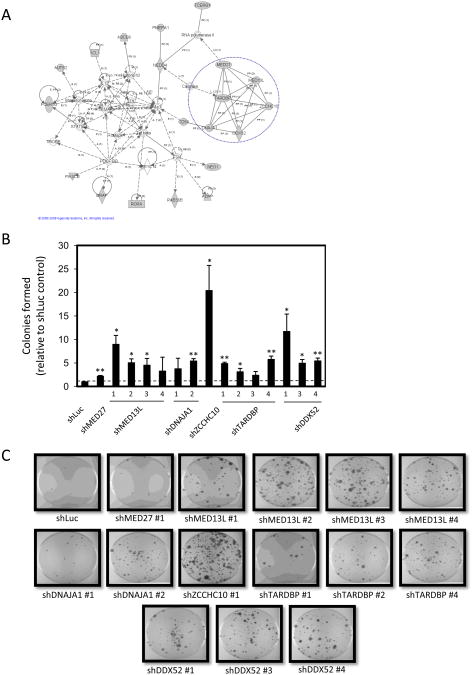
Figure 4. Involvement of Mediator complex subunits in Rb/E2F-mediated growth arrest
(A) A highly interconnected node of candidate genes identified in the screen was revealed by Ingenuity Pathways Analysis. One identified network is shown. Shading indicates gene products identifed in the shRNA screen. MED13L, MED27, ZCCHC10, DDX52, TARDBP, and DNAJA1 were connected by reciprocal protein-protein interactions. (B) T98G-EcoR cells expressing shRNA sequences targeting luciferase (shLuc) or shRNAs targeting MED27, MED13L, DNAJA1, ZCCHC10, TARDBP, or DDX52 were generated by retroviral infection and selection. Polyclonal populations were subsequently infected with retrovirus producing PSM-Rb, selected in hygromycin for 19 days, fixed, and stained with crystal violet. The number of colonies formed was counted and graphed relative to the control (shLuc) plate. The mean ± S.D. is shown for two independent experiments. * indicates p<0.05. ** indicates p<0.01. (C) Representative images collected from dishes of cells as described in (B).
Figure 5
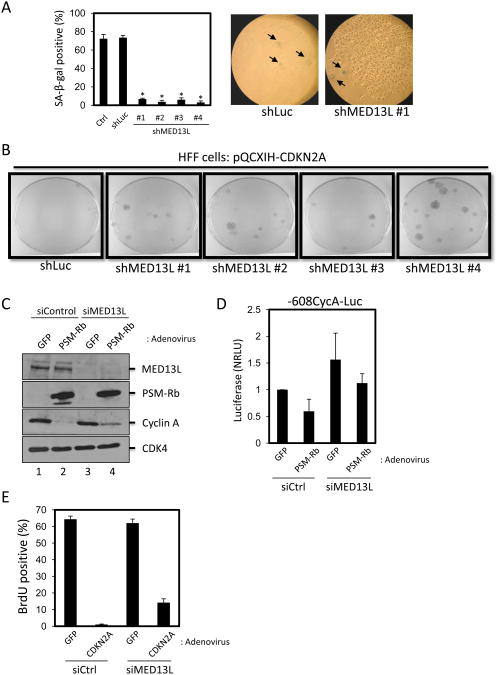
Figure 5. MED13L is required for complete repression of Rb/E2F-regulated cell cycle targets and the inhibition of DNA synthesis
(A) T98G-EcoR cells expressing shRNA sequences targeting luciferase (shLuc) or shRNAs targeting MED13L were infected with retrovirus producing PSM-Rb, selected in hygromycin for 19 days, fixed, and processed for SA-β-gal activity. Two hundred cells were scored for SA-β-gal staining. The mean ± S.D. is shown for two independent experiments. * indicates p<0.05. Representative images are shown at right. Arrows indicate SA-β-gal positive cells. (B) HFF cells expressing shRNA targeting luciferase (Luc) or MED13L were generated by retroviral infection and selection. Polyclonal populations were infected with retrovirus producing p16ink4a, selected in hygromycin for 19 days, fixed, and stained with crystal violet. (C) U2OS cells were transfected with siRNA pools, either a non-targeting siControl pool or a pool targeting MED13L. Forty-eight hours post-transfection, cells were infected with control adenovirus producing GFP or adenovirus producing GFP and PSM-Rb. Twenty-four hours post-infection, infected cells were harvested, whole cell lystates were prepared, and equal amounts of protein were separated by SDS-PAGE. The indicated proteins were detected by immunoblotting. CDK4 was used as a loading control. (D) U2OS cells were transfected with siRNA pools, either a non-targeting siControl pool or a pool targeting MED13L, Cyclin A-Luc reporter plasmid, and CMV-Renilla. Forty-eight hours post-transfection, cells were infected with control adenovirus producing GFP or adenovirus producing GFP and PSM-RB. Twenty-four hours post-infection, cells were harvested and luciferase activity was measured. Relative light units were normalized using Renilla luciferase activity (NRLU). (E) U2OS cells were transfected with siRNA pools, either a non-targeting siControl pool or a pool targeting MED13L. Forty-eight hours post-transfection, cells were infected with control adenovirus producing GFP or adenovirus producing GFP and CDKN2A. Twenty-four hours post-infection, cells were labeled with BrdU for 16 h. Cells were then fixed and BrdU incorporation was detected by immunofluorescence. At least 200 cells were counted per condition. Bar graphs represent mean ± S.D. from three independent experiments.

References

    1. Weinberg RA. The retinoblastoma protein and cell cycle control. Cell. 1995;81:323–30. - PubMed
    1. Sherr CJ. Cancer cell cycles. Science. 1996;274:1672–7. - PubMed
    1. Burkhart DL, Sage J. Cellular mechanisms of tumour suppression by the retinoblastoma gene. Nat Rev Cancer. 2008;8:671–82. - PMC - PubMed
    1. Attwooll C, Denchi EL, Helin K. The E2F family: specific functions and overlapping interests. The EMBO J. 2004;23:4709–16. - PMC - PubMed
    1. Dyson N. The regulation of E2F by pRB-family proteins. Genes & Dev. 1998;12:2245–62. - PubMed

Publication types

MeSH terms