


Adjunctive sleep medications and depression outcome in the treatment of serotonin-selective reuptake inhibitor resistant depression in adolescents study
- PMID: 22251024
- PMCID: PMC3281285
- DOI: 10.1089/cap.2011.0027
Adjunctive sleep medications and depression outcome in the treatment of serotonin-selective reuptake inhibitor resistant depression in adolescents study
Erratum in
-
Correction to: Adjunctive Sleep Medications and Depression Outcome in the Treatment of Serotonin-Selective Reuptake Inhibitor Resistant Depression in Adolescents Study by Shamseddeen W, Clarke G, Keller MB, Wagner KD, Birmaher B, Emslie GJ, Ryan N, Asarnow JR, Porta G, and Brent DA. J Child Adolesc Psychopharmacol 22:29-36, 2019. DOI: 10.1089/cap.2011.0027.J Child Adolesc Psychopharmacol. 2019 Aug;29(7):573. doi: 10.1089/cap.2011.0027.correx. Epub 2019 Aug 6. J Child Adolesc Psychopharmacol. 2019. PMID: 31386557 Free PMC article. No abstract available.
Abstract
Objective: In the Treatment of Resistant Depression in Adolescents, study participants who received medication for sleep had a lower response rate. This report sought to clarify this finding.
Method: Depressed adolescents who had not responded to a previous adequate serotonin-selective reuptake inhibitor (SSRI) trial were randomly assigned to another SSRI, venlafaxine, another SSRI+cognitive behavior therapy (CBT), or venlafaxine+CBT. Augmentation with sleep medication was permitted as clinically indicated.
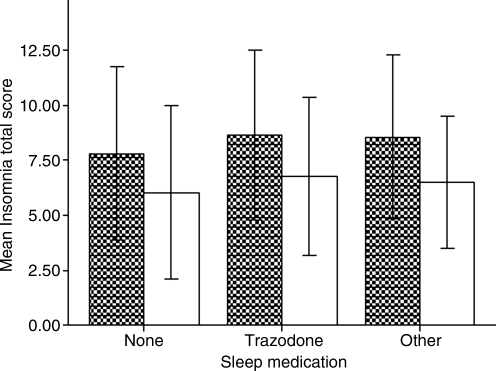
Results: Youth who received trazodone were six times less likely to respond than those with no sleep medication (adjusted odds ratio [OR]=0.16, 95% confidence interval [CI]: 0.05-0.50, p=0.001) and were three times more likely to experience self-harm (OR=3.0, 95% CI: 1.1-7.9, p=0.03), even after adjusting for baseline differences associated with trazodone use. None (0/13) of those cotreated with trazodone and either paroxetine or fluoxetine responded. In contrast, those treated with other sleep medications had similar rates of response (60.0% vs. 50.4%, χ(2)=0.85, p=0.36) and of self-harm events (OR=0.5, 95% CI: 0.1-2.6, p=0.53) as those who received no sleep medication.
Conclusions: These findings should be interpreted cautiously because these sleep agents were not assigned randomly, but at clinician discretion. Nevertheless, they suggest that the use of trazodone for the management of sleep difficulties in adolescent depression should be re-evaluated and that future research on the management of sleep disturbance in adolescent depression is needed. The very low response rate of participants cotreated with trazodone and either fluoxetine or paroxetine could be due to inhibition of CYP 2D6 by these antidepressants.
Trial registration: ClinicalTrials.gov NCT00018902.
Figures
References
-
- Alfaro CL. Lam YW. Simpson J. Ereshefsky L. CYP2D6 inhibition by fluoxetine, paroxetine, sertraline, and venlafaxine in a crossover study: Intraindividual variability and plasma concentration correlations. J Clin Pharmacol. 2000;40:58–66. - PubMed
-
- Amchin J. Ereshefsky L. Zarycranski W. Taylor K. Albano D. Klockowski PM. Effect of venlafaxine versus fluoxetine on metabolism of dextromethorphan, a CYP2D6 probe. J Clin Pharmacol. 2001;41:443–451. - PubMed
-
- American Psychiatric Association. Diagnostic and Statistical Manual of Mental Disorders. 4th. Washington, DC: American Psychiatric Association; 1994. (DSM-IV)
-
- Asarnow JR. Emslie G. Clarke G. Wagner KD. Spirito A. Vitiello B. Iyengar S. Shamseddeen W. Ritz L. McCracken J. Strober M. Suddath R. Leonard H. Porta G. Keller M. Brent D. Treatment of selective serotonin reuptake inhibitor-resistant depression in adolescents: Predictors and moderators of treatment response. J Am Acad Child Adolesc Psychiatry. 2009;48:330–339. - PMC - PubMed
-
- Beck AT. Steer RA. Manual for the Beck Hopelessness Scale. San Antonio, TX: Psychological Corporation; 1988.
Publication types
MeSH terms
Substances
Associated data
Grants and funding
LinkOut - more resources
Full Text Sources
Medical
