


Dispositional mindfulness and the attenuation of neural responses to emotional stimuli
- PMID: 22253259
- PMCID: PMC3541486
- DOI: 10.1093/scan/nss004
Dispositional mindfulness and the attenuation of neural responses to emotional stimuli
Abstract
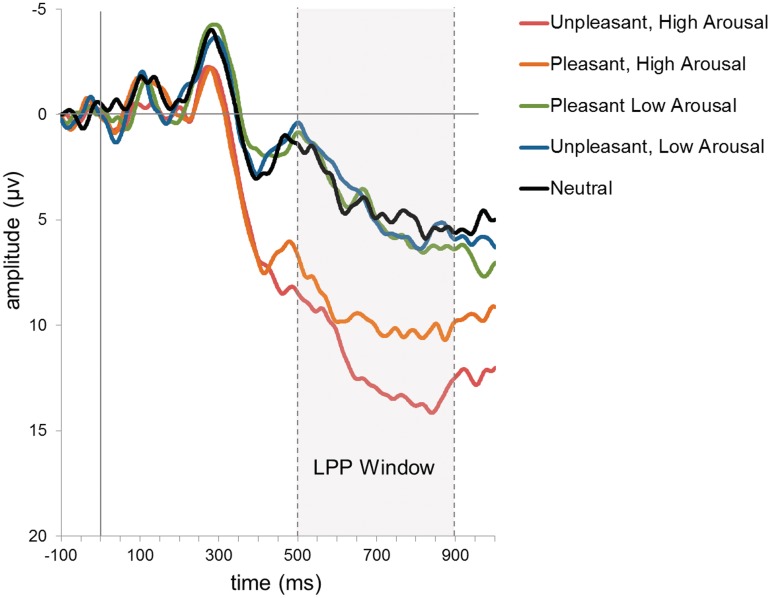
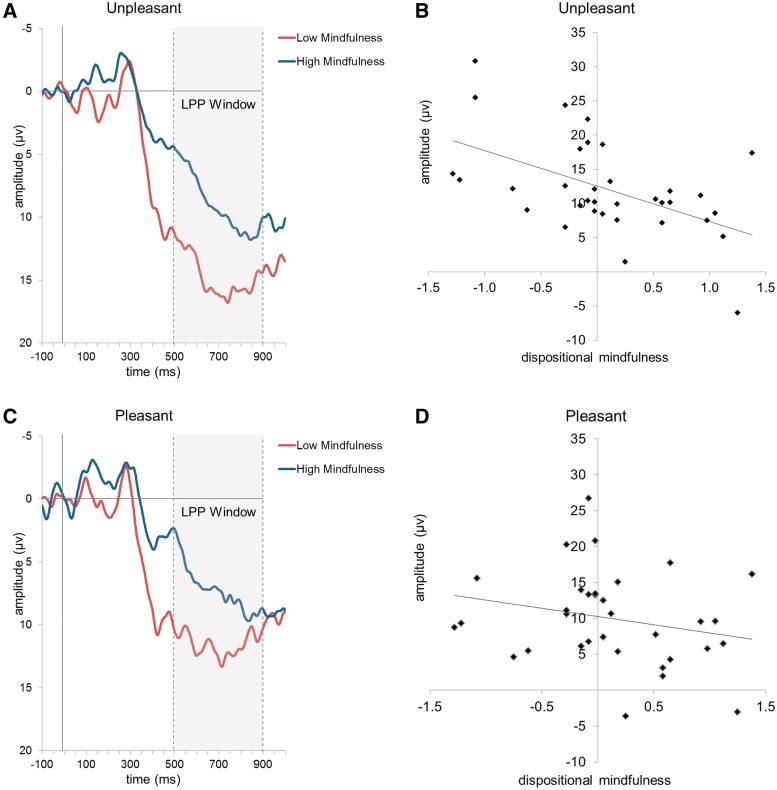
Considerable research has disclosed how cognitive reappraisals and the modulation of emotional responses promote successful emotion regulation. Less research has examined how the early processing of emotion-relevant stimuli may create divergent emotional response consequences. Mindfulness--a receptive, non-evaluative form of attention--is theorized to foster emotion regulation, and the present study examined whether individual differences in mindfulness would modulate neural responses associated with the early processing of affective stimuli. Focus was on the late positive potential (LPP) of the event-related brain potential to visual stimuli varying in emotional valence and arousal. This study first found, replicating past research, that high arousal images, particularly of an unpleasant type, elicited larger LPP responses. Second, the study found that more mindful individuals showed lower LPP responses to high arousal unpleasant images, even after controlling for trait attentional control. Conversely, two traits contrasting with mindfulness--neuroticism and negative affectivity--were associated with higher LPP responses to high arousal unpleasant images. Finally, mindfulness was also associated with lower LPP responses to motivationally salient pleasant images (erotica). These findings suggest that mindfulness modulates neural responses in an early phase of affective processing, and contribute to understanding how this quality of attention may promote healthy emotional functioning.
Figures
References
-
- Arch JJ, Craske MG. Mechanisms of mindfulness: emotion regulation following a focused breathing induction. Behaviour Research and Therapy. 2006;44:1849–58. - PubMed
-
- Baer RA. Mindfulness training as a clinical intervention: a conceptual and empirical review. Clinical Psychology: Science and Practice. 2003;10:125–43.
-
- Baer RA, Smith GT, Hopkins J, Krietemeyer J, Toney L. Using self-report assessment methods to explore facets of mindfulness. Assessment. 2006;13:27–45. - PubMed
-
- Barnes S, Brown KW, Krusemark E, Campbell WK, Rogge RD. The role of mindfulness in romantic relationship satisfaction and responses to relationship stress. Journal of Marital and Family Therapy. 2007;33:482–500. - PubMed
-
- Brown KW, Cordon SL. Toward a phenomenology of mindfulness: subjective experience and emotional correlates. In: Didonna F, editor. Clinical Handbook of Mindfulness. New York: Springer; 2009. pp. 59–81.
MeSH terms
LinkOut - more resources
Full Text Sources
Miscellaneous
