. 2012;7(1):e29446.
doi: 10.1371/journal.pone.0029446. Epub 2012 Jan 10.

Active and passive immunization protects against lethal, extreme drug resistant-Acinetobacter baumannii infection

Affiliations

Active and passive immunization protects against lethal, extreme drug resistant-Acinetobacter baumannii infection

Guanpingshen Luo et al. PLoS One. 2012.

Abstract

Extreme-drug-resistant (XDR) Acinetobacter baumannii is a rapidly emerging pathogen causing infections with unacceptably high mortality rates due to inadequate available treatment. New methods to prevent and treat such infections are a critical unmet medical need. To conduct a rational vaccine discovery program, OmpA was identified as the primary target of humoral immune response after intravenous infection by A. baumannii in mice. OmpA was >99% conserved at the amino acid level across clinical isolates harvested between 1951 and 2009 from cerebrospinal fluid, blood, lung, and wound infections, including carbapenem-resistant isolates, and was ≥89% conserved among other sequenced strains, but had minimal homology to the human proteome. Vaccination of diabetic mice with recombinant OmpA (rOmpA) with aluminum hydroxide adjuvant markedly improved survival and reduced tissue bacterial burden in mice infected intravenously. Vaccination induced high titers of anti-OmpA antibodies, the levels of which correlated with survival in mice. Passive transfer with immune sera recapitulated protection. Immune sera did not enhance complement-mediated killing but did enhance opsonophagocytic killing of A. baumannii. These results define active and passive immunization strategies to prevent and treat highly lethal, XDR A. baumannii infections.


Conflict of interest statement

Competing Interests: The authors have declared that no competing interests exist.

Figures

Figure 1
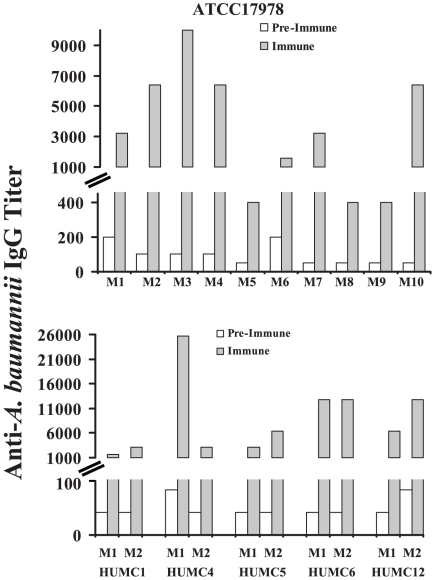
Figure 1. A. baumannii infection induces specific humoral immune response.
Ten mice were infected with ATCC 17978 (top) and 2 mice each were infected with clinical isolates from Harbor-UCLA Medical Center (HUMC) (bottom). Paired pre-immune & immune serum IgG anti-A. baumannii cell membrane protein titers are shown. M1 = mouse 1; M2 = mouse 2.
Figure 2
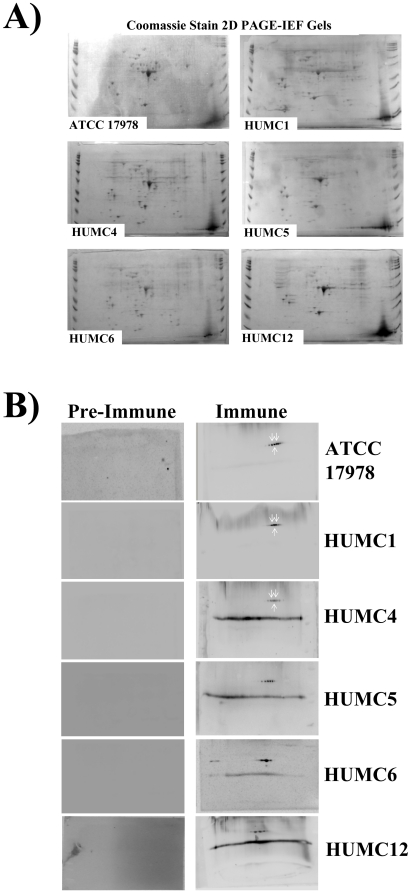
Figure 2. A. baumannii infection induces specific anti-rOmpA antibody response.
(A) Membrane protein preparations from A. baumanni clinical strains (ATCC 17978 & HUMC1, 4, 5, 6, & 12) were run on 2 D gels stained with Coomassie Blue. (B) Western blots of those 2D gels were stained with paired sera obtained from mice before infection (pre-serum) and after recovery from non-lethal iv infection (post-serum) with A. baumannii. 2D gels were run at least twice for all strains, and representative figures are shown. Spots uniquely identified by post-immune serum were seen at conserved locations. Spots selected for protein identification by MALDI-TOF analysis are marked with white arrows—these all contained OmpA.
Figure 3
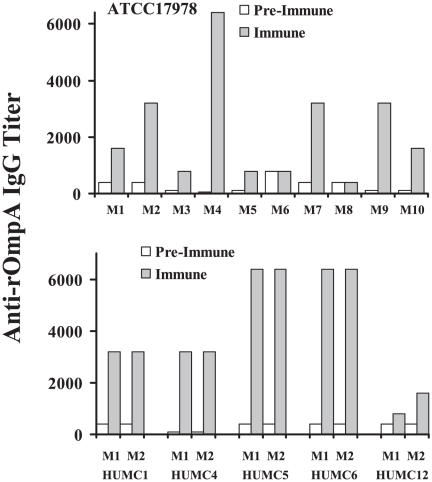
Figure 3. Anti-OmpA IgG antibodies were generated after infection with multiple strains of A. baumannii.
Ten mice were infected with ATCC 17978 (top) and 2 mice each were infected with HUMC clinical isolates (bottom). Paired pre-immune & immune serum IgG anti-rOmpA cell membrane protein titers are shown.
Figure 4
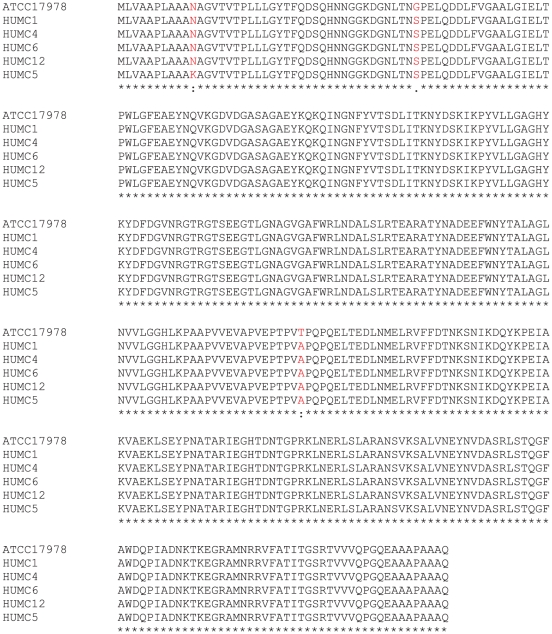
Figure 4. OmpA was highly conserved across clinical isolates of A. baumannii.
The OmpA gene was sequenced from each strain and the predicted amino acid sequences demonstrated >99% identity.
Figure 5
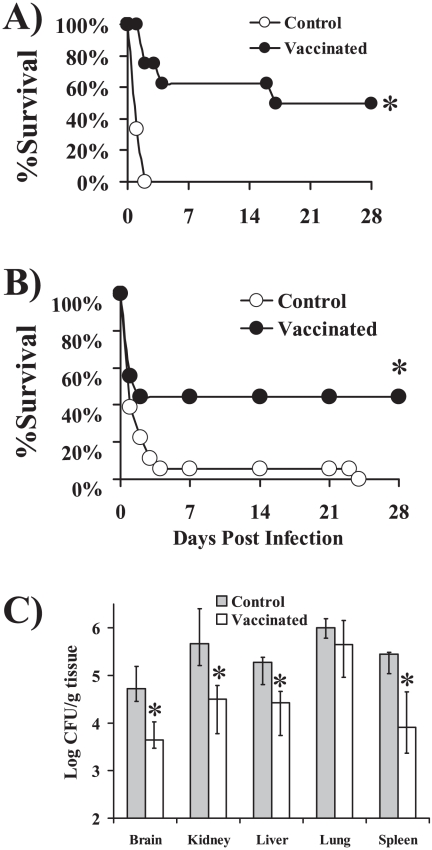
Figure 5. Vaccination with rOmpA protected mice from lethal A. baumannii infection in a disseminated sepsis model.
A) Survival of retired breeder (>6 mo) diabetic Balb/c mice vaccinated with 3 µg of rOmpA plus aluminum hydroxide (AlOH3) adjuvant, or with adjuvant alone (n = 6 adjuvant control and 8 vaccinated) and infected with 2×10⁷ A. baumannii HUMC1. B) Survival of juvenile (8–10 weeks, n = 18 mice per group) diabetic Balb/c mice vaccinated with 3 µg of rOmpA plus adjuvant or adjuvant alone and infected with 2×10⁷ A. baumannii HUMC1. C) Tissue bacterial burden in vaccinated (3 µg) or control diabetic mice (n = 10 control and 13 vaccinated) infected with 107 A. baumannii HUMC1. Median and interquartile ranges are shown. * p<0.05 vs. adjuvant control.
Figure 6
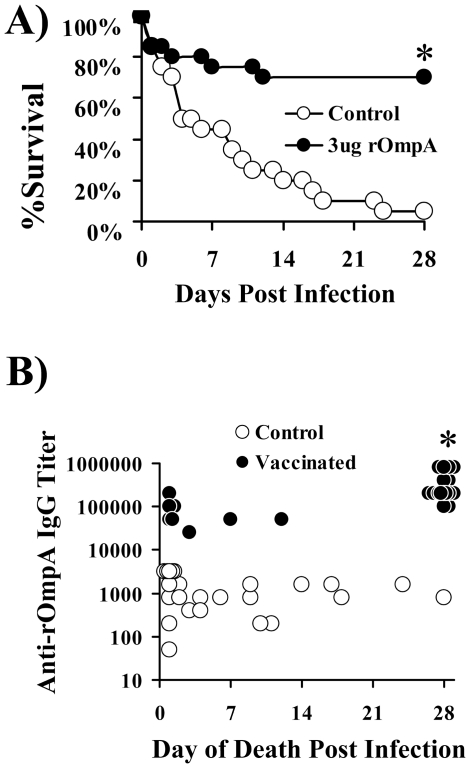
Figure 6. Anti-rOmpA antibody titers correlated with survival in infected mice.
A) Survival of juvenile diabetic Balb/c mice vaccinated with 3 µg of rOmpA plus adjuvant or adjuvant alone (n = 20 mice per group from 2 experiments) and infected with 1.4 or 1.6×10⁷ A. baumannii HUMC1 in the sequential experiments. The experiments were terminated at 28 days with all remaining mice appearing clinically well. B) Antibody titers of individual vaccinated (n = 26) and control (n = 28) mice vs. day of death.
Figure 7
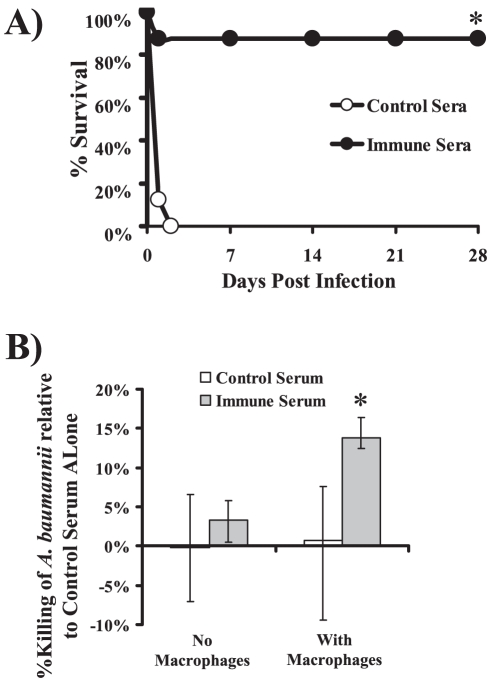
Figure 7. Passive immunization with immune serum from rOmpA-vaccinated mice protected recipient mice from lethal infection.
A) Survival of juvenile diabetic Balb/c mice (n = 10 per group) treated ip with immune (from OmpA vaccinated donor mice) or non-immune (from adjuvant treated donor mice) serum 2 hours before tail-vein infection with 2×10⁷ A. baumannii HUMC1. The experiments were terminated at 28 days with all remaining mice appearing clinically well. *p = <0.0001 vs. non-immune serum. B) Opsonophagocytic killing of A. baumannii HUMC1 by immune (from OmpA vaccinated mice) or control (from adjuvant treated mice) serum incubated without or with RAW 247.6 macrophages. Median and interquartile killing is shown, normalized to the control serum. Results are from 8 to 12 samples per group, from 3 separate experiments. *p<0.05 vs. all other groups.

References

    1. Walker B, Barrett S, Polasky S, Galaz V, Folke C, et al. Environment. Looming global-scale failures and missing institutions. Science. 2009;325:1345–1346. - PubMed
    1. Smolinski MS, Hamburg MA, Lederberg J, editors. Microbial Threats to Health: Emergence, Detection, and Response. Washington D.C.: The Institute of Medicine; 2003. 367 - PubMed
    1. Infectious Diseases Society of America. Bad Bugs, No Drugs. 2004. 35 A White Paper. Alexandria, VA.
    1. Choffnes ER, Relman DA, Mack A. for the Forum on Microbial Threats, Institute of Medicine of the National Academies. Antibiotic resistance: implications for global health and novel intervention strategies. Washington D.C.: The National Academies Press; 2010. - PubMed
    1. Spellberg B, Blaser M, Guidos R, Boucher HW, Bradley JS, et al. for the Infectious Diseases Society of America. Position Paper: Combating Antimicrobial Resistance. Clin Infect Dis. 2011;52(S5):S397–428. - PMC - PubMed

Publication types

MeSH terms