


Zoonotic viruses associated with illegally imported wildlife products
- PMID: 22253731
- PMCID: PMC3254615
- DOI: 10.1371/journal.pone.0029505
Zoonotic viruses associated with illegally imported wildlife products
Abstract
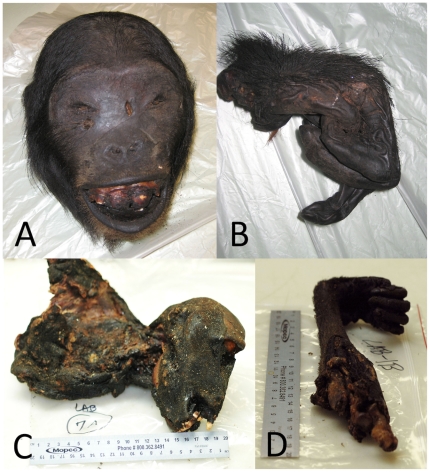
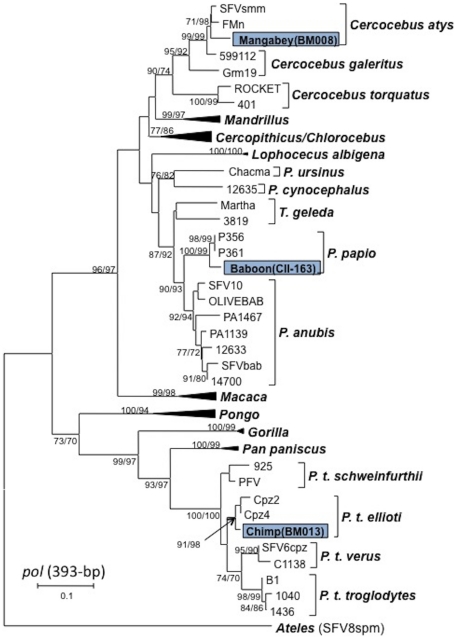
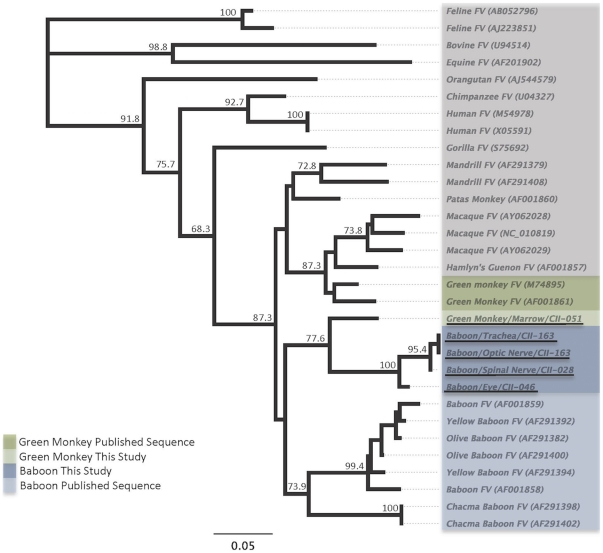
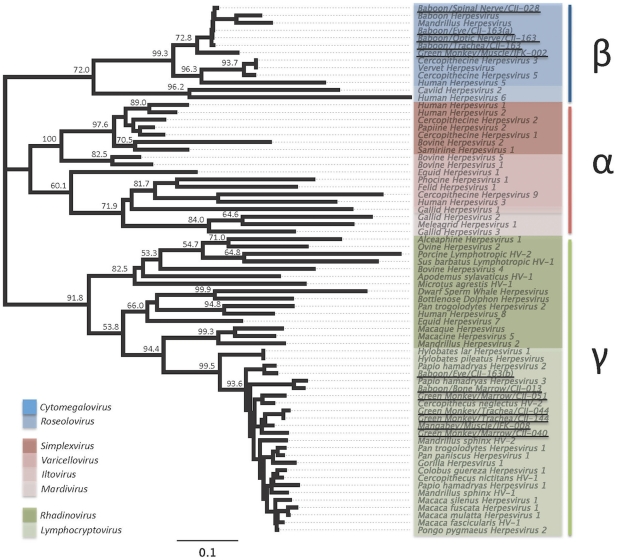
The global trade in wildlife has historically contributed to the emergence and spread of infectious diseases. The United States is the world's largest importer of wildlife and wildlife products, yet minimal pathogen surveillance has precluded assessment of the health risks posed by this practice. This report details the findings of a pilot project to establish surveillance methodology for zoonotic agents in confiscated wildlife products. Initial findings from samples collected at several international airports identified parts originating from nonhuman primate (NHP) and rodent species, including baboon, chimpanzee, mangabey, guenon, green monkey, cane rat and rat. Pathogen screening identified retroviruses (simian foamy virus) and/or herpesviruses (cytomegalovirus and lymphocryptovirus) in the NHP samples. These results are the first demonstration that illegal bushmeat importation into the United States could act as a conduit for pathogen spread, and suggest that implementation of disease surveillance of the wildlife trade will help facilitate prevention of disease emergence.
Conflict of interest statement
Figures
References
-
- Karesh WB, Cook RA, Bennett EL, Newcomb J. Wildlife trade and global disease emergence. Emerg Infect Dis. 2005 Available: http://www.cdc.gov/ncidod/eid/vol11no07/05-0194.htm Accessed 23 August 2011. - PMC - PubMed
-
- Woolhouse MEJ, Gowtage-Sequeria S. Host range and emerging and reemerging pathogens. Emerg Infect Dis. 2005 Available: http://www.cdc.gov/ncidod/EID/vol11no12/05-0997.htm Accessed 2011 August 23. - PMC - PubMed
-
- Xu RH, He JF, Evans MR, Peng GW, Field HE, et al. Epidemiologic clues to SARS origin in China. Emerg Infect Dis. 2004 Available: http://www.cdc.gov/ncidod/EID/vol10no6/03-0852.htm Accessed 2011 August 23. - PMC - PubMed
-
- United States Fish and Wildlife Service Office of Law Enforcement Intelligence Unit. US Wildlife Trade: An Overview for 1997–2003. Available: http://www.fws.gov/le/pdffiles/Wildlife%20Trade%20Overview%20Report.pdf. Accessed 2011 August 23.
Publication types
MeSH terms
Associated data
- Actions
- Actions
- Actions
- Actions
- Actions
- Actions
- Actions
- Actions
- Actions
- Actions
- Actions
- Actions
- Actions
- Actions
- Actions
- Actions
- Actions
- Actions
- Actions
- Actions
- Actions
- Actions
- Actions
- Actions
- Actions
Grants and funding
LinkOut - more resources
Full Text Sources
Medical
