


Ecological guild evolution and the discovery of the world's smallest vertebrate
- PMID: 22253785
- PMCID: PMC3256195
- DOI: 10.1371/journal.pone.0029797
Ecological guild evolution and the discovery of the world's smallest vertebrate
Abstract
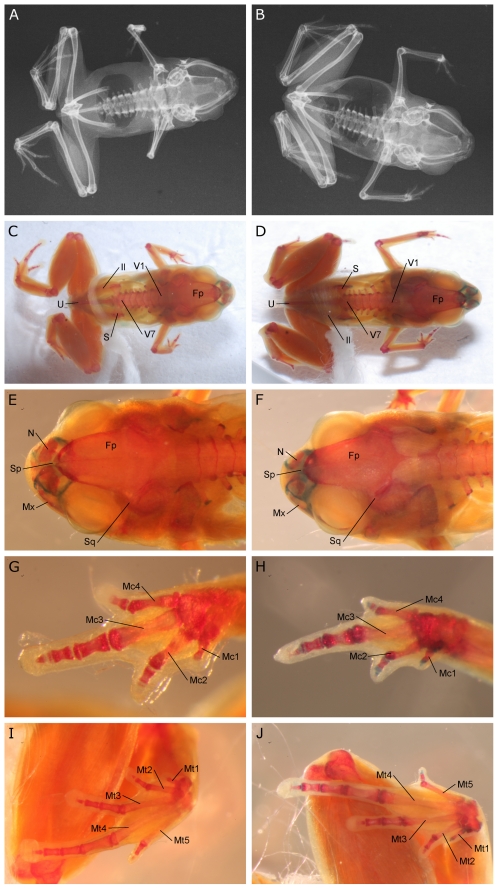
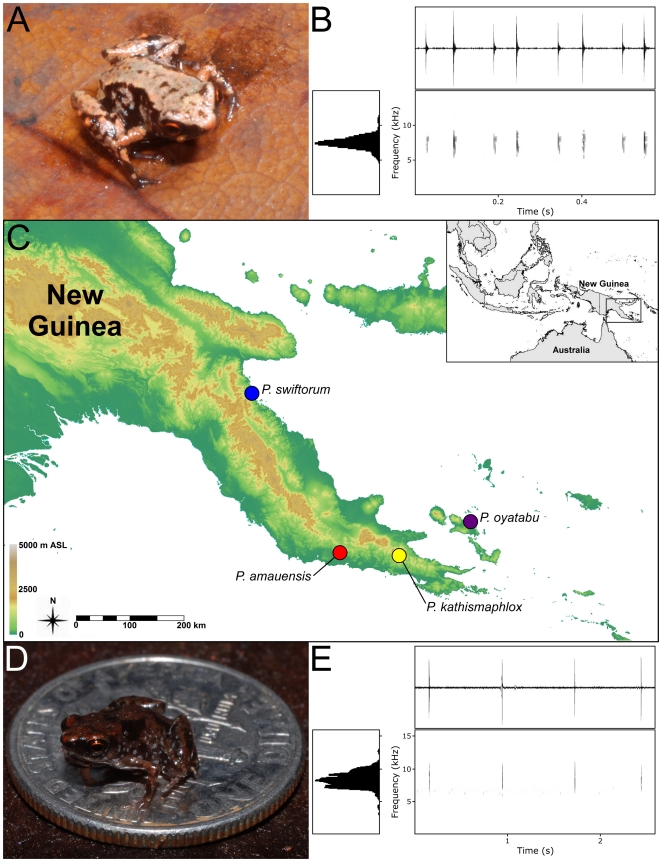
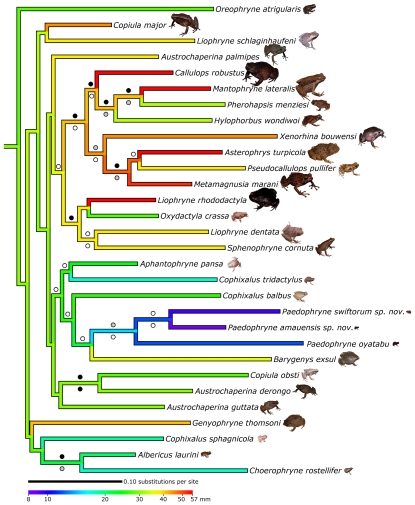
Living vertebrates vary drastically in body size, yet few taxa reach the extremely minute size of some frogs and teleost fish. Here we describe two new species of diminutive terrestrial frogs from the megadiverse hotspot island of New Guinea, one of which represents the smallest known vertebrate species, attaining an average body size of only 7.7 mm. Both new species are members of the recently described genus Paedophryne, the four species of which are all among the ten smallest known frog species, making Paedophryne the most diminutive genus of anurans. This discovery highlights intriguing ecological similarities among the numerous independent origins of diminutive anurans, suggesting that minute frogs are not mere oddities, but represent a previously unrecognized ecological guild.
Conflict of interest statement
Figures
References
-
- Branch TA, Abubaker EMN, Mkango S, Butterworth DS. Separating southern blue whale subspecies based on length frequencies of sexually mature females. Marine Mammal Science. 2007;23:803–833.
-
- Blanckenhorn WU. The evolution of body size: what keeps organisms small? The Quarterly Review of Biology. 2000;75:385–407. - PubMed
Publication types
MeSH terms
LinkOut - more resources
Full Text Sources
