


Gut microbiota and inflammation
- PMID: 22254115
- PMCID: PMC3257638
- DOI: 10.3390/nu3060637
Gut microbiota and inflammation
Abstract
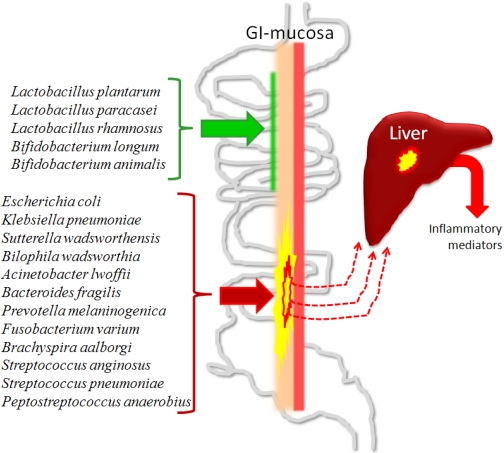
Systemic and local inflammation in relation to the resident microbiota of the human gastro-intestinal (GI) tract and administration of probiotics are the main themes of the present review. The dominating taxa of the human GI tract and their potential for aggravating or suppressing inflammation are described. The review focuses on human trials with probiotics and does not include in vitro studies and animal experimental models. The applications of probiotics considered are systemic immune-modulation, the metabolic syndrome, liver injury, inflammatory bowel disease, colorectal cancer and radiation-induced enteritis. When the major genomic differences between different types of probiotics are taken into account, it is to be expected that the human body can respond differently to the different species and strains of probiotics. This fact is often neglected in discussions of the outcome of clinical trials with probiotics.
Keywords: probiotics; gut microbiota; inflammation.
Figures
References
-
- Mölne J., Wold A. Inflammation. 1st. Liber AB; Stockholm, Sweden: 2007.
-
- Pepys M.B., Baltz M.L. Acute phase proteins with special reference to C-reactive and related proteins (pentaxins) and serum amyloid A protein. Adv. Immunol. 1983;34:141–212. - PubMed
-
- Ridker P.M. Clinical application of C-reactive protein for cardiovascular disease detection and prevention. Circulation. 2003;107:363–369. - PubMed
-
- Piéroni L., Bastard J.P., Piton A., Khalil L., Hainque B., Jardel C. Interpretation of circulating C-reactive protein levels in adults: Body mass index and gender are a must. Diabetes Metab. 2003;29:133–138. - PubMed
-
- Visser M., Bouter L.M., McQuillan G.M., Wener M.H., Harris T.B. Elevated C-reactive protein levels in overweight and obese adults. JAMA. 1999;282:2131–2135. - PubMed
Publication types
MeSH terms
LinkOut - more resources
Full Text Sources
Other Literature Sources
