


Heterogeneous rates of molecular evolution among cryptic species of the ciliate morphospecies Chilodonella uncinata
- PMID: 22258433
- PMCID: PMC3366273
- DOI: 10.1007/s00239-011-9468-x
Heterogeneous rates of molecular evolution among cryptic species of the ciliate morphospecies Chilodonella uncinata
Abstract
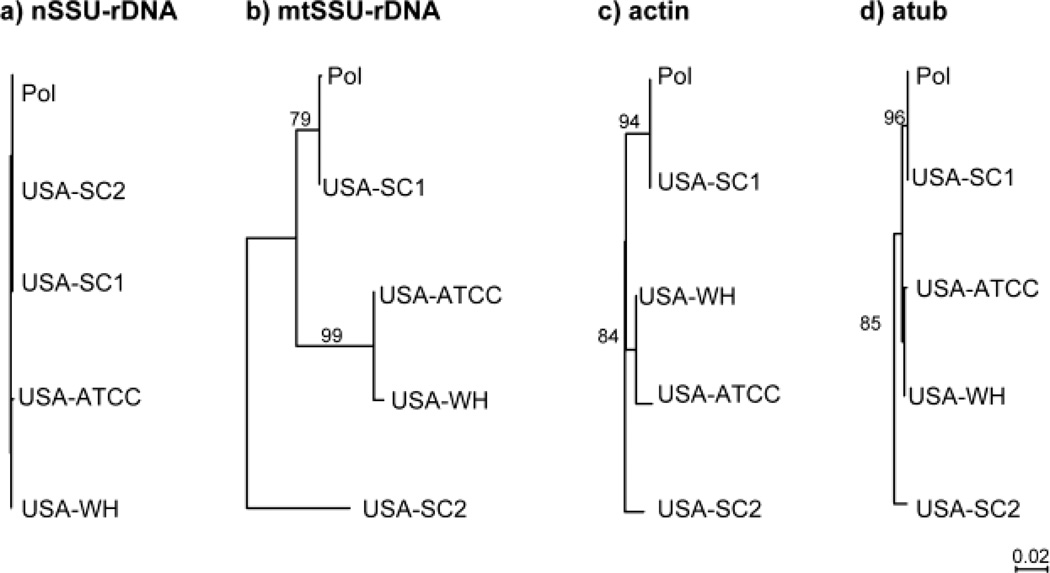
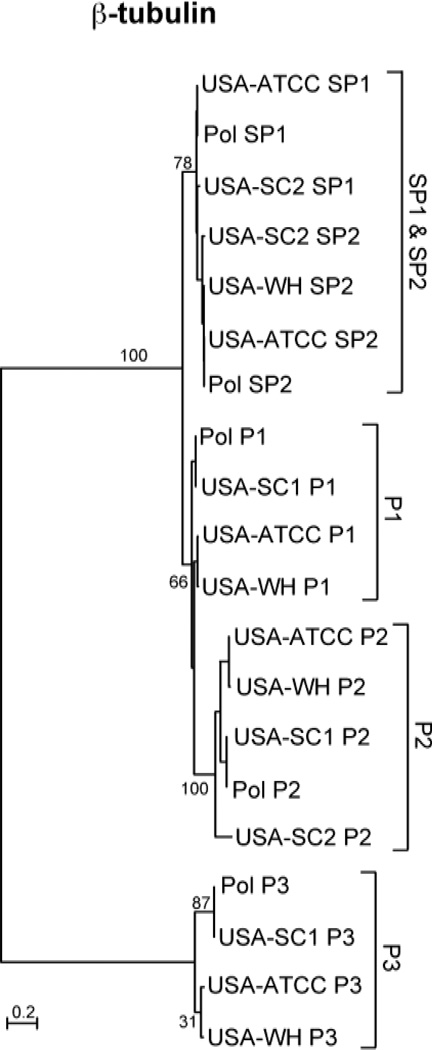
While molecular analyses have provided insight into the phylogeny of ciliates, the few studies assessing intraspecific variation have largely relied on just a single locus [e.g., nuclear small subunit rDNA (nSSU-rDNA) or mitochondrial cytochrome oxidase I]. In this study, we characterize the diversity of several nuclear protein-coding genes plus both nSSU-rDNA and mitochondrial small subunit rDNA (mtSSU-rDNA) of five isolates of the ciliate morphospecies Chilodonella uncinata. Although these isolates have nearly identical nSSU-rDNA sequences, they differ by up to 8.0% in mtSSU-rDNA. Comparative analyses of all loci, including β-tubulin paralogs, indicate a lack of recombination between strains, demonstrating that the morphospecies C. uncinata consists of multiple cryptic species. Further, there is considerable variation in substitution rates among loci as some protein-coding domains are nearly identical between isolates, while others differ by up to 13.2% at the amino acid level. Combining insights on macronuclear variation among isolates, the focus of this study, with published data from the micronucleus of two of these isolates, indicates that C. uncinata lineages are able to maintain both highly divergent and highly conserved genes within a rapidly evolving germline genome.
Figures
References
-
- Barth D, Krenek S, Fokin SI, Berendonk TU. Intraspecific genetic variation in Paramecium revealed by mitochondrial cytochrome c oxidase I sequences. Journal of Eukaryotic Microbiology. 2006;53:20–25. - PubMed
-
- Barth D, Tischer K, Berger H, Schlegel M, Berendonk TU. High mitochondrial haplotype diversity of Coleps sp. (Ciliophora: Prostomatida) Environ. Microbiol. 2008;10:626–634. - PubMed
-
- Chantangsi C, Lynn DH, Brandl MT, Cole JC, Hetrick N, Ikonomi P. Barcoding ciliates: a comprehensive study of 75 isolates of the genus Tetrahymena. Int. J. Syst. Evol. Microbiol. 2007;57:2412–2425. - PubMed
Publication types
MeSH terms
Substances
Grants and funding
LinkOut - more resources
Full Text Sources
