


DNA breaks and chromosome pulverization from errors in mitosis
- PMID: 22258507
- PMCID: PMC3271137
- DOI: 10.1038/nature10802
DNA breaks and chromosome pulverization from errors in mitosis
Abstract
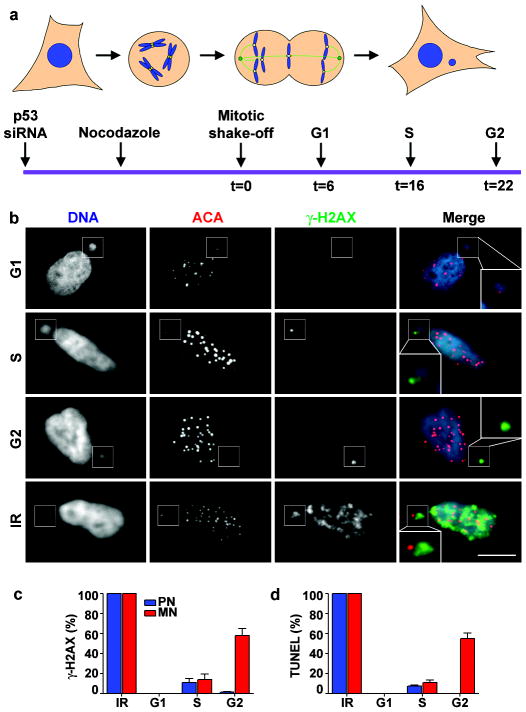
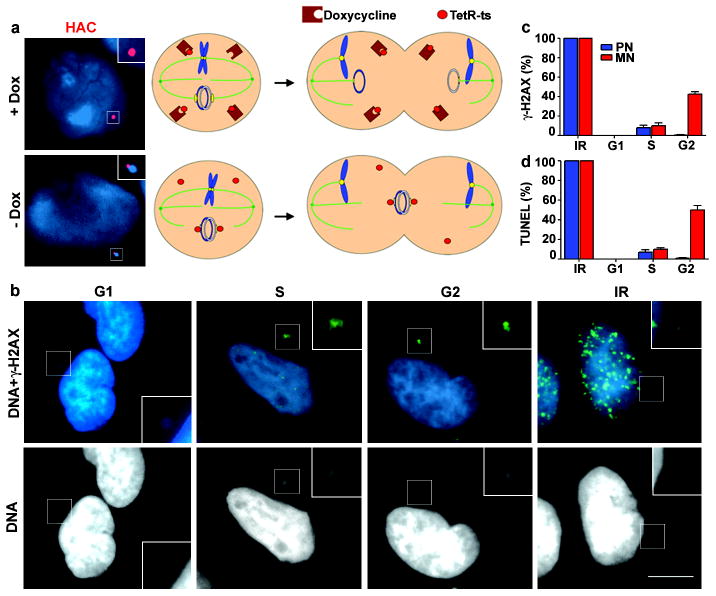
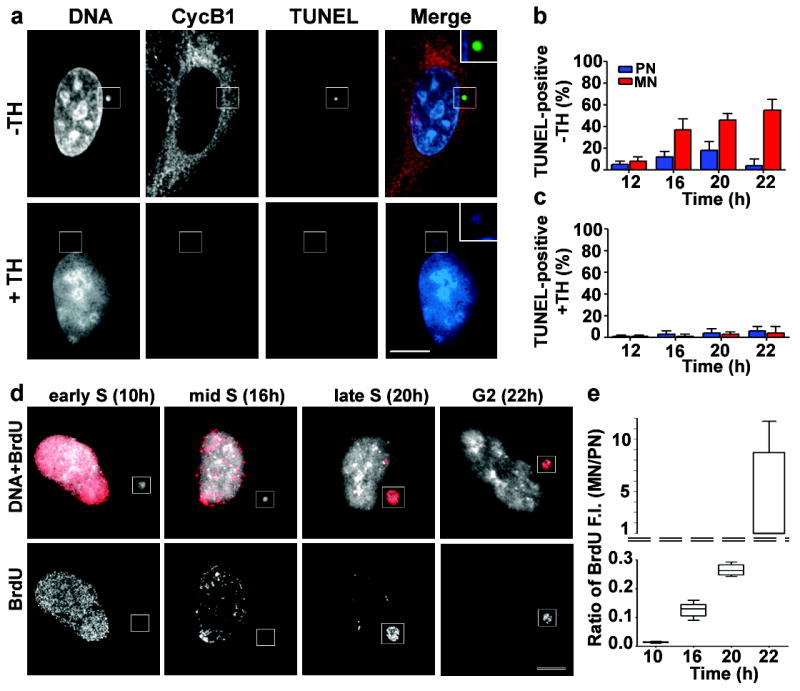
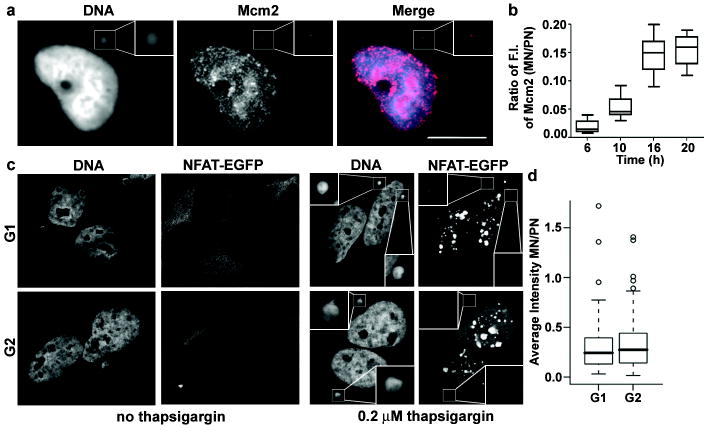
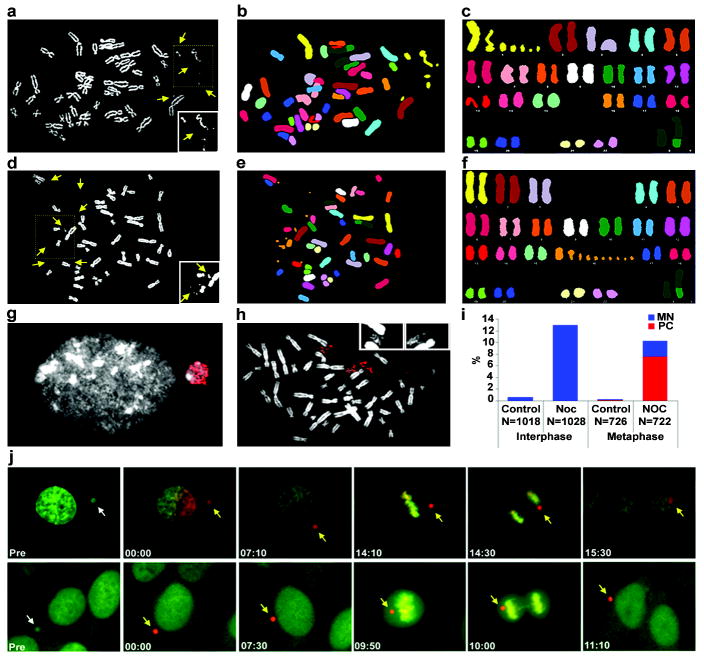
The involvement of whole-chromosome aneuploidy in tumorigenesis is the subject of debate, in large part because of the lack of insight into underlying mechanisms. Here we identify a mechanism by which errors in mitotic chromosome segregation generate DNA breaks via the formation of structures called micronuclei. Whole-chromosome-containing micronuclei form when mitotic errors produce lagging chromosomes. We tracked the fate of newly generated micronuclei and found that they undergo defective and asynchronous DNA replication, resulting in DNA damage and often extensive fragmentation of the chromosome in the micronucleus. Micronuclei can persist in cells over several generations but the chromosome in the micronucleus can also be distributed to daughter nuclei. Thus, chromosome segregation errors potentially lead to mutations and chromosome rearrangements that can integrate into the genome. Pulverization of chromosomes in micronuclei may also be one explanation for 'chromothripsis' in cancer and developmental disorders, where isolated chromosomes or chromosome arms undergo massive local DNA breakage and rearrangement.
Conflict of interest statement
The authors declare no competing financial interests.
Figures
Comment in
-
Shattered details.Nat Rev Cancer. 2012 Feb 2;12(3):152. doi: 10.1038/nrc3228. Nat Rev Cancer. 2012. PMID: 22298192 No abstract available.
-
Genomic instability: Shattered details.Nat Rev Genet. 2012 Feb 2;13(3):150. doi: 10.1038/nrg3177. Nat Rev Genet. 2012. PMID: 22298233 No abstract available.
References
Publication types
MeSH terms
Grants and funding
LinkOut - more resources
Full Text Sources
Other Literature Sources
Molecular Biology Databases
