


Interventions for replacing missing teeth: treatment of peri-implantitis
- PMID: 22258958
- PMCID: PMC6786958
- DOI: 10.1002/14651858.CD004970.pub5
Interventions for replacing missing teeth: treatment of peri-implantitis
Abstract
Background: One of the key factors for the long-term success of oral implants is the maintenance of healthy tissues around them. Bacterial plaque accumulation induces inflammatory changes in the soft tissues surrounding oral implants and it may lead to their progressive destruction (peri-implantitis) and ultimately to implant failure. Different treatment strategies for peri-implantitis have been suggested, however it is unclear which are the most effective.
Objectives: To identify the most effective interventions for treating peri-implantitis around osseointegrated dental implants.
Search methods: We searched the Cochrane Oral Health Group's Trials Register, CENTRAL, MEDLINE and EMBASE. Handsearching included several dental journals. We checked the bibliographies of the identified randomised controlled trials (RCTs) and relevant review articles for studies outside the handsearched journals. We wrote to authors of all identified RCTs, to more than 55 dental implant manufacturers and an Internet discussion group to find unpublished or ongoing RCTs. No language restrictions were applied. The last electronic search was conducted on 9 June 2011.
Selection criteria: All RCTs comparing agents or interventions for treating peri-implantitis around dental implants.
Data collection and analysis: Screening of eligible studies, assessment of the methodological quality of the trials and data extraction were conducted in duplicate and independently by two review authors. We contacted the authors for missing information. Results were expressed as random-effects models using mean differences for continuous outcomes and risk ratios for dichotomous outcomes with 95% confidence intervals (CI). Heterogeneity was to be investigated including both clinical and methodological factors.
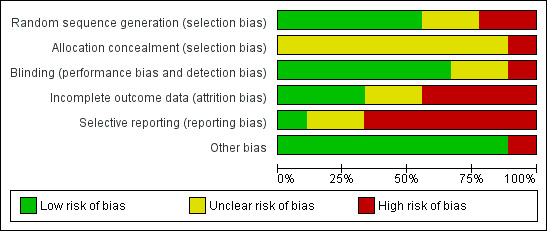
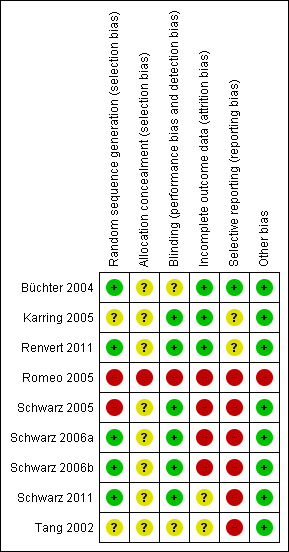
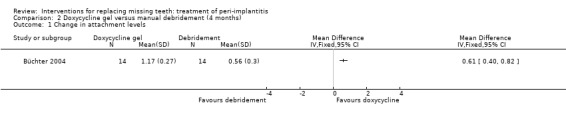
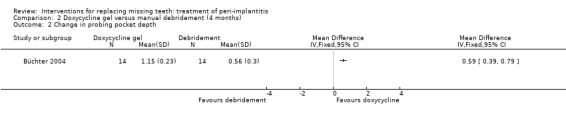
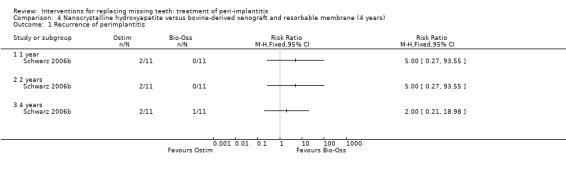
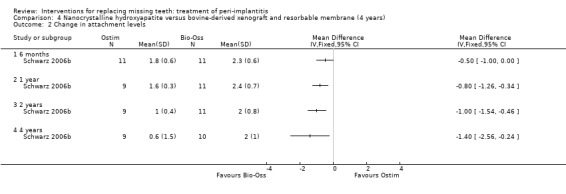
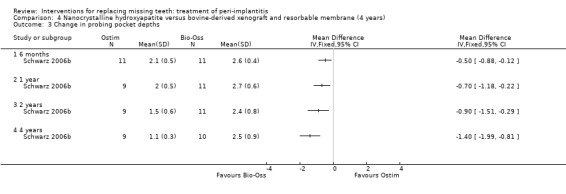
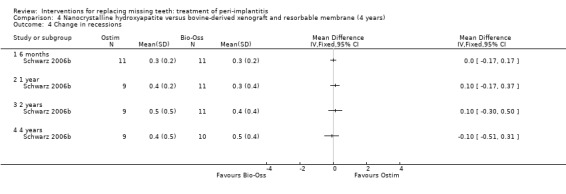
Main results: Fifteen eligible trials were identified, but six were excluded. The following interventions were compared in the nine included studies: different non-surgical interventions (five trials); adjunctive treatments to non-surgical interventions (one trial); different surgical interventions (two trials); adjunctive treatments to surgical interventions (one trial). Follow-up ranged from 3 months to 4 years. No study was judged to be at low risk of bias.Statistically significant differences were observed in two small single trials judged to be at unclear or high risk of bias. After 4 months, adjunctive local antibiotics to manual debridement in patients who lost at least 50% of the bone around implants showed improved mean probing attachment levels (PAL) of 0.61 mm (95% confidence interval (CI) 0.40 to 0.82) and reduced probing pockets depths (PPD) of 0.59 mm (95% CI 0.39 to 0.79). After 4 years, patients with peri-implant infrabony defects > 3 mm treated with Bio-Oss and resorbable barriers gained 1.4 mm more PAL (95% CI 0.24 to 2.56) and 1.4 mm PPD (95% CI 0.81 to 1.99) than patients treated with a nanocrystalline hydroxyapatite.
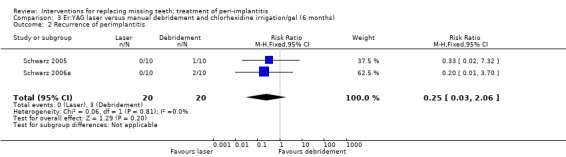
Authors' conclusions: There is no reliable evidence suggesting which could be the most effective interventions for treating peri-implantitis. This is not to say that currently used interventions are not effective.A single small trial at unclear risk of bias showed the use of local antibiotics in addition to manual subgingival debridement was associated with a 0.6 mm additional improvement for PAL and PPD over a 4-month period in patients affected by severe forms of peri-implantitis. Another small single trial at high risk of bias showed that after 4 years, improved PAL and PPD of about 1.4 mm were obtained when using Bio-Oss with resorbable barriers compared to a nanocrystalline hydroxyapatite in peri-implant infrabony defects. There is no evidence from four trials that the more complex and expensive therapies were more beneficial than the control therapies which basically consisted of simple subgingival mechanical debridement. Follow-up longer than 1 year suggested recurrence of peri-implantitis in up to 100% of the treated cases for some of the tested interventions. As this can be a chronic disease, re-treatment may be necessary. Larger well-designed RCTs with follow-up longer than 1 year are needed.
Conflict of interest statement
From April 2011 Marco Esposito became a full‐time free‐lance consultant in dentistry specialising in implantology. Therefore he receives funding for conducting clinical trials and presenting the results of trials/Cochrane reviews at international dental meetings. This funding comes from universities, companies (in alphabetical order: Apollonia e Fama Implant, Biomax, Biomet 3i, Bioteck, Bone System, Branemark Integration, CMS Dental, Dentsply‐Friadent, Geistlich Pharma, Geass, Keystone Dental, MegaGen Implant, Mozo‐Grau, Nano Bridging molecules, Nobel Biocare, Ricerfarma, Saint Jude Medical, Southern Implants, Supercharched production, Techoss Dental Thommen Medical, Tutogen Medical, Zimmer Dental, Z‐Systems), scientific societies, publishing companies, and private dentists. This list of companies was provided by Marco on Friday 4th November 2011 and the funders will change all the time.
This is to certify that: a) Marco does not own stock in companies that produce products included in the reviews; b) he does not have patents on any of the products included in the reviews; c) his salary will not be affected by company sales of any of the products included in the reviews.
Marco’s authorship has been authorised by The Cochrane Collaboration Funding Arbiter (reference 071111/057: Oral Health Group).
Figures


Update of
-
Interventions for replacing missing teeth: treatment of perimplantitis.Cochrane Database Syst Rev. 2010 Jun 16;(6):CD004970. doi: 10.1002/14651858.CD004970.pub4. Cochrane Database Syst Rev. 2010. Update in: Cochrane Database Syst Rev. 2012 Jan 18;1:CD004970. doi: 10.1002/14651858.CD004970.pub5. PMID: 20556759 Updated.
Comment in
-
No reliable evidence suggesting what is the most effective interventions for treating peri-implantitis.Evid Based Dent. 2012 Jun;13(2):50-1. doi: 10.1038/sj.ebd.6400861. Evid Based Dent. 2012. PMID: 22722416
References
References to studies included in this review
Büchter 2004 {published and unpublished data}
-
- Büchter A, Meyer U, Kruse‐Lösler B, Joos U, Kleinheinz J. Sustained release of doxycycline for the treatment of peri‐implantitis: randomised controlled trial. British Journal of Oral and Maxillofacial Surgery 2004;42(5):439‐44. - PubMed
Karring 2005 {published and unpublished data}
-
- Karring ES, Stavropoulos A, Ellegaard B, Karring T. Treatment of peri‐implantitis by the vector system. Clinical Oral Implants Research 2005;16(3):288‐93. - PubMed
Renvert 2011 {published data only}
-
- Renvert S, Lindahl C, Roos Jansaker AM, Persson GR. Treatment of peri‐implantitis using an Er:YAG laser or an air‐abrasive device: a randomized clinical trial. Journal of Clinical Periodontology 2011;38(1):65‐73. - PubMed
-
- Rutger Persson G, Roos Jansaker AM, Lindahl C, Renvert S. Microbiologic Results After Non‐Surgical Erbium‐Doped:Yttrium, Aluminum, and Garnet Laser or Air‐Abrasive Treatment of Peri‐Implantitis: A Randomized Clinical Trial. Journal of Periodontology 2011;82(9):1267‐78. - PubMed
Romeo 2005 {published data only}
-
- Romeo E, Ghisolfi M, Murgolo N, Chiapasco M, Lops D, Vogel G. Therapy of peri‐implantitis with resective surgery. A 3‐year clinical trial on rough screw‐shaped oral implants. Part I: clinical outcome. Clinical Oral Implants Research 2005;16(1):9‐18. - PubMed
-
- Romeo E, Lops D, Chiapasco M, Ghisolfi M, Vogel G. Therapy of peri‐implantitis with resective surgery. A 3‐year clinical trial on rough screw‐shaped oral implants. Part II: radiographic outcome. Clinical Oral Implants Research 2007;18(2):179‐87. - PubMed
Schwarz 2005 {published data only}
-
- Schwarz F, Sculean A, Rothamel D, Schwenzer K, Georg T, Becker J. Clinical evaluation of an Er:YAG laser for nonsurgical treatment of peri‐implantitis: a pilot study. Clinical Oral Implants Research 2005;16(1):44‐52. - PubMed
Schwarz 2006a {published and unpublished data}
-
- Schwarz F, Bieling K, Bonsmann M, Latz T, Becker J. Nonsurgical treatment of moderate and advanced periimplantitis lesions: a controlled clinical study. Clinical Oral Investigations 2006;10(4):279‐88. - PubMed
Schwarz 2006b {published and unpublished data}
-
- Schwarz F, Bieling K, Latz T, Nuersy E, Becker J. Healing of intrabony peri‐implantitis defects following application of a nanocrystalline hydroxyapatite (Ostim) or a bovine‐derived xenograft (Bio‐Oss) in combination with a collagen membrane (Bio‐Gide). A case series. Journal of Clinical Periodontology 2006;33(7):491‐9. - PubMed
-
- Schwarz F, Sahm N, Bieling K, Becker J. Surgical regenerative treatment of peri‐implantitis lesions using a nanocrystalline hydroxyapatite or a natural bone mineral in combination with a collagen membrane: a four‐year clinical follow‐up report. Journal of Clinical Periodontology 2009;36(9):807‐14. - PubMed
-
- Schwarz F, Sculean A, Bieling K, Ferrari D, Rothamel D, Becker J. Two‐year clinical results following treatment of peri‐implantitis lesions using a nanocrystalline hydroxyapatite or a natural bone mineral in combination with a collagen membrane. Journal of Clinical Periodontology 2008;35(1):80‐7. - PubMed
Schwarz 2011 {published data only}
-
- Schwarz F, Sahm N, Iglhaut G, Becker J. Impact of the method of surface debridement and decontamination on the clinical outcome following combined surgical therapy of peri‐implantitis: a randomized controlled clinical study. Journal of Clinical Periodontology 2011;38(3):276‐84. - PubMed
Tang 2002 {published data only}
-
- Tang Z, Cao C, Sha Y, Lin Y, Wang X. Effects of non‐surgical treatment modalities on peri‐implantitis. Chinese Journal of Stomatology 2002;37(3):173‐5. - PubMed
References to studies excluded from this review
Bach 2000 {published data only}
-
- Bach G, Neckel C, Mall C, Krekeler G. Conventional versus laser‐assisted therapy of periimplantitis: a five‐year comparative study. Implant Dentistry 2000;9(3):247‐51. - PubMed
Renvert 2004 {published data only}
-
- Renvert S, Lessem J, Dahlén G, Lindahl C, Svensson M. Topical minocycline microspheres versus topical chlorhexidine gel as an adjunct to mechanical debridement of incipient peri‐implant infections: a randomized clinical trial. Journal of Clinical Periodontology 2006;33(5):362‐9. - PubMed
-
- Renvert S, Lessem J, Lindahl C, Svensson M. Treatment of incipient peri‐implant infections using topical minocycline microspheres versus topical chlorhexidine gel as an adjunct to mechanical debridement. Journal of the International Academy of Periodontology 2004;6(Suppl 4):154‐9. - PubMed
Renvert 2008 {published data only}
-
- Renvert S, Lessem J, Dahlen G, Renvert H, Lindahl C. Mechanical and repeated antimicrobial therapy using a local drug delivery system in the treatment of peri‐implantitis: a randomized clinical trial. Journal of Periodontology 2008;79(5):836‐44. - PubMed
Renvert 2009 {published data only}
-
- Persson GR, Samuelsson E, Lindahl C, Renvert S. Mechanical non‐surgical treatment of peri‐implantitis: a single‐blinded randomized longitudinal clinical study. II. Microbiological results. Journal of Clinical Periodontology 2010;37(6):563‐73. - PubMed
-
- Renvert S, Samuelsson E, Lindahl C, Persson GR. Mechanical non‐surgical treatment of peri‐implantitis: a double‐blind randomized longitudinal clinical study. I: clinical results. Journal of Clinical Periodontololgy 2009;36(7):604‐9. - PubMed
Sahm 2011 {published data only}
-
- Sahm N, Becker J, Santel T, Schwarz F. Non‐surgical treatment of peri‐implantitis using an air‐abrasive device or mechanical debridement and local application of chlorhexidine: a prospective, randomized, controlled clinical study. Journal of Clinical Periodontology 2011;38(9):872‐8. - PubMed
Tarpey 1996 {published data only}
-
- Tarpey MV, Lynch E, Beighton D. Effect of Dentomycin on clinical and microbiological parameters of peri‐implantitis (Abs No 1311). Journal of Dental Research 1996;75(Special Issue):181.
Additional references
Brånemark 1977
-
- Brånemark PI, Hansson BO, Adell R, Breine U, Lindstrom J, Hallen O, et al. Osseointegrated Implants in the Treatment of the Edentulous Jaw. Experience from a 10‐year Period. Stockholm: Almqvist & Wiksell Int, 1977. - PubMed
Egger 1997
Elbourne 2002
-
- Elbourne DR, Altman DG, Higgins JPT, Curtin F, Worthington HV, Vail A. Meta‐analyses involving cross‐over trials: methodological issues. International Journal of Epidemiology 2002;31(1):140‐9. - PubMed
Esposito 1999
-
- Esposito M, Hirsch J‐M, Lekholm U, Thomsen P. Differential diagnosis and treatment strategies for biologic complications and failing oral implants: a review of the literature. International Journal of Oral and Maxillofacial Implants 1999;14(4):473‐90. - PubMed
Esposito 2007
Follmann 1992
-
- Follmann D, Elliott P, Suh I, Cutler J. Variance imputation for overviews of clinical trials with continuous response. Journal of Clinical Epidemiology 1992;45(7):769‐73. - PubMed
Grusovin 2010
Haas 2000
-
- Haas R, Baron M, Dörtbudak O, Watzek G. Lethal photosensitization, autogenous bone, and e‐PTFE membrane for the treatment of peri‐implantitis: preliminary results. The International Journal of Oral and Maxillofacial Implants 2000;15(3):374‐82. - PubMed
Higgins 2011
-
- Higgins JPT, Green S (editors). Cochrane Handbook for Systematic Reviews of Interventions Version 5.1.0 [updated March 2011]. The Cochrane Collaboration, 2011. Available from www.cochrane‐handbook.org.
Isidor 1996
-
- Isidor F. Loss of osseointegration caused by occlusal load of oral implants. A clinical and radiographic study in monkeys. Clinical Oral Implants Research 1996;7(2):143‐52. - PubMed
Leonhardt 2003
-
- Leonhardt A, Dahlen G, Renvert S. Five‐year clinical, microbiological, and radiological outcome following treatment of peri‐implantitis in man. Journal of Periodontology 2003;74(10):1415‐22. - PubMed
Mombelli 1992
-
- Mombelli A, Lang NP. Antimicrobial treatment of peri‐implant infections. Clinical Oral Implants Research 1992;3(4):162‐8. - PubMed
Mombelli 1999
-
- Mombelli A. Prevention and therapy of peri‐implant infections. Proceedings of the 3rd European Workshop on Periodontology. Implant Dentistry. Berlin, Germany: Quintessence Publishing Co., Inc, 1999:281‐303.
Mombelli 2001
-
- Mombelli A, Feloutzis A, Bragger U, Lang NP. Treatment of peri‐implantitis by local delivery of tetracycline. Clinical, microbiological and radiological results. Clinical Oral Implants Research 2001;12(4):287‐94. - PubMed
Pontoriero 1994
-
- Pontoriero R, Tonelli MP, Carnevale G, Mombelli A, Nyman SR, Lang NP. Experimentally induced peri‐implant mucositis. A clinical study in humans. Clinical Oral Implants Research 1994;5(4):254‐9. - PubMed
Roos‐Jansåker 2003
-
- Roos‐Jansåker AM, Renvert S, Egelberg J. Treatment of peri‐implant infections: a literature review. Journal of Clinical Periodontology 2003;30(6):467‐85. - PubMed
Roos‐Jansåker 2006
-
- Roos‐Jansåker AM, Lindahl C, Renvert H, Renvert S. Nine‐ to fourteen‐year follow‐up of implant treatment. Part II: presence of peri‐implant lesions. Journal of Clinical Periodontology 2006;33(4):290‐5. - PubMed
Roos‐Jansåker 2007a
-
- Roos‐Jansåker AM, Renvert H, Lindahl C, Renvert S. Surgical treatment of peri‐implantitis using a bone substitute with or without a resorbable membrane: a prospective cohort study. Journal of Clinical Periodontology 2007;34(7):625‐32. - PubMed
Roos‐Jansåker 2007b
-
- Roos‐Jansåker AM, Renvert H, Lindahl C, Renvert S. Submerged healing following surgical treatment of peri‐implantitis: a case series. Journal Clinical Periodontology 2007;34(8):723‐37. - PubMed
Sahrmann 2011
-
- Sahrmann P, Attin T, Schmidlin PR. Regenerative treatment of peri‐implantitis using bone substitutes and membrane: A systematic review. Clinical Implant Dentistry and Related Research 2011; Vol. 13, issue 1:46‐57. - PubMed
Schou 2004
-
- Schou S, Berglundh T, Lang NP. Surgical treatment of peri‐implantitis. International Journal of Oral and Maxillofacial Implants 2004;19(7):140‐9. - PubMed
References to other published versions of this review
Esposito 2002
Esposito 2003
-
- Esposito M, Worthington HV, Coulthard P, Thomsen P. Maintaining and re‐establishing health around osseointegrated oral implants: a Cochrane systematic review comparing the efficacy of various treatments. Periodontology 2000 2003;33:204‐12. - PubMed
Esposito 2004
Esposito 2006
Esposito 2008a
Esposito 2008b
-
- Esposito M, Grusovin MG, Coulthard P, Worthington HV. The efficacy of interventions to treat perimplantitis. A Cochrane systematic review of randomized controlled clinical trials. European Journal of Oral Implantology 2008;1:111‐25. - PubMed
Publication types
MeSH terms
Substances
LinkOut - more resources
Full Text Sources
Research Materials
