


Interventions designed to prevent healthcare bed-related injuries in patients
- PMID: 22258994
- PMCID: PMC11569887
- DOI: 10.1002/14651858.CD008931.pub3
Interventions designed to prevent healthcare bed-related injuries in patients
Abstract
Background: Every patient in residential healthcare has a bed. Falling out of bed is associated with preventable patient harm. Various interventions to prevent injury are available. Bed rails are the most common intervention designed to prevent patients falling out of bed; however, their effectiveness is uncertain and bed rail entrapment can also result in injuries.
Objectives: To assess the effectiveness of interventions designed to prevent patient injuries and falls from their beds.
Search methods: We searched the Cochrane Injuries Group Specialised Register, Cochrane Central Register of Controlled Trials 2010, Issue 2 (The Cochrane Library), MEDLINE (Ovid), EMBASE (Ovid), CINAHL (EBSCO), ISOI Web of Science and Web-based trials registers (all to December 2010) as well as reference lists.
Selection criteria: Randomised controlled trials of interventions designed to prevent patient injuries from their beds which were conducted in hospitals, nursing care facilities or rehabilitation units were eligible for inclusion.
Data collection and analysis: Two review authors independently assessed the risk of bias and extracted data from the included studies. Authors contacted investigators to obtain missing information.
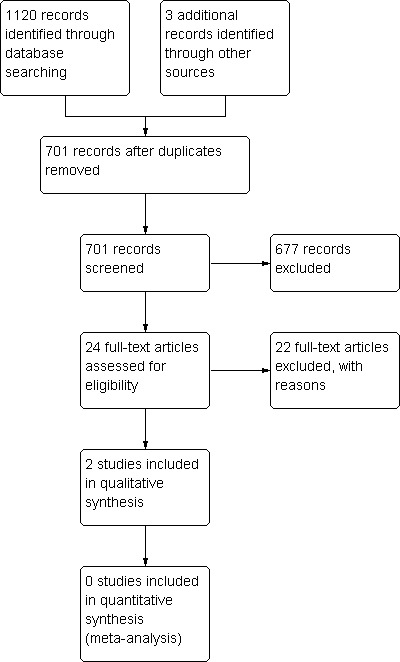
Main results: Two studies met the inclusion criteria, involving a total of 22,106 participants. One study tested low height beds and the other tested bed exit alarms. Both studies used standard care for their control group and both studies were conducted in hospitals. No study investigating bed rails met the inclusion criteria. Due to the clinical heterogeneity of the interventions in the included studies pooling of data and meta-analysis was inappropriate, and so the results of the studies are described.A single cluster randomised trial of low height beds in 18 hospital wards, including 22,036 participants, found no significant reduction in the frequency of patient injuries due to their beds (there were no injuries in either group), patient falls in the bedroom (rate ratio 0.69, 95% CI 0.35 to 1.34), all falls (rate ratio 1.26, 95% CI 0.83 to 1.90) or patient injuries due to all falls (rate ratio 1.35, 95% CI 0.68 to 2.68).One randomised controlled trial of bed exit alarms in one hospital geriatric ward, involving 70 participants, found no significant reduction in the frequency of patient injuries due to their beds (there were no injuries in either group), patient falls out of bed (rate ratio 0.25, 95% CI 0.03 to 2.24), all falls (rate ratio 0.42, 95% CI 0.15 to 1.18) or patient injuries due to all falls (no injuries in either group).
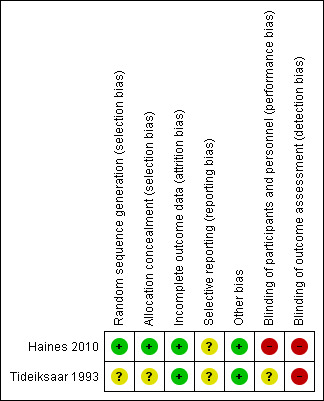
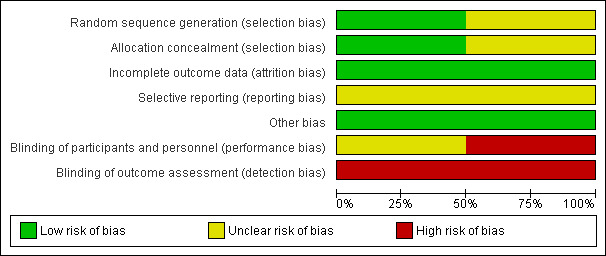
Authors' conclusions: The effectiveness of interventions designed to prevent patient injuries from their beds (including bed rails, low height beds and bed exit alarms) remains uncertain. The available evidence shows no significant increase or decrease in the rate of injuries with the use of low height beds and bed exit alarms. Limitations of the two included studies include lack of blinding and insufficient power. No randomised controlled trials of bed rails were identified. Future reports should fully describe the standard care received by the control group.
Conflict of interest statement
None known.
Figures
Update of
-
Interventions designed to prevent healthcare bed-related injuries in patients.Cochrane Database Syst Rev. 2011 Nov 9;(11):CD008931. doi: 10.1002/14651858.CD008931.pub2. Cochrane Database Syst Rev. 2011. Update in: Cochrane Database Syst Rev. 2012 Jan 18;1:CD008931. doi: 10.1002/14651858.CD008931.pub3. PMID: 22071860 Updated.
Comment in
-
Interventionen zur Prävention von Verletzungen im Zusammenhang mit dem eigenen Bett.Pflege Z. 2016 Mar;69(3):176-7. Pflege Z. 2016. PMID: 27180491 German. No abstract available.
References
References to studies included in this review
Haines 2010 {published and unpublished data}
-
- Haines TP, Bell RAR, Varghese PN. Pragmatic, Cluster Randomized Trial of a Policy to Introduce Low‐Low Beds to Hospital Wards for the Prevention of Falls and Fall Injuries. Journal of the American Geriatrics Society 2010;58(3):435‐41. [PUBMED: 20398112] - PubMed
Tideiksaar 1993 {published data only (unpublished sought but not used)}
-
- Tideiksaar R, Feiner CF, Maby J. Falls prevention: the efficacy of a bed alarm system in an acute care setting. The Mount Sinai journal of medicine, New York 1993;60(6):522‐7. [PUBMED: 8121429] - PubMed
References to studies excluded from this review
Bowling 1992 {published data only (unpublished sought but not used)}
-
- Bowling A, Formby J, Grant K. Accidents in elderly care: a randomised controlled trial (part 3). Nursing Standard 1992;6(31):25‐7. - PubMed
Broe 2007 {published data only (unpublished sought but not used)}
-
- Broe KE, Chen TC, Weinberg J, Bischoff‐Ferrari HA, Holick MF, Kiel DP. A higher dose of vitamin d reduces the risk of falls in nursing home residents: a randomized, multiple‐dose study. Journal of the American Geriatrics Society 2007;55(2):234‐9. - PubMed
Burleigh 2007 {published data only (unpublished sought but not used)}
-
- Burleigh E, McColl J, Potter J. Does vitamin D stop inpatients falling? A randomised controlled trial. Age & Ageing 2007;36(5):507‐13. - PubMed
Capezuti 2002 {published data only (unpublished sought but not used)}
-
- Capezuit E, Maislin G, Strumpf N, Evans LK. Side rail use and bed‐related fall outcomes among nursing home residents. Journal of the American Geriatrics Society 2002;50(1):90‐6. - PubMed
Cumming 2008 {published data only (unpublished sought but not used)}
-
- Cumming RG, Sherrington C, Lord SR, Simpson JM, Vogler C, Cameron ID, et al. Prevention of Older People's Injury Falls Prevention in Hospitals Research Group. Cluster randomised trial of a targeted multifactorial intervention to prevent falls among older people in hospital. British Medical Journal 758‐60;336(7647):758‐60. - PMC - PubMed
Dykes 2010 {published data only (unpublished sought but not used)}
Fonda 2006 {published data only (unpublished sought but not used)}
-
- Fonda D, Cook J, Sandler V, Bailey M. Sustained reduction in serious fall‐related injuries in older people in hospital. Medical Journal of Australia 2006;184(8):379‐82. - PubMed
Kelly 2002 {published data only (unpublished sought but not used)}
-
- Kelly KE, Phillips CL, Cain KC, Polissar NL, Kelly PB. Evaluation of a nonintrusive monitor to reduce falls in nursing home patients. Journal of the American Medical Directors Association 2002;3(6):377‐82. [PUBMED: 12807607] - PubMed
Koczy 2005 {published data only (unpublished sought but not used)}
-
- Koczy P, Klie T, Kron M, Bredthauer D, Rissmann U, Branitzki S, et al. Effectiveness of a multifactorial intervention to reduce physical restraints in nursing home residents with dementia [Effektivität einer multifaktoriellen Intervention zur Reduktion von körpernaher Fixierung bei demenzerkrankten Heimbewohnern]. Zeitschrift fur Gerontologie und Geriatrie 2005;38(1):33‐9. - PubMed
Kwok 2006 {published data only (unpublished sought but not used)}
-
- Kwok T, Mok F, Chien WT, Tam E. Does access to bed‐chair pressure sensors reduce physical restraint use in the rehabilitative care setting?. Journal of Clinical Nursing 2006;15(5):581‐7. [PUBMED: 16629967] - PubMed
Latham 2003 {published data only (unpublished sought but not used)}
-
- Latham NK, Anderson CS, Lee A, Bennett DA, Moseley A, Cameron ID. A randomized, controlled trial of quadriceps resistance exercise and vitamin D in frail older people: the Frailty Interventions Trial in Elderly Subjects (FITNESS). Journal of the American Geriatrics Society 2003;51(3):291‐9. - PubMed
Law 2006 {published data only (unpublished sought but not used)}
-
- Law M, Withers H, Morris J, Anderson F. Vitamin D supplementation and the prevention of fractures and falls: results of a randomised trial in elderly people in residential accommodation. Age and ageing 2006;35(5):482‐6. - PubMed
Lightbody 2002 {published data only (unpublished sought but not used)}
-
- Lightbody E, Watkins C, Leathley M, Sharma A, Lye M. Evaluation of a nurse‐led falls prevention programme versus usual care: a randomized controlled trial. Age and ageing 2002;31(3):203‐10. - PubMed
Morgan 2004 {published data only (unpublished sought but not used)}
-
- Morgan RO, Vimig BA, Duque M, Abdel‐Moty E, Devito CA. Low‐intensity exercise and reduction of the risk for falls among at‐risk elders. Journals of Gerontology Series A‐Biological Sciences & Medical Sciences 2004;59(10):1062‐7. - PubMed
O'Halloran 2004 {published data only (unpublished sought but not used)}
-
- O'Halloran PD, Cran GW, Beringer TRO, Kernohan G, O'Neill C, Orr J, et al. A cluster randomised controlled trial to evaluate a policy of making hip protectors available to residents of nursing homes. Age and ageing 2004;33(6):582‐8. - PubMed
Ray 1997 {published data only (unpublished sought but not used)}
-
- Ray WA, Taylor JA, Meador KG, Thapa PB, Brown AK, Kajihara HK, et al. A randomized trial of a consultation service to reduce falls in nursing homes. Journal of the American Medical Association 1997;278(7):57‐62. - PubMed
Ray 2005 {published data only (unpublished sought but not used)}
-
- Ray WA, Taylor JA, Brown AK, Gideon P, Hall K, Arbogast P, et al. Prevention of fall‐related injuries in long‐term care: a randomized controlled trial of staff education. Archives of internal medicine 2005;165(19):2293‐8. - PubMed
Reuben 1995 {published data only (unpublished sought but not used)}
-
- Reuben DB, Borok GM, Wolde‐Tsadik G, Ershoff DH, Fishman LK, Ambrosini VL, et al. A randomized trial of comprehensive geriatric assessment in the care of hospitalized patients. New England Journal of Medicine 1995;332(20):1345‐50. - PubMed
Schwendimann 2006 {published data only (unpublished sought but not used)}
-
- Schwendimann R, Milisen K, Buhler H, Geest S. Fall prevention in a Swiss acute care hospital setting: Reducing multiple falls. Journal of gerontological nursing 2006;32(3):13‐22. - PubMed
Spetz 2007 {published data only (unpublished sought but not used)}
-
- Spetz J, Jacobs J, Hatler C. Cost effectiveness of a medical vigilance system to reduce patient falls. Nursing economics 2007;25(6):333‐8, 352. - PubMed
Vassallo 2004 {published data only (unpublished sought but not used)}
-
- Vassallo M, Vignaraja R, Sharma JC, Hallam H, Binns K, Briggs R, et al. The Effect of Changing Practice on Fall Prevention in a Rehabilitative Hospital: The Hospital Injury Prevention Study. Journal of the American Geriatrics Society 2004;52(3):335‐9. - PubMed
Young 2005 {published data only (unpublished sought but not used)}
-
- Young JB, Robinson M, Chell S, Sanderson D, Chaplin S, Burns E, et al. A whole system study of intermediate care services for older people. Age and ageing 2005;34(6):577‐83. - PubMed
References to ongoing studies
Additional references
Anderson 2011
Bates 1995
-
- Bates DW, Pruess K, Souney P, Platt R. Serious falls in hospitalized patients: correlates and resource utilization. American Journal of Medicine 1995;99(2):137‐43. - PubMed
Bowers 2008
-
- Bowers B, Lloyd J, Lee W, Powell‐Cope G, Baptiste A. Biomechanical evaluation of injury severity associated with patient falls from bed. Rehabilitation Nursing 2008;33(6):253‐9. - PubMed
Brown 1997
-
- Brown EL. A study of a side rail reduction program in a long‐term care facility: implications for a professional nursing staff. University of Columbia 1997.
Campbell 1981
-
- Campbell AJ, Reinken J, Allan BC, Martinez GS. Falls in old age: a study of frequency and related clinical factors. Age Ageing 1981;10:264‐70. - PubMed
Capezuti 2007
-
- Capezuti E, Wagner LM, Brush BL, Boltz M, Renz S, Talerico KA. Consequences of an intervention to reduce restrictive side rail use in nursing homes. Journal of the American Geriatrics Society 2007;55(3):334‐41. - PubMed
Capezuti 2009
FDA 2006
-
- United States Food, Drug Administration. Guidance on Hospital Bed Design to Reduce Patient Entrapment. Available from: www.fda.gov/bbs/topics/NEWS/2006/NEW01331.html 2006.
Hanger 1999
-
- Hanger HC, Ball MC, Wood LA. An analysis of falls in the hospital: can we do without bedrails?. Journal of the American Geriatrics Society 1999;47(5):529‐31. - PubMed
Healey 2008
-
- Healey F, Oliver D, Milne A, Connelly JB. The effect of bedrails on falls and injury: a systematic review of clinical studies. Age and Ageing 2008;37:368‐78. - PubMed
Healey 2009
-
- Healey FM, Cronberg A, Oliver D. Bedrail use in English and Welsh hospitals. Journal of the American Geriatrics Society 2009;57(10):1887‐91. - PubMed
Higgins 2008
-
- Higgins JPT, Green S (editors). Cochrane Handbook for Systematic Reviews of Interventions. The Cochrane Collaboration. Available from www.cochrane‐handbook.org issue Version 5.1.0 [updated March 2011].
Hoffman 2003
-
- Hoffman SB, Powell‐Cope G, MacClellan L, Bero K. BedSAFE. A bed safety project for frail older adults. Journal of Gerontological Nursing 2003;29(11):34‐42. - PubMed
Jehan 1999
-
- Jehan W. Restraint or protection? The use of bedside rails. Nursing Management (Harrow) 1999;6(2):9‐13. - PubMed
Krauss 2005
MHRA 2006
-
- United Kingdom Medicines & Healthcare Regulatory Authority. Device Bulletin: Safe Use of Bed Rails. Available from: http://www.mhra.gov.uk/Publications/Safetyguidance/DeviceBulletins/CON20... 2006.
Miles 1996
-
- Miles S. A case of death by physical restraint: new lessons from a photograph. Journal of the American Geriatrics Society 1996;44(3):291‐2. - PubMed
Miles 1998
-
- Miles S, Parker K. Pictures of fatal bedrail entrapment. American Family Physician 1998;58(8):1755, 59‐60. - PubMed
Miles 2002
-
- Miles SH. Deaths between bedrails and air pressure mattresses. Journal of the American Geriatrics Society 2002;50(6):1124‐4. - PubMed
Murphy 1982
-
- Murphy J, Isaacs B. The post‐fall syndrome. A study of 36 elderly patients. Gerontology 1982;28(4):265‐70. - PubMed
NPSA 2007a
-
- NPSA. Slips, trips and falls in hospital. Available from: www.npsa.nhs.uk 2007.
NPSA 2007b
-
- NPSA. Safe and effective use of bedrails in hospitals: Resource set 2007. Available from: www.npsa.nhs.uk. 2007.
Nurmi 2002
-
- Nurmi I, Luthje P. Incidence and costs of falls and fall injuries among elderly in institutional care. Scandinavian Journal of Primary Health Care 2002;20(2):118‐22. - PubMed
O'Connor 2003
-
- O'Connor B, Moore A, Watts M. Hess' sign produced by bedrail injury. Irish Medical Journal 2003;96(10):313. - PubMed
O'Keeffe 1996
-
- O'Keeffe S, Jack CI, Lye M. Use of restraints and bedrails in a British hospital. Journal of the American Geriatrics Society 1996;44(9):1086‐8. - PubMed
Oliver 2008
-
- Oliver D, Killick S, Even T, Willmott M. Do falls and falls‐injuries in hospital indicate negligent care ‐ and how big is the risk? A retrospective analysis of the NHS Litigation Authority Database of clinical negligence claims, resulting from falls in hospitals in England 1995 to 2006. Quality and Safety in Health Care 2008;17(6):431‐6. - PubMed
Osculati 2000
-
- Osculati A, Fassina G. Two cases of accidental asphyxia by neck compression between bed bars. American Journal of Forensic Medical Pathology 2000;21(3):217‐9. - PubMed
Parker 1997
-
- Parker K, Miles SH. Deaths caused by bedrails. Journal of American Geriatrics 1997;45(7):797‐802. - PubMed
Rosenthal 2007
-
- Rosenthal MB. Nonpayment for performance? Medicare's new reimbursement rule. New England Journal of Medicine 2007;357(16):1573‐5. - PubMed
Rubenstein 2006
-
- Rubenstein LZ. Falls in older people: epidemiology, risk factors and strategies for prevention. Age and Ageing 2006;35(Supplement 2):ii37‐41. - PubMed
Todd 1997
van Leeuwen 2001
-
- Leeuwen M, Bennett L, West S, Wiles V, Grasso J. Patient falls from bed and the role of bedrails in the acute care setting. Australian Journal of Advanced Nursing 2001;19(2):8‐13. - PubMed
Vetter 1989
-
- Vetter N, Ford D. Anxiety and depression scores in elderly fallers. International Journal of Geriatric Psychiatry 1989;4:168‐73.
Ytterstad 1999
-
- Ytterstad B. The Harstad injury prevention study: the characteristics and distribution of fractures amongst elders ‐ an eight year study. International Journal of Circumpolar Health 1999;58(2):84‐95. - PubMed
Publication types
MeSH terms
LinkOut - more resources
Full Text Sources
Medical
Miscellaneous
