


mTOR-independent 4E-BP1 phosphorylation is associated with cancer resistance to mTOR kinase inhibitors
- PMID: 22262166
- PMCID: PMC3315097
- DOI: 10.4161/cc.11.3.19096
mTOR-independent 4E-BP1 phosphorylation is associated with cancer resistance to mTOR kinase inhibitors
Abstract
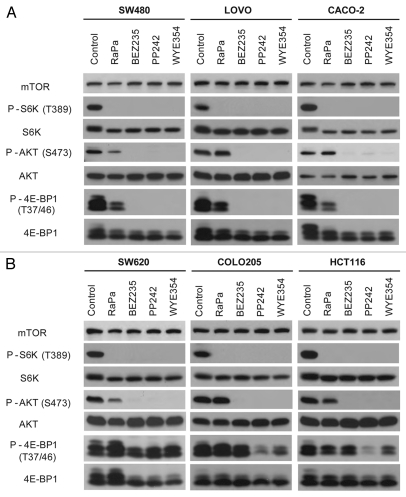
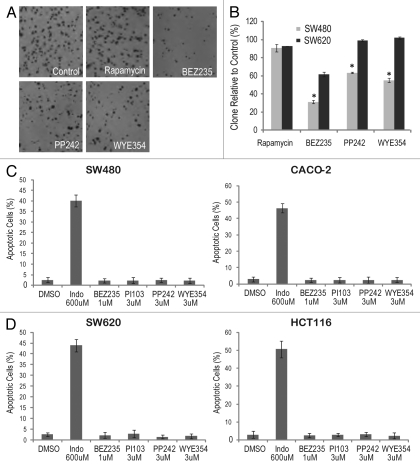
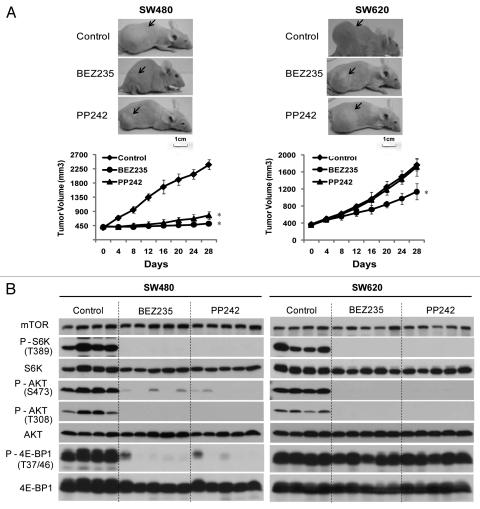
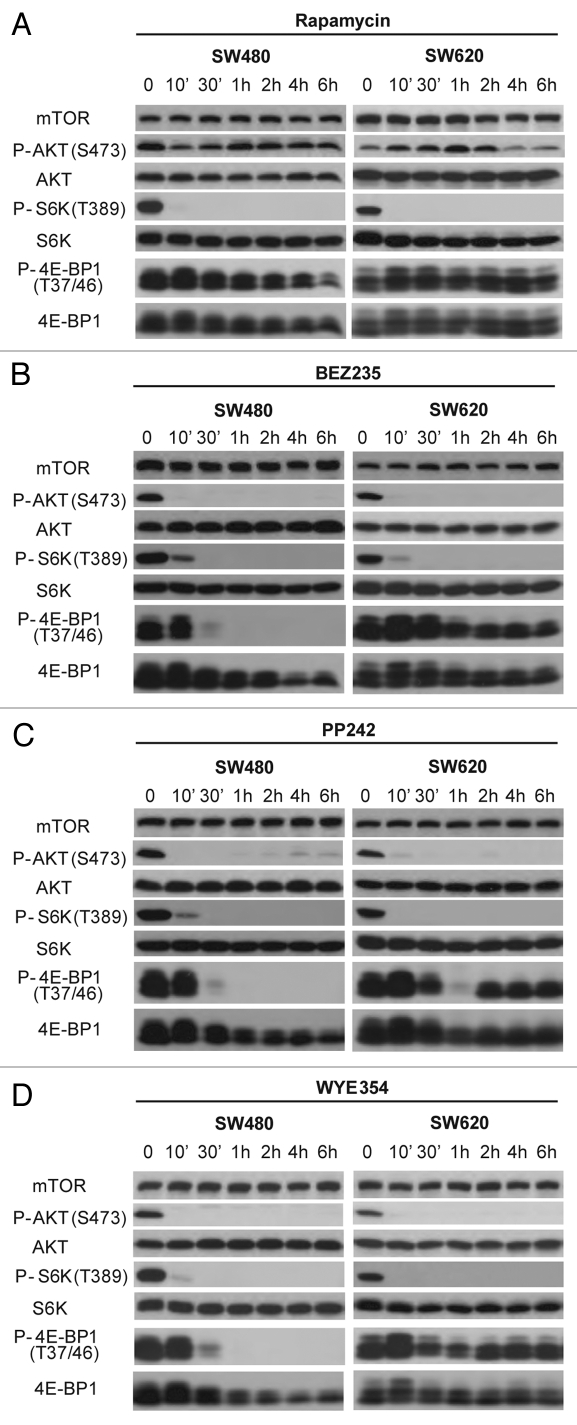
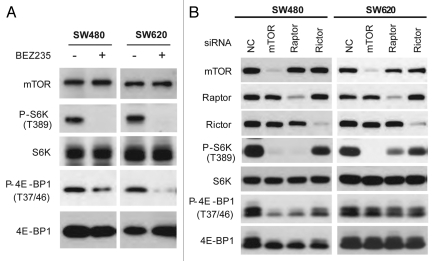
ATP-competitive mTOR kinase inhibitors (mTorKIs) are a new generation of mTOR-targeted agents with more potent anticancer activity than rapamycin in several tumor models. However, the sensitivity and resistance of cancer cells to mTorKIs remain poorly understood. In this study, we tested mTorKIs against a large panel of colorectal cancer (CRC) cell lines, and found that mTorKIs displayed broader anti-CRC activity than rapamycin, including CRC cells with K-Ras or B-Raf mutations, suggesting that these mTorKIs are particularly useful for CRCs resistant to EGFR inhibitors. Unexpectedly, we found that 40% CRC cell lines were intrinsically drug resistant. Moreover, we discovered an mTOR-independent 4E‑BP1 phosphorylation that was correlated with mTorKI resistance. Altogether, our findings provide compelling preclinical support for testing mTorKIs in human CRC clinical trials. They further reveal the existence of significant intrinsic mTorKI drug resistance in cancer cells and suggest that 4E-BP1 phosphorylation is a predictive biomarker for mTorKI sensitivity and resistance.
Figures
References
-
- Dasari A, Messersmith WA. New strategies in colorectal cancer: biomarkers of response to epidermal growth factor receptor monoclonal antibodies and potential therapeutic targets in phosphoinositide-3-kinase and mitogen-activated protein kinase pathways. Clin Cancer Res. 2010;16:3811–3818. doi: 10.1158/1078-0432.CCR-09-2283. - DOI - PubMed
Publication types
MeSH terms
Substances
Grants and funding
LinkOut - more resources
Full Text Sources
Other Literature Sources
Research Materials
Miscellaneous
