


A family business: stem cell progeny join the niche to regulate homeostasis
- PMID: 22266760
- PMCID: PMC3280338
- DOI: 10.1038/nrm3272
A family business: stem cell progeny join the niche to regulate homeostasis
Abstract
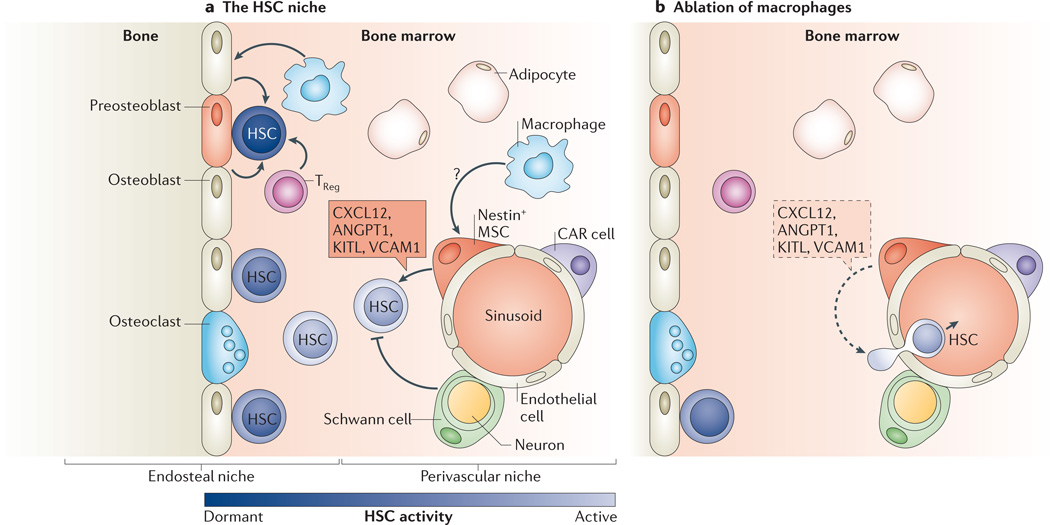
Stem cell niches, the discrete microenvironments in which the stem cells reside, play a dominant part in regulating stem cell activity and behaviours. Recent studies suggest that committed stem cell progeny become indispensable components of the niche in a wide range of stem cell systems. These unexpected niche inhabitants provide versatile feedback signals to their stem cell parents. Together with other heterologous cell types that constitute the niche, they contribute to the dynamics of the microenvironment. As progeny are often located in close proximity to stem cell niches, similar feedback regulations may be the underlying principles shared by different stem cell systems.
Figures
References
-
- Morris RJ, Potten CS. Highly persistent label-retaining cells in the hair follicles of mice and their fate following induction of anagen. J. Invest. Dermatol. 1999;112:470–475. - PubMed
-
-
Cotsarelis G, Sun TT, Lavker RM. Label-retaining cells reside in the bulge area of pilosebaceous unit: implications for follicular stem cells, hair cycle, and skin carcinogenesis. Cell. 1990;61:1329–1337. Marks slow-cycling cells located in the bulge region and suggests that they might be HFSCs.
-
-
-
Tumbar T, et al. Defining the epithelial stem cell niche in skin. Science. 2004;303:359–363. Describes the generation of a mouse model combining two transgenes to fluorescently tag slow-cycling cells, which has been widely applied to other systems, including the HSCs as in references 26 and 80. Also reports the transcriptional profiling that identified genes preferentially expressed by HFSCs.
-
-
- Gros J, Manceau M, Thome V, Marcelle C. A common somitic origin for embryonic muscle progenitors and satellite cells. Nature. 2005;435:954–958. - PubMed
-
- Collins CA, et al. Stem cell function, self-renewal, and behavioral heterogeneity of cells from the adult muscle satellite cell niche. Cell. 2005;122:289–301. - PubMed
Publication types
MeSH terms
Grants and funding
LinkOut - more resources
Full Text Sources
Other Literature Sources
Medical
Molecular Biology Databases
