


Long-term sensitization of mechanosensitive and -insensitive afferents in mice with persistent colorectal hypersensitivity
- PMID: 22268098
- PMCID: PMC3330779
- DOI: 10.1152/ajpgi.00490.2011
Long-term sensitization of mechanosensitive and -insensitive afferents in mice with persistent colorectal hypersensitivity
Abstract
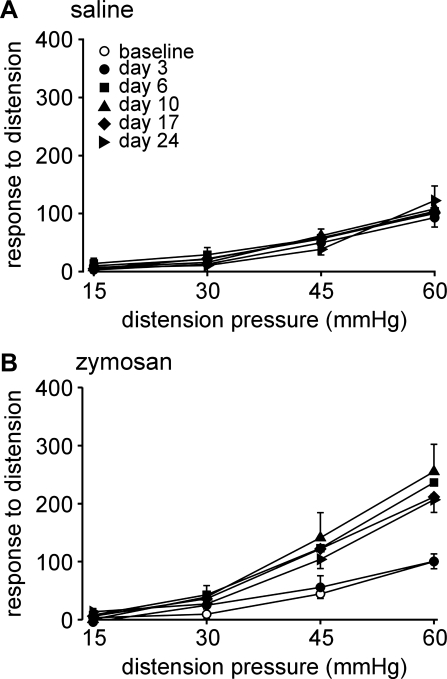
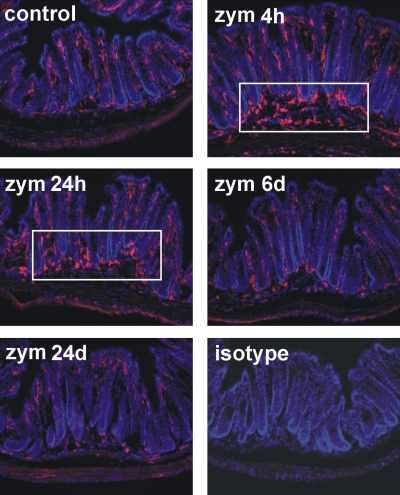
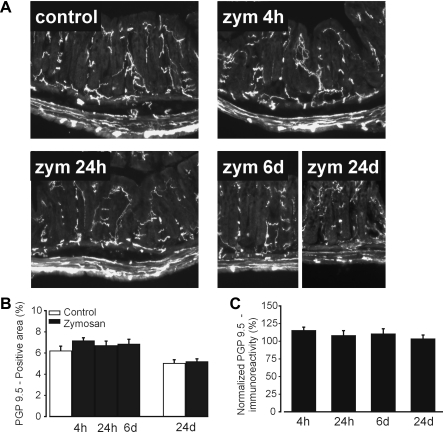
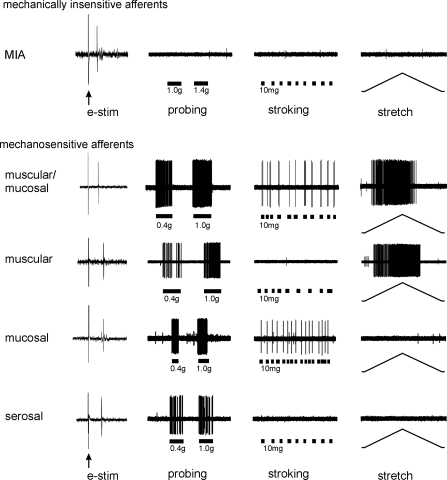
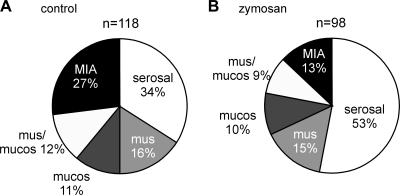
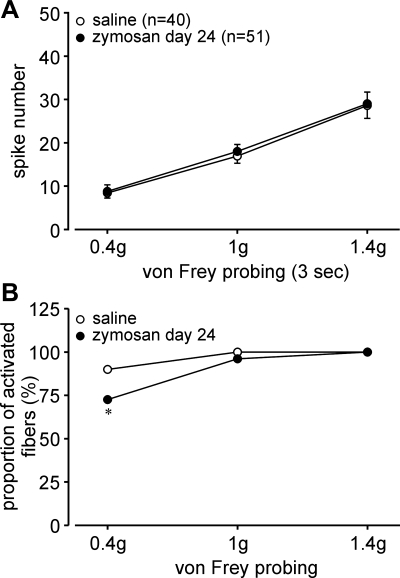
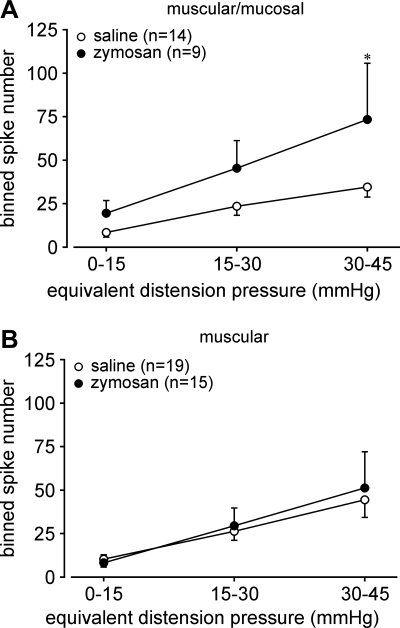
Afferent input contributes significantly to the pain and colorectal hypersensitivity that characterize irritable bowel syndrome. In the present study, we investigated the contributions of mechanically sensitive and mechanically insensitive afferents (MIAs; or silent afferents) to colorectal hypersensitivity. The visceromotor response to colorectal distension (CRD; 15-60 mmHg) was recorded in mice before and for weeks after intracolonic treatment with zymosan or saline. After CRD tests, the distal colorectum with the pelvic nerve attached was removed for single-fiber electrophysiological recordings. Colorectal afferent endings were located by electrical stimulation and characterized as mechanosensitive or not by blunt probing, mucosal stroking, and circumferential stretch. Intracolonic zymosan produced persistent colorectal hypersensitivity (>24 days) associated with brief colorectal inflammation. Pelvic nerve muscular-mucosal but not muscular mechanosensitive afferents recorded from mice with colorectal hypersensitivity exhibited persistent sensitization. In addition, the proportion of MIAs (relative to control) was significantly reduced from 27% to 13%, whereas the proportion of serosal afferents was significantly increased from 34% to 53%, suggesting that MIAs acquired mechanosensitivity. PGP9.5 immunostaining revealed no significant loss of colorectal nerve fiber density, suggesting that the reduction in MIAs is not due to peripheral fiber loss after intracolonic zymosan. These results indicate that colorectal MIAs and sensitized muscular-mucosal afferents that respond to stretch contribute significantly to the afferent input that sustains hypersensitivity to CRD, suggesting that targeted management of colorectal afferent input could significantly reduce patients' complaints of pain and hypersensitivity.
Figures
References
-
- Barbara G, Stanghellini V, de GR, Cremon C, Cottrell GS, Santini D, Pasquinelli G, Morselli-Labate AM, Grady EF, Bunnett NW, Collins SM, Corinaldesi R. Activated mast cells in proximity to colonic nerves correlate with abdominal pain in irritable bowel syndrome. Gastroenterology 126: 693–702, 2004 - PubMed
-
- Barbara G, Wang B, Stanghellini V, de GR, Cremon C, Di NG, Trevisani M, Campi B, Geppetti P, Tonini M, Bunnett NW, Grundy D, Corinaldesi R. Mast cell-dependent excitation of visceral-nociceptive sensory neurons in irritable bowel syndrome. Gastroenterology 132: 26–37, 2007 - PubMed
-
- Brierley SM, Jones RC, 3rd, Gebhart GF, Blackshaw LA. Splanchnic and pelvic mechanosensory afferents signal different qualities of colonic stimuli in mice. Gastroenterology 127: 166–178, 2004 - PubMed
-
- Christianson JA, Gebhart GF. Assessment of colon sensitivity by luminal distension in mice. Nat Protoc 2: 2624–2631, 2007 - PubMed
-
- Dillon S, Agrawal S, Banerjee K, Letterio J, Denning TL, Oswald-Richter K, Kasprowicz DJ, Kellar K, Pare J, van DT, Ziegler S, Unutmaz D, Pulendran B. Yeast zymosan, a stimulus for TLR2 and dectin-1, induces regulatory antigen-presenting cells and immunological tolerance. J Clin Invest 116: 916–928, 2006 - PMC - PubMed
Publication types
MeSH terms
Substances
Grants and funding
LinkOut - more resources
Full Text Sources
Medical
