


Lifestyle risk factors predict disability and death in healthy aging adults
- PMID: 22269623
- PMCID: PMC3266548
- DOI: 10.1016/j.amjmed.2011.08.006
Lifestyle risk factors predict disability and death in healthy aging adults
Abstract
Background: Associations between modifiable health risk factors during middle age with disability and mortality in later life are critical to maximizing longevity while preserving function. Positive health effects of maintenance of normal weight, routine exercise, and nonsmoking are known for the short and intermediate term. We studied the effects of these risk factors into advanced age.
Methods: A cohort of 2327 college alumnae aged 60 years or more was followed annually (1986-2005) by questionnaires addressing health risk factors, history, and Health Assessment Questionnaire disability. Mortality data were ascertained from the National Death Index. Low-, medium-, and high-risk groups were created on the basis of the number (0, 1, ≥2) of health risk factors (overweight, smoking, inactivity) at baseline. Disability and mortality for each group were estimated from unadjusted data and regression analyses. Multivariable survival analyses estimated time to disability or death.
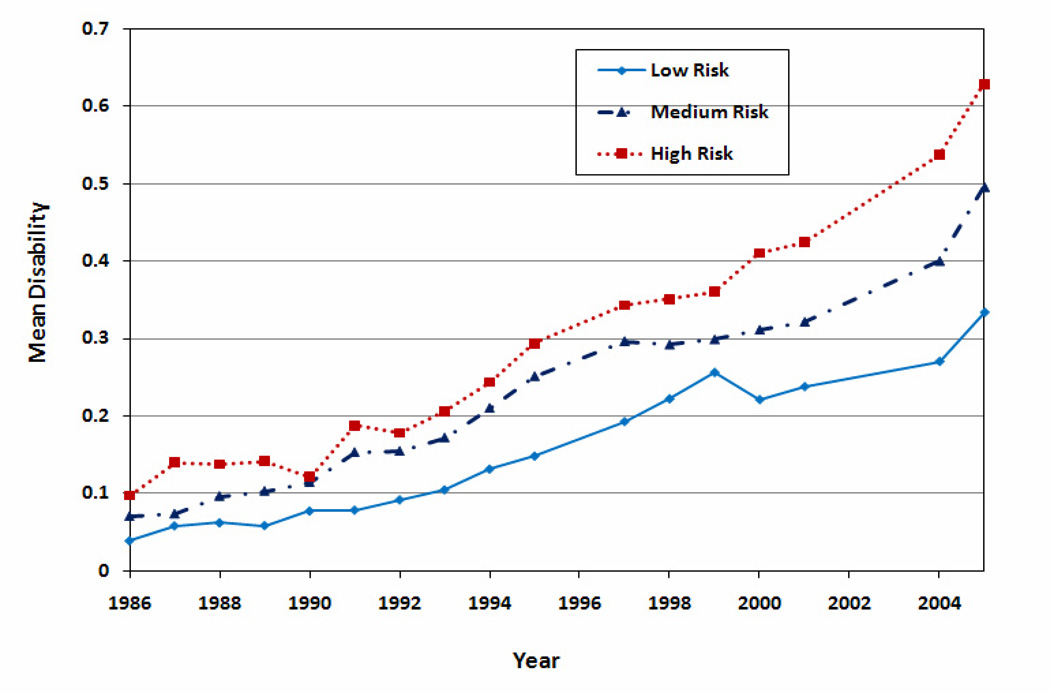
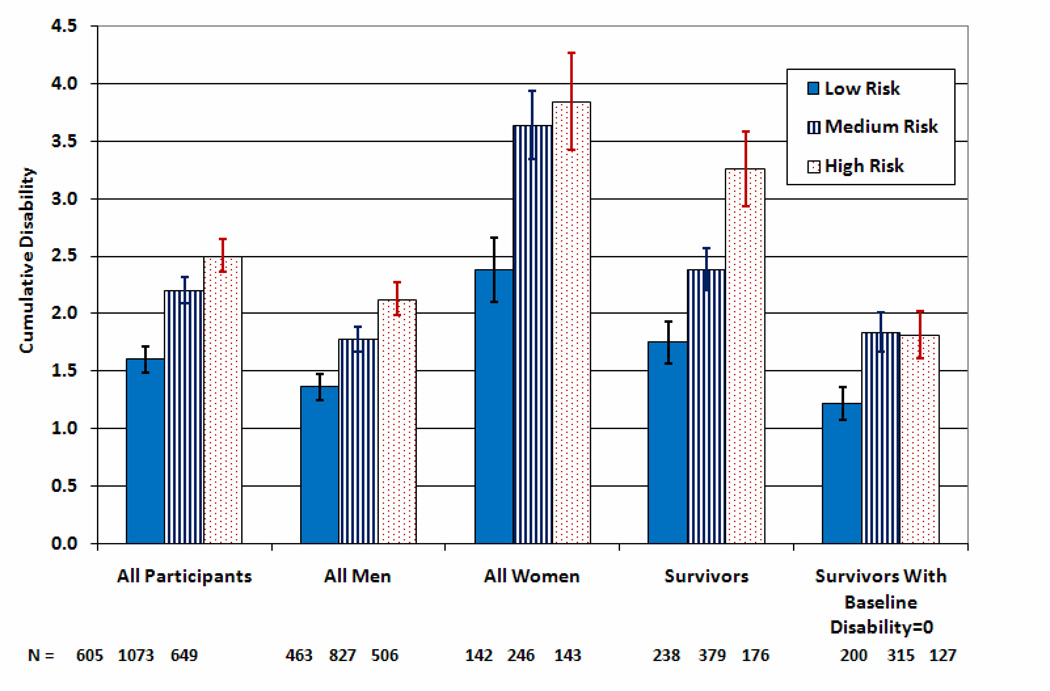
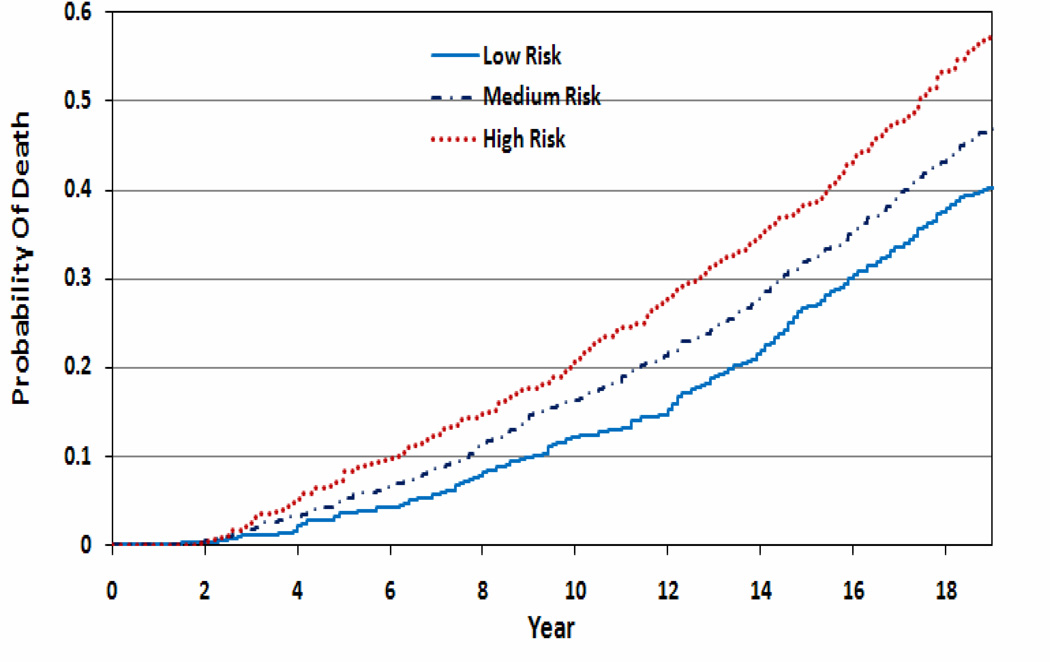
Results: The medium- and high-risk groups had higher disability than the low-risk group throughout the study (P<.001). Low-risk subjects had onset of moderate disability delayed 8.3 years compared with high-risk subjects. Mortality rates were higher in the high-risk group (384 vs 247 per 10,000 person-years). Multivariable survival analyses showed the number of risk factors to be associated with cumulative disability and increased mortality.
Conclusion: Seniors with fewer behavioral risk factors during middle age have lower disability and improved survival. These data document that the associations of lifestyle risk factors on health continue into the ninth decade.
Copyright © 2012 Elsevier Inc. All rights reserved.
Conflict of interest statement
Figures
References
-
- Fries JF. Aging, natural death, and the compression of morbidity. N Engl J Med. 1980;303:130–135. - PubMed
