


Independent effects of HIV, aging, and HAART on brain volumetric measures
- PMID: 22269799
- PMCID: PMC3302928
- DOI: 10.1097/QAI.0b013e318249db17
Independent effects of HIV, aging, and HAART on brain volumetric measures
Abstract
Background: Neurocognitive impairment remains prevalent in HIV-infected (HIV+) individuals despite highly active antiretroviral therapy (HAART). We assessed the impact of HIV, HAART, and aging using structural neuroimaging.
Methods: Seventy-eight participants [HIV- (n = 26), HIV+ on stable HAART (HIV+/HAART+; n = 26), HIV+ naive to HAART (HIV+/HAART-; n = 26)] completed neuroimaging and neuropsychological testing. A subset of HIV+ subjects (n = 12) performed longitudinal assessments before and after initiating HAART. Neuropsychological tests evaluated memory, psychomotor speed, and executive function, and a composite neuropsychological score was calculated based on normalized performances (neuropsychological summary Z score, NPZ-4). Volumetrics were evaluated for the amygdala, caudate, thalamus, hippocampus, putamen, corpus callosum, and cerebral gray and white matter. A 3-group 1-way analysis of variance assessed differences in neuroimaging and neuropsychological indices. Correlations were examined between NPZ-4 and volumetrics. Exploratory testing using a broken-stick regression model evaluated self-reported duration of HIV infection on brain structure.
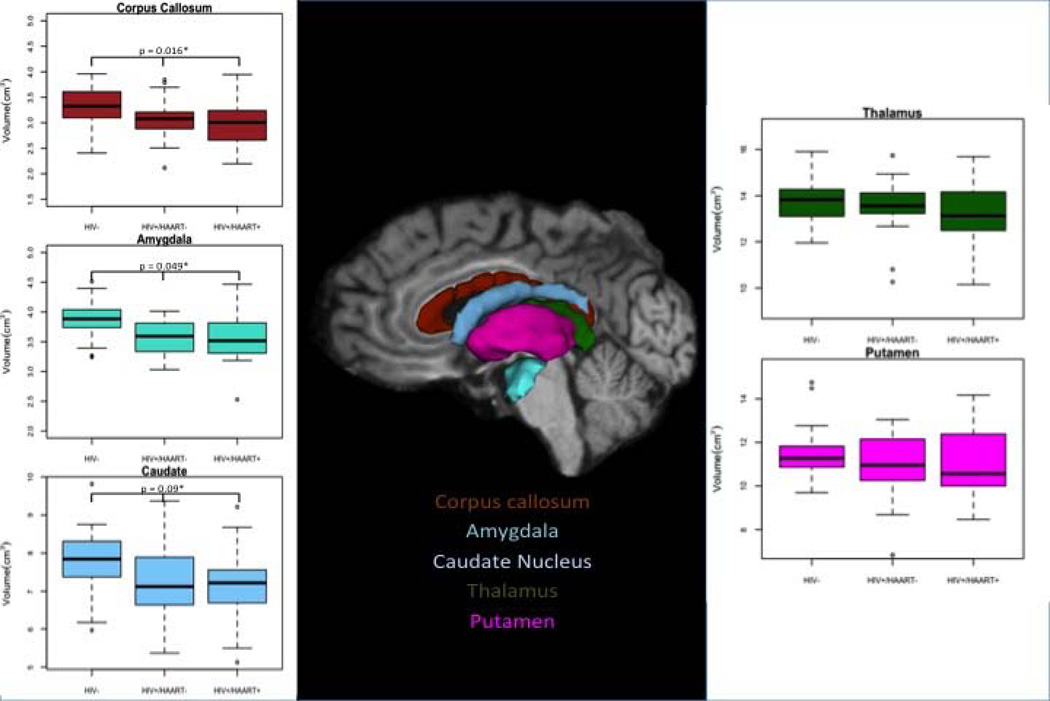
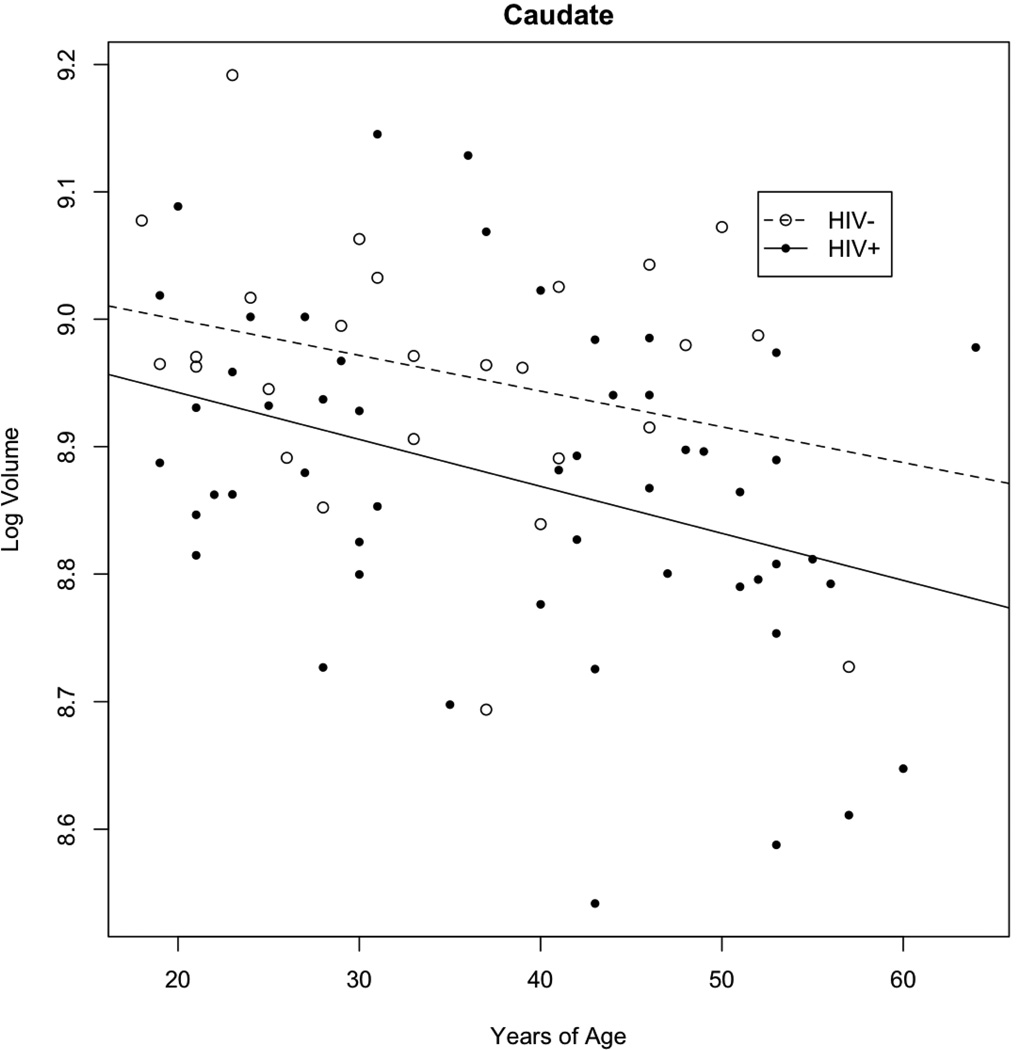
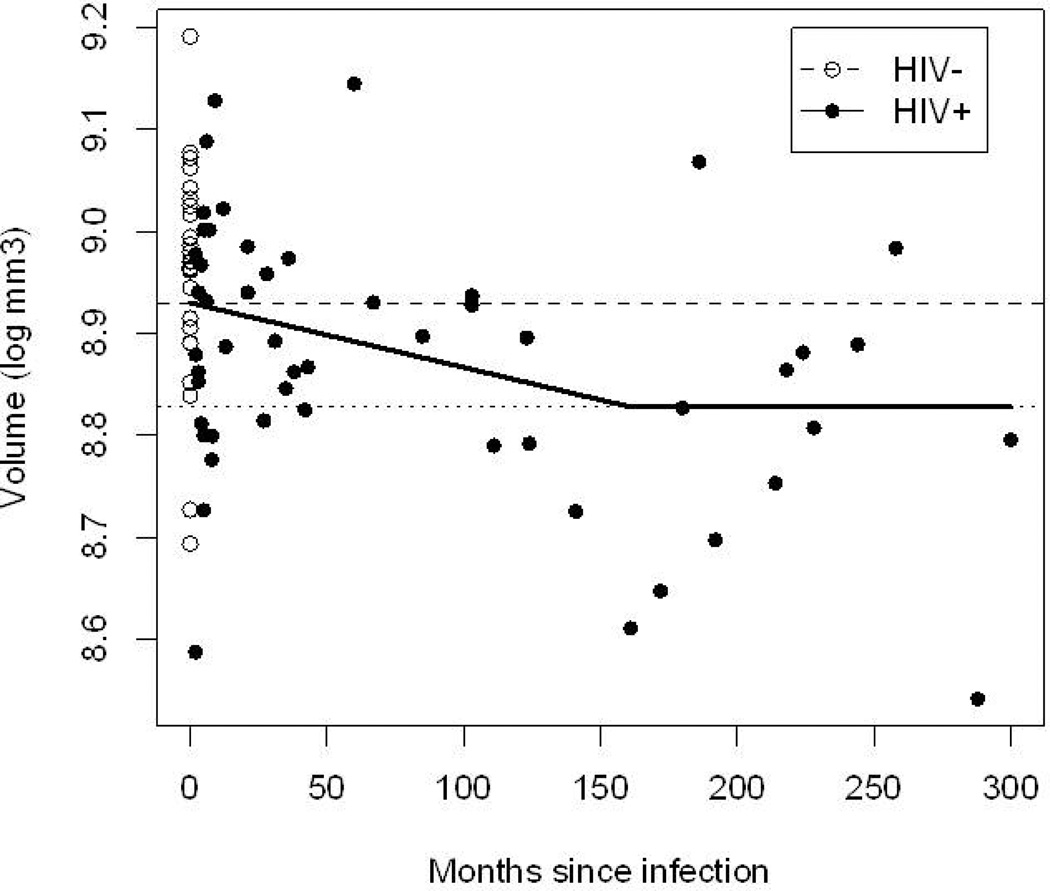
Results: HIV+ individuals had significant reductions in brain volumetrics within select subcortical regions (amygdala, caudate, and corpus callosum) compared with HIV- participants. However, HAART did not affect brain structure as regional volumes were similar for HIV+/HAART- and HIV+/HAART+. No association existed between NPZ-4 and volumetrics. HIV and aging were independently associated with volumetric reductions. Exploratory analyses suggest caudate atrophy due to HIV slowly occurs after self-reported seroconversion.
Conclusions: HIV associated volumetric reductions within the amygdala, caudate, and corpus callosum occurs despite HAART. A gradual decline in caudate volume occurs after self-reported seroconversion. HIV and aging independently increase brain vulnerability. Additional longitudinal structural magnetic resonance imaging studies, especially within older HIV+ participants, are required.
Conflict of interest statement
Conflicts: Dr. Ances serves on a scientific advisory panel for Lilly Pharmaceuticals. He is currently receiving studying anti-dementia drugs with Pfizer. Drs. Vaida and Paul have no conflicts. Mr. Ortega and Ms. Heaps have no conflicts.
Figures
References
-
- Lima VD, Hogg RS, Harrigan PR, et al. Continued improvement in survival among HIV-infected individuals with newer forms of highly active antiretroviral therapy. AIDS. 2007 Mar 30;21(6):685–692. - PubMed
-
- Desquilbet L, Jacobson LP, Fried LP, et al. HIV-1 infection is associated with an earlier occurrence of a phenotype related to frailty. J Gerontol A Biol Sci Med Sci. 2007 Nov;62(11):1279–1286. - PubMed
Publication types
MeSH terms
Grants and funding
- K23MH081786/MH/NIMH NIH HHS/United States
- R01NR012657/NR/NINR NIH HHS/United States
- R01MH085604/MH/NIMH NIH HHS/United States
- R01NR012907/NR/NINR NIH HHS/United States
- R01MH22005/MH/NIMH NIH HHS/United States
- R01 NR012657/NR/NINR NIH HHS/United States
- R01 MH085604/MH/NIMH NIH HHS/United States
- N01 MH022005/MH/NIMH NIH HHS/United States
- R01 AI047033/AI/NIAID NIH HHS/United States
- R01 NR012907/NR/NINR NIH HHS/United States
- R01AI47033/AI/NIAID NIH HHS/United States
- K23 MH081786/MH/NIMH NIH HHS/United States
LinkOut - more resources
Full Text Sources
Medical
Molecular Biology Databases
