


Hydrolytic catalysis and structural stabilization in a designed metalloprotein
- PMID: 22270627
- PMCID: PMC3270697
- DOI: 10.1038/nchem.1201
Hydrolytic catalysis and structural stabilization in a designed metalloprotein
Abstract
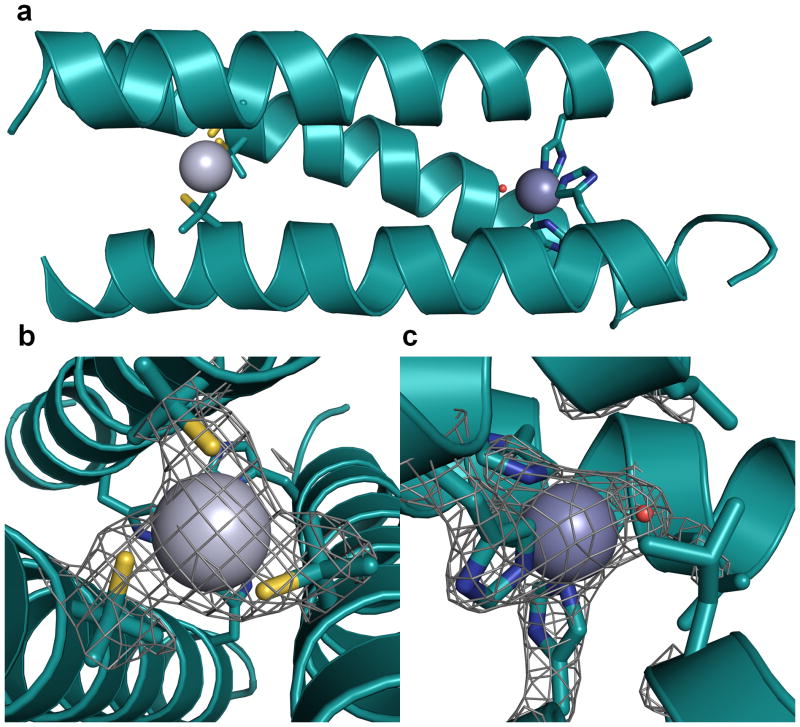
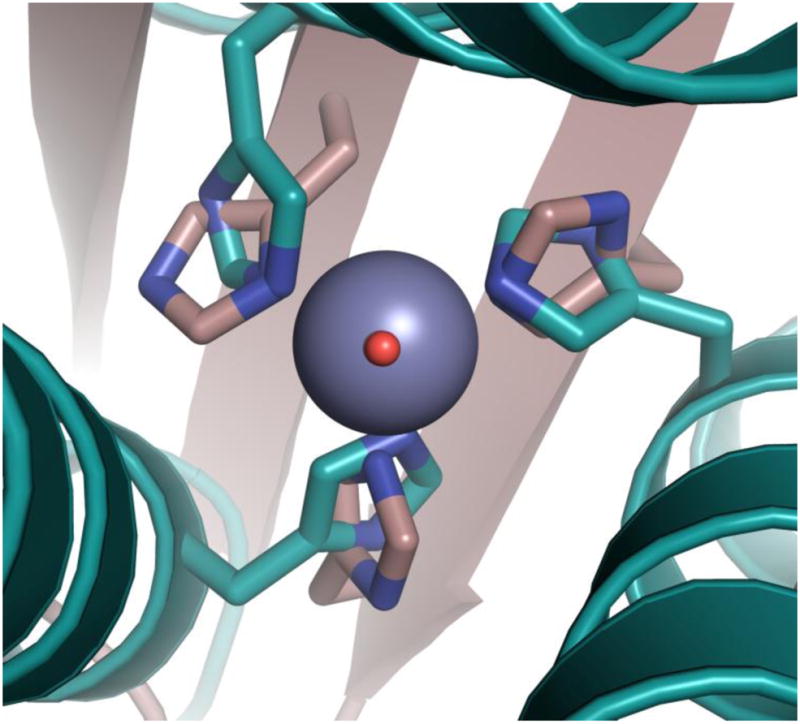
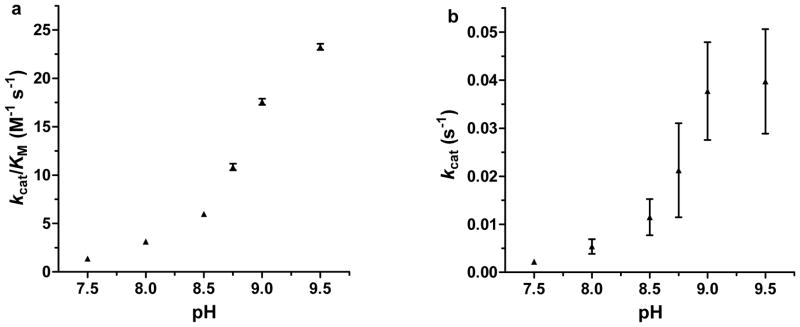
Metal ions are an important part of many natural proteins, providing structural, catalytic and electron transfer functions. Reproducing these functions in a designed protein is the ultimate challenge to our understanding of them. Here, we present an artificial metallohydrolase, which has been shown by X-ray crystallography to contain two different metal ions-a Zn(II) ion, which is important for catalytic activity, and a Hg(II) ion, which provides structural stability. This metallohydrolase displays catalytic activity that compares well with several characteristic reactions of natural enzymes. It catalyses p-nitrophenyl acetate (pNPA) hydrolysis with an efficiency only ~100-fold less than that of human carbonic anhydrase (CA)II and at least 550-fold better than comparable synthetic complexes. Similarly, CO(2) hydration occurs with an efficiency within ~500-fold of CAII. Although histidine residues in the absence of Zn(II) exhibit pNPA hydrolysis, miniscule apopeptide activity is observed for CO(2) hydration. The kinetic and structural analysis of this first de novo designed hydrolytic metalloenzyme reveals necessary design features for future metalloenzymes containing one or more metals.
Conflict of interest statement
The authors declare no competing financial interests. Supplementary information and chemical compound information accompany this paper at
Figures
References
-
- Holm RH, Kennepohl P, Solomon EI. Structural and functional aspects of metal sites in biology. Chem Rev. 1996;96:2239–2314. - PubMed
Publication types
MeSH terms
Substances
Grants and funding
LinkOut - more resources
Full Text Sources
