


Hormonal influence on coenzyme Q(10) levels in blood plasma
- PMID: 22272129
- PMCID: PMC3257126
- DOI: 10.3390/ijms12129216
Hormonal influence on coenzyme Q(10) levels in blood plasma
Abstract
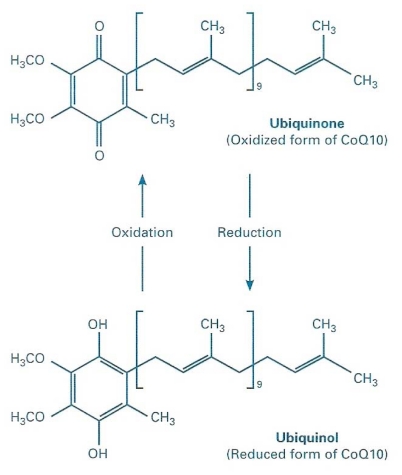
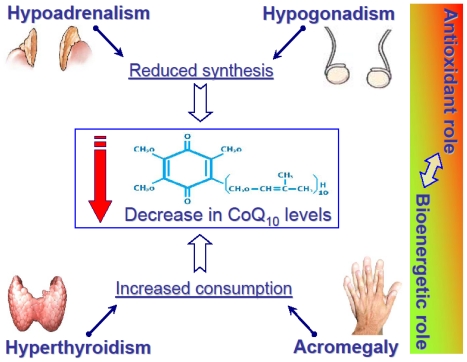
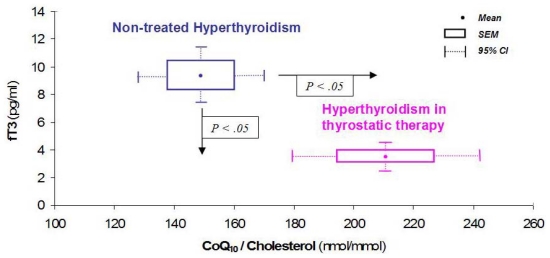
Coenzyme Q(10) (CoQ(10)), also known as ubiquinone for its presence in all body cells, is an essential part of the cell energy-producing system. However, it is also a powerful lipophilic antioxidant protecting lipoproteins and cell membranes. Due to these two actions, CoQ(10) is commonly used in clinical practice in chronic heart failure, male infertility, and neurodegenerative disease. However, it is also taken as an anti-aging substance by healthy people aiming for long-term neuroprotection and by sportsmen to improve endurance. Many hormones are known to be involved in body energy regulation, in terms of production, consumption and dissipation, and their influence on CoQ(10) body content or blood values may represent an important pathophysiological mechanism. We summarize the main findings of the literature about the link between hormonal systems and circulating CoQ(10) levels. In particular the role of thyroid hormones, directly involved in the regulation of energy homeostasis, is discussed. There is also a link with gonadal and adrenal hormones, partially due to the common biosynthetic pathway with CoQ(10), but also to the increased oxidative stress found in hypogonadism and hypoadrenalism.
Keywords: antioxidants; coenzyme Q10; oxidative stress; pituitary; thyroid.
Figures
References
-
- Crane F.L. Biochemical functions of coenzyme Q10. J. Am. Coll. Nutr. 2001;20:591–598. - PubMed
-
- Kaltschmidt B., Sparna T., Kaltschmidt C. Activation of NFκB by reactive oxygen intermediates in the nervous system. Antioxid. Redox Signal. 1999;1:129–144. - PubMed
-
- Littarru G.P., Tiano L. Clinical aspects of coenzyme Q10: An update. Nutrition. 2010;26:250–254. - PubMed
-
- Littarru G.P., Mosca F., Fattorini D., Bompadre S., Battino M. Assay of coenzyme Q10 in plasma by a single dilution step. Methods Enzymol. 2004;378:170–176. - PubMed
-
- Mancini A., Festa R., Di Donna V., Leone E., Littarru G.P., Silvestrini A., Meucci E., Pontecorvi A. Hormones and antioxidant systems: Role of pituitary and pituitary-dependent axes. J. Endocrinol. Invest. 2010;33:422–433. - PubMed
Publication types
MeSH terms
Substances
LinkOut - more resources
Full Text Sources
Other Literature Sources
Medical
