


Wogonin improves histological and functional outcomes, and reduces activation of TLR4/NF-κB signaling after experimental traumatic brain injury
- PMID: 22272328
- PMCID: PMC3260265
- DOI: 10.1371/journal.pone.0030294
Wogonin improves histological and functional outcomes, and reduces activation of TLR4/NF-κB signaling after experimental traumatic brain injury
Erratum in
-
Correction: Wogonin Improves Histological and Functional Outcomes, and Reduces Activation of TLR4/NF-κB Signaling after Experimental Traumatic Brain Injury.PLoS One. 2012 Dec 3;7(12):10.1371/annotation/1f110857-27d7-4e83-9eb3-4e5f51950a26. doi: 10.1371/annotation/1f110857-27d7-4e83-9eb3-4e5f51950a26. eCollection 2012. PLoS One. 2012. PMID: 29161739 Free PMC article.
Abstract
Background: Traumatic brain injury (TBI) initiates a neuroinflammatory cascade that contributes to neuronal damage and behavioral impairment. This study was undertaken to investigate the effects of wogonin, a flavonoid with potent anti-inflammatory properties, on functional and histological outcomes, brain edema, and toll-like receptor 4 (TLR4)- and nuclear factor kappa B (NF-κB)-related signaling pathways in mice following TBI.
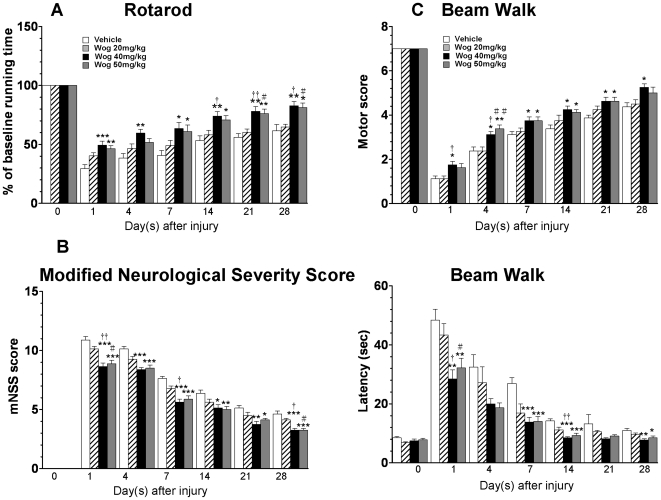
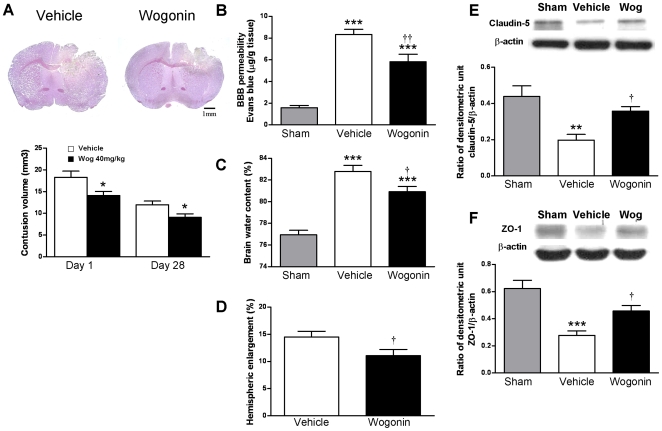
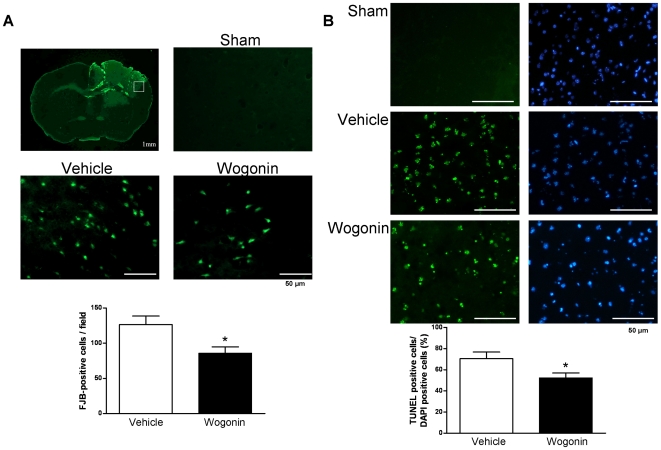
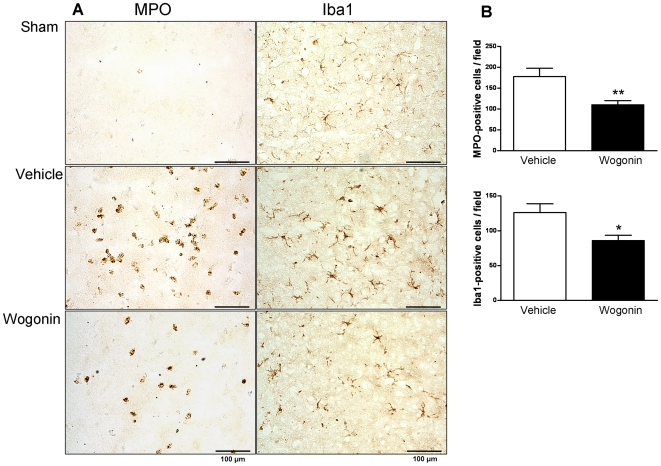
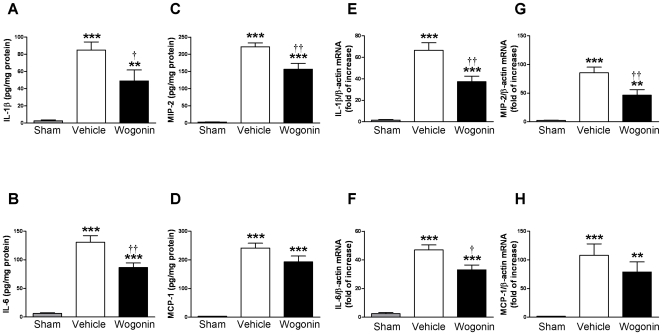
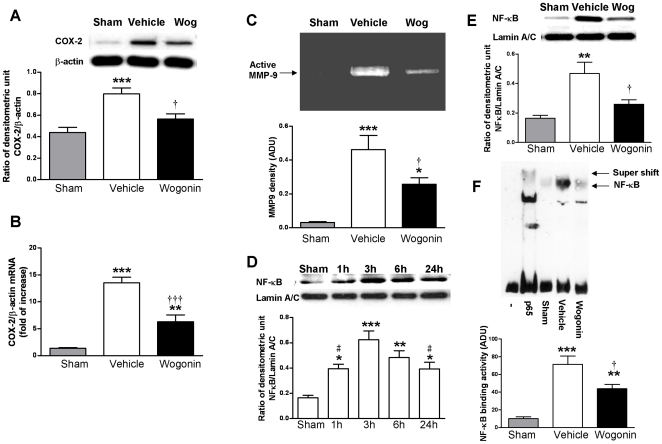
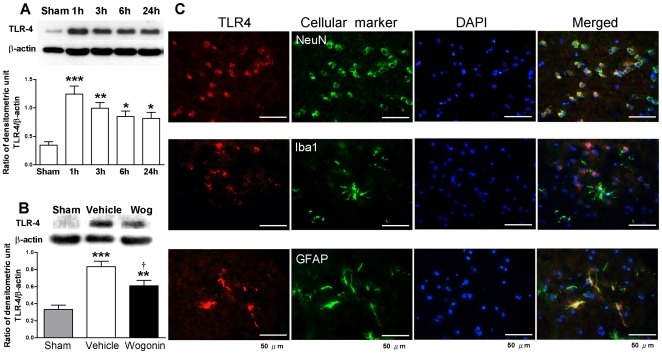
Methodology/principal findings: Mice subjected to controlled cortical impact injury were injected with wogonin (20, 40, or 50 mg·kg(-1)) or vehicle 10 min after injury. Behavioral studies, histology analysis, and measurement of blood-brain barrier (BBB) permeability and brain water content were carried out to assess the effects of wogonin. Levels of TLR4/NF-κB-related inflammatory mediators were also examined. Treatment with 40 mg·kg(-1) wogonin significantly improved functional recovery and reduced contusion volumes up to post-injury day 28. Wogonin also significantly reduced neuronal death, BBB permeability, and brain edema beginning at day 1. These changes were associated with a marked reduction in leukocyte infiltration, microglial activation, TLR4 expression, NF-κB translocation to nucleus and its DNA binding activity, matrix metalloproteinase-9 activity, and expression of inflammatory mediators, including interleukin-1β, interleukin-6, macrophage inflammatory protein-2, and cyclooxygenase-2.
Conclusions/significance: Our results show that post-injury wogonin treatment improved long-term functional and histological outcomes, reduced brain edema, and attenuated the TLR4/NF-κB-mediated inflammatory response in mouse TBI. The neuroprotective effects of wogonin may be related to modulation of the TLR4/NF-κB signaling pathway.
Conflict of interest statement
Figures
References
-
- Morganti-Kossmann MC, Rancan M, Stahel PF, Kossmann T. Inflammatory response in acute traumatic brain injury: a double-edged sword. Curr Opin Crit Care. 2002;8:101–105. - PubMed
-
- Dong XQ, Yu WH, Hu YY, Zhang ZY, Huang M. Oxymatrine reduces neuronal cell apoptosis by inhibiting Toll-like receptor 4/nuclear factor kappa-B-dependent inflammatory responses in traumatic rat brain injury. Inflamm Res. 2011;60:533–539. - PubMed
-
- Chen G, Shi J, Jin W, Wang L, Xie W, et al. Progesterone administration modulates TLRs/NF-kappaB signaling pathway in rat brain after cortical contusion. Ann Clin Lab Sci. 2008;38:65–74. - PubMed
-
- Chen G, Zhang S, Shi J, Ai J, Qi M, et al. Simvastatin reduces secondary brain injury caused by cortical contusion in rats: possible involvement of TLR4/NF-kappaB pathway. Exp Neurol. 2009;216:398–406. - PubMed
Publication types
MeSH terms
Substances
LinkOut - more resources
Full Text Sources
Research Materials
