Relationship between inflammatory mediators, Aβ levels and ApoE genotype in Alzheimer disease
- PMID: 22272623
- PMCID: PMC5215089
- DOI: 10.2174/156720512800492549
Relationship between inflammatory mediators, Aβ levels and ApoE genotype in Alzheimer disease
Abstract
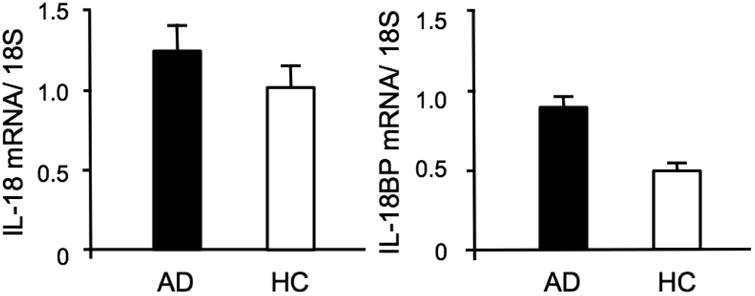
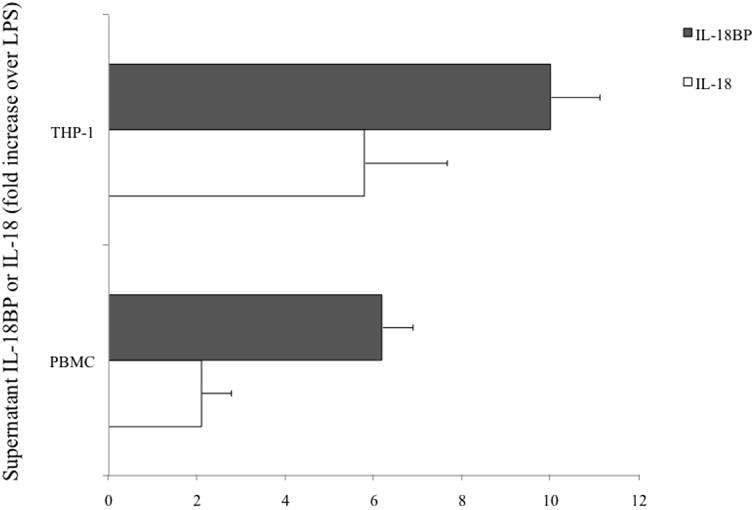
Activation of inflammatory processes is observed within the brain as well as periphery of subjects with Alzheimer's disease (AD). Whether or not inflammation represents a possible cause of AD or occurs as a consequence of the disease process, or, alternatively, whether the inflammatory response might be beneficial to slow the disease progression remains to be elucidated. The cytokine IL-18 shares with IL-1 the same pro-inflammatory features. Consequent to these similarities, IL-18 and its endogenous inhibitor, IL-18BP, were investigated in the plasma of AD patients versus healthy controls (HC). An imbalance of IL-18 and IL-18BP was observed in AD, with an elevated IL-18/IL-18BP ratio that might be involved in disease pathogenesis. As part of the inflammatory response, altered levels of RANTES, MCP-1 and ICAM- 1, molecules involved in cell recruitment to inflammatory sites, were observed in AD. Hence, correlations between IL-18 and other inflammatory plasma markers were analyzed. A negative correlation was observed between IL-18 and IL-18BP in both AD and HC groups. A positive correlation was observed between IL-18 and ICAM-1 in AD patients, whereas a negative correlation was evident in the HC group. IL-18 positively correlated with Aβ in both groups, and no significant correlations were observed between IL-18, RANTES and MCP-1. An important piece of evidence supporting a pathophysiologic role for inflammation in AD is the number of inflammatory mediators that have been found to be differentially regulated in AD patients, and specific ones may provide utility as part of a biomarker panel to not only aid early AD diagnosis, but follow its progression.
Figures



References
-
- Zlokovic BV. Cerebrovascular transport of Alzheimer's amyloid-β and apolipoproteins J and E: possible anti-amyloidogenic role of the blood-brain-barrier. Life Sci. 1996;59:1483–97. - PubMed
-
- Genin E, Hannequin D, Wallon D, Sleegers K, Hiltunen M, Combarros O, Bullido MJ, Engelborghs S, De Deyn P, Berr C, Pasquier F, Dubois B, Tognoni G, Fiévet N, Brouwers N, Bettens K, Arosio B, Coto E, Del Zompo M, Mateo I, Epelbaum J, Frank-Garcia A, Helisalmi S, Porcellini E, Pilotto A, Forti P, Ferri R, Scarpini E, Siciliano G, Solfrizzi V, Sorbi S, Spalletta G, Valdivieso F, Vepsäläinen S, Alvarez V, Bosco P, Mancuso M, Panza F, Nacmias B, Bossù P, Hanon O, Piccardi P, Annoni G, Seripa D, Galimberti D, Licastro F, Soininen H, Dartigues JF, Kamboh MI, Van Broeckhoven C, Lambert JC, Amouyel P, Campion D. APOE and Alzheimer disease: a major gene with semi-dominant inheritance. Mol Psychiatry. 2011;16:903–7. - PMC - PubMed
-
- Giri R, Shen Y, Stins M, Yan SD, Schmidt AM, Stern D, Kim KS, Zlokovic B, Kalra VK. β-Amyloid-induced migration of monocytes across human brain endothelial cells involves RAGE and PECAM-1. Am J Physiol Cell Physiol. 2000;279:C1772–C1781. - PubMed
-
- Kerschensteiner M, Meinl E, Hohlfeld R. Neuro-immune crosstalk in CNS diseases. Neuroscience. 2009;158:1122–32. - PubMed
Publication types
MeSH terms
Substances
Grants and funding
LinkOut - more resources
Full Text Sources
Other Literature Sources
Medical
Miscellaneous