


Identifying factors relevant in the assessment of return-to-work efforts in employees on long-term sickness absence due to chronic low back pain: a focus group study
- PMID: 22272831
- PMCID: PMC3307027
- DOI: 10.1186/1471-2458-12-77
Identifying factors relevant in the assessment of return-to-work efforts in employees on long-term sickness absence due to chronic low back pain: a focus group study
Abstract
Background: Efforts undertaken during the return to work (RTW) process need to be sufficient to prevent unnecessary applications for disability benefits. The purpose of this study was to identify factors relevant to RTW Effort Sufficiency (RTW-ES) in cases of sick-listed employees with chronic low back pain (CLBP).
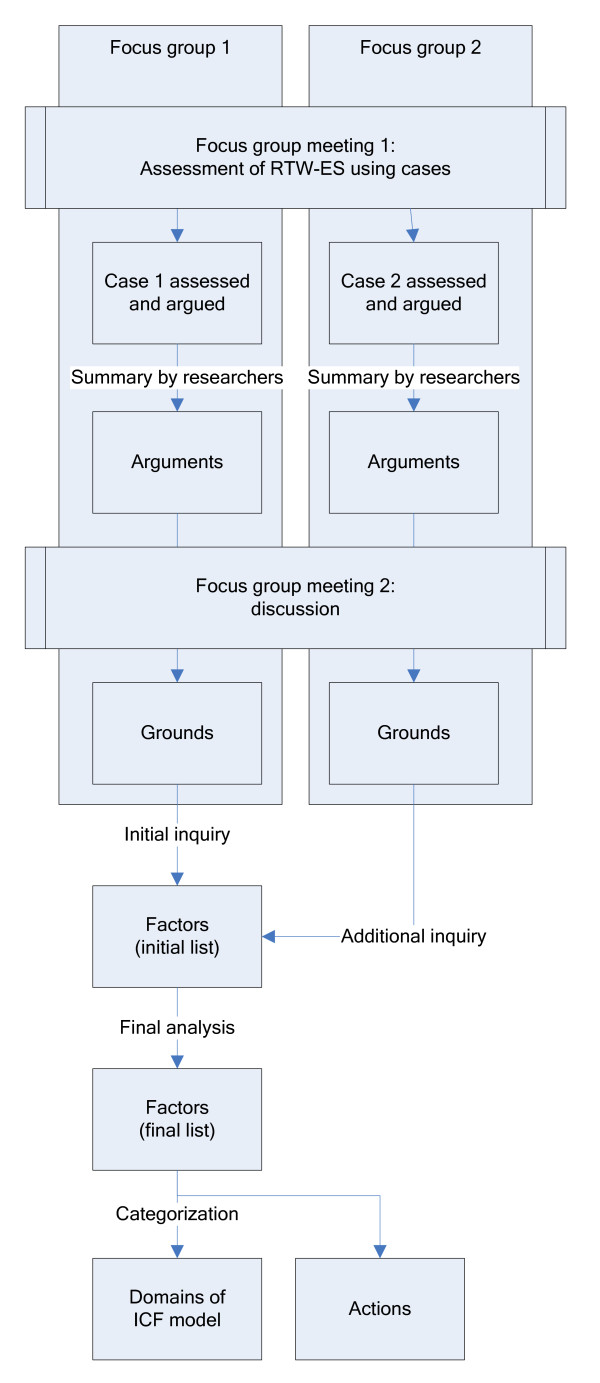
Methods: Using focus groups consisting of Labor Experts (LE's) working at the Dutch Social Insurance Institute, arguments and underlying grounds relevant to the assessment of RTW-ES were investigated. Factors were collected and categorized using the International Classification of Functioning, Disability and Health (ICF model).
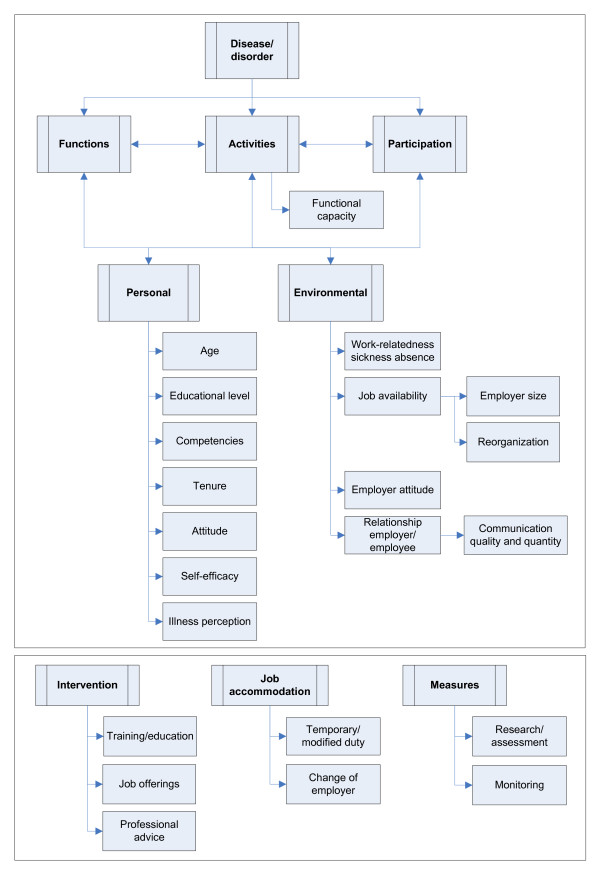
Results: Two focus groups yielded 19 factors, of which 12 are categorized in the ICF model under activities (e.g. functional capacity) and in the personal (e.g. age, tenure) and environmental domain (e.g. employer-employee relationship). The remaining 7 factors are categorized under intervention, job accommodation and measures.
Conclusions: This focus group study shows that 19 factors may be relevant to RTW-ES in sick-listed employees with CLBP. Providing these results to professionals assessing RTW-ES might contribute to a more transparent and systematic approach. Considering the importance of the quality of the RTW process, optimizing the RTW-ES assessment is essential.
Figures
References
Publication types
MeSH terms
LinkOut - more resources
Full Text Sources
