


Mutant mice derived by ICSI of evaporatively dried spermatozoa exhibit expected phenotype
- PMID: 22274886
- PMCID: PMC3738174
- DOI: 10.1530/REP-12-0005
Mutant mice derived by ICSI of evaporatively dried spermatozoa exhibit expected phenotype
Abstract
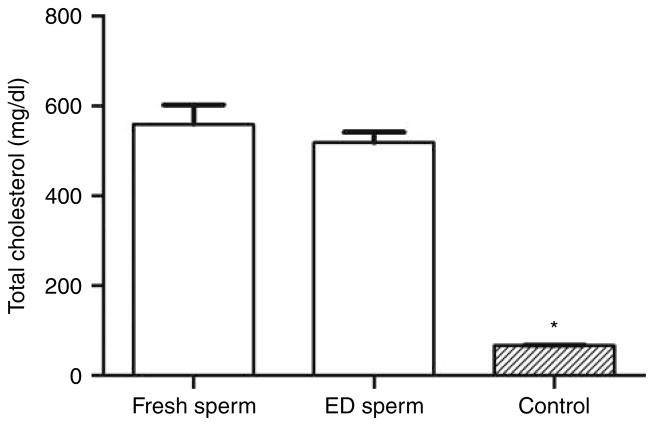
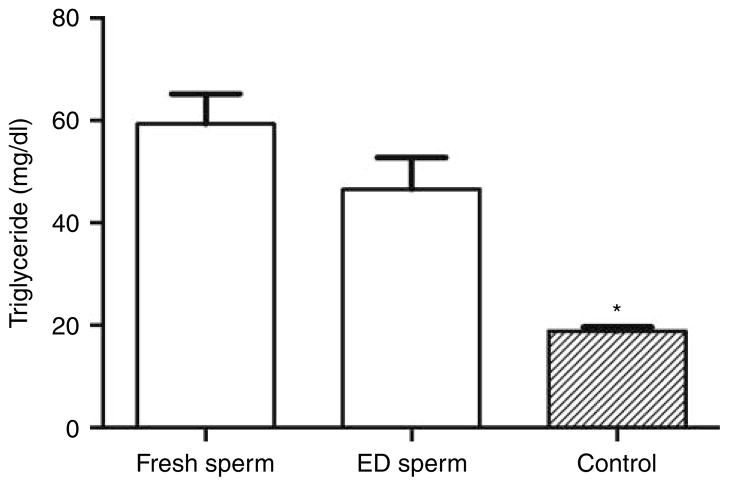
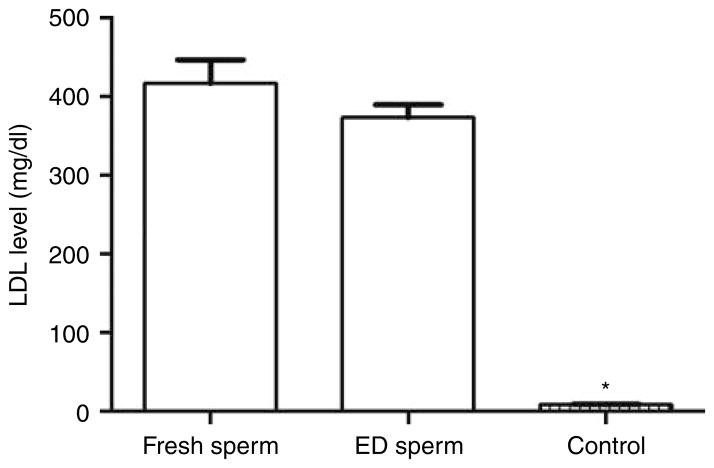
Apolipoprotein E (Apoe)-deficient knockout mice were used to test the hypothesis that mutant mice preserved as evaporatively dried (ED) spermatozoa, stored at -80 °C for 6 months, and then recovered by ICSI will exhibit the same phenotype as before preservation. The birth rate of mice recovered by ICSI of evaporatively dried spermatozoa was lower than that of fresh spermatozoa (17.5 vs 38.0%). Progeny of mice preserved using evaporatively dried spermatozoa were reproductively sound. From these, the second generation of mice produced by natural mating showed lesions typical of APOE deficiency, including severe hypercholesterolemia, hypertriglyceridemia, markedly increased plasma low-density lipoprotein level, and extensive and severe atherosclerotic lesions in the aorta. We conclude that the expected phenotype caused by an induced genetic mutation can be faithfully recapitulated and sustained in subsequent generations of mice preserved and stored as ED spermatozoa and recovered using ICSI. Because it is simpler, faster, and cheaper than conventional (cryopreservation) and nonconventional (freeze-drying) preservation procedures, evaporative drying is a viable, cost-effective, and efficient method for preserving and storing valuable mutant mouse strains.
Conflict of interest statement
The authors declare that there is no conflict of interest that could be perceived as prejudicing the impartiality of the research reported.
Figures
References
-
- Biggers JD. Evaporative drying of mouse spermatozoa. Reproductive BioMedicine Online. 2009;19(Suppl 4):4338. - PubMed
Publication types
MeSH terms
Substances
Grants and funding
LinkOut - more resources
Full Text Sources
Miscellaneous
