Multijoint arm stiffness during movements following stroke: implications for robot therapy
- PMID: 22275576
- PMCID: PMC4532671
- DOI: 10.1109/ICORR.2011.5975372
Multijoint arm stiffness during movements following stroke: implications for robot therapy
Abstract
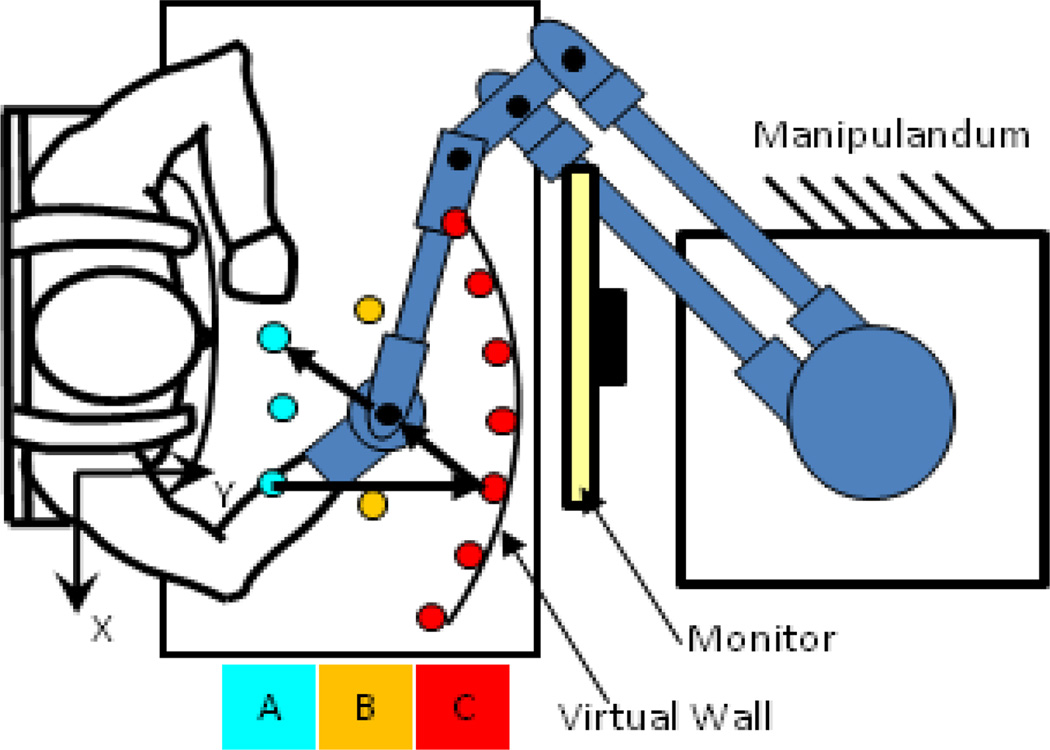
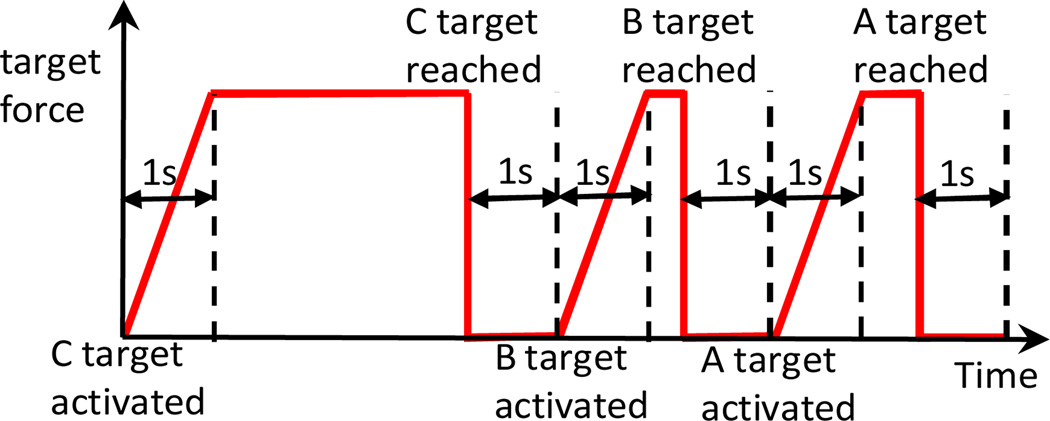
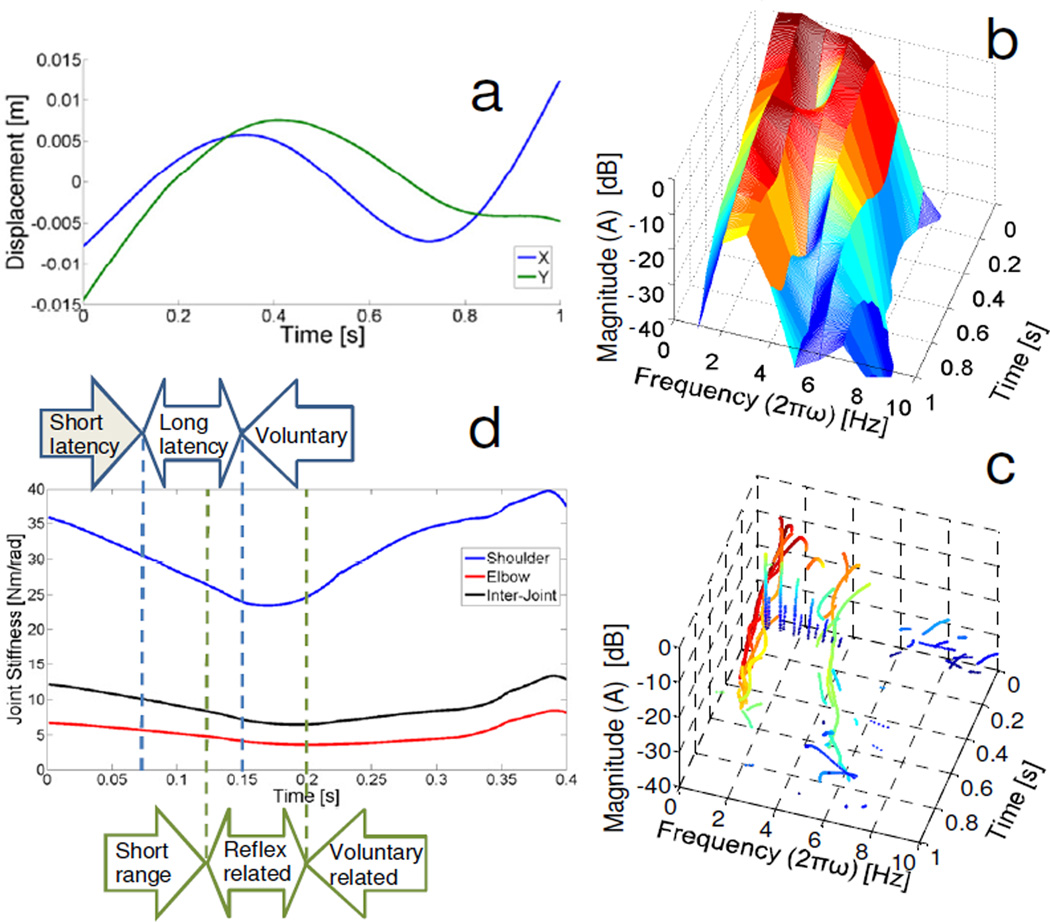
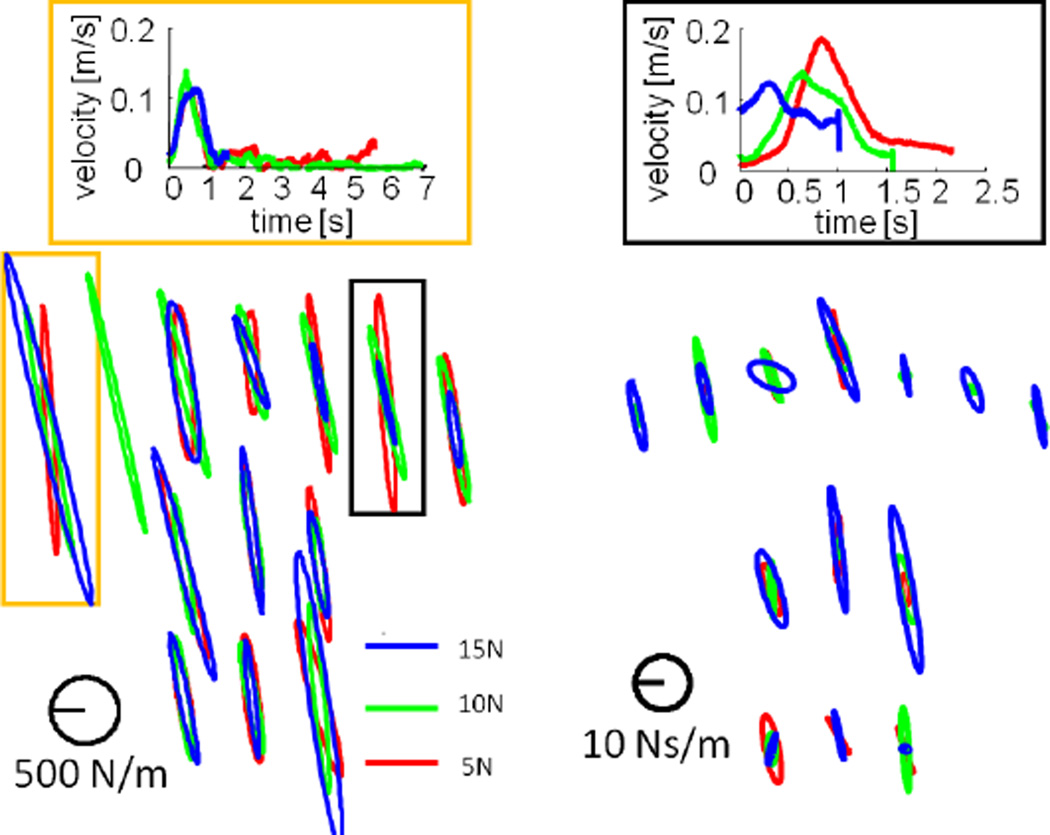
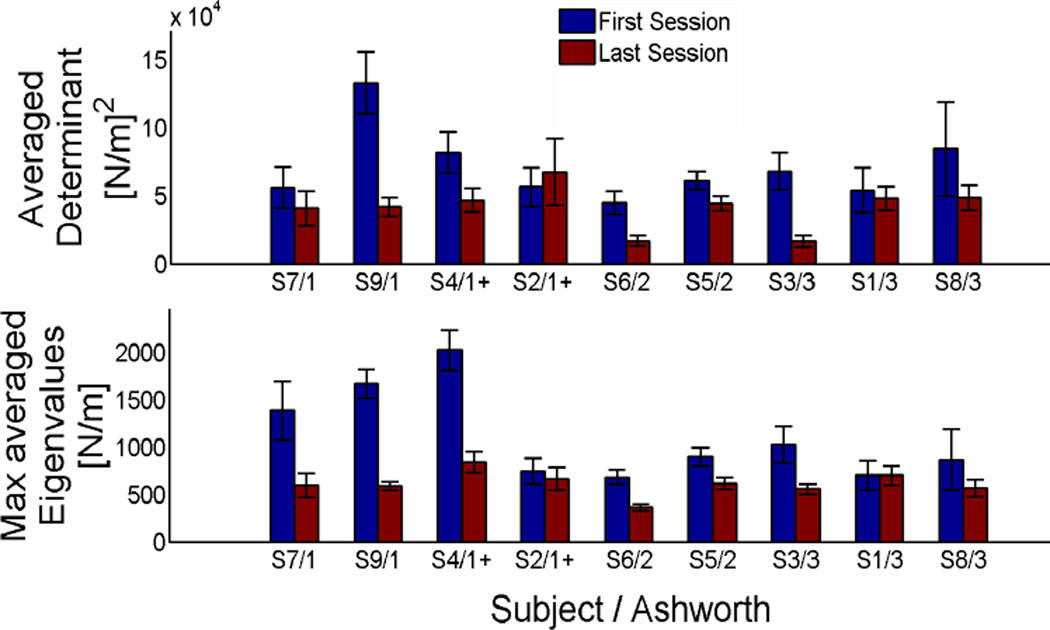
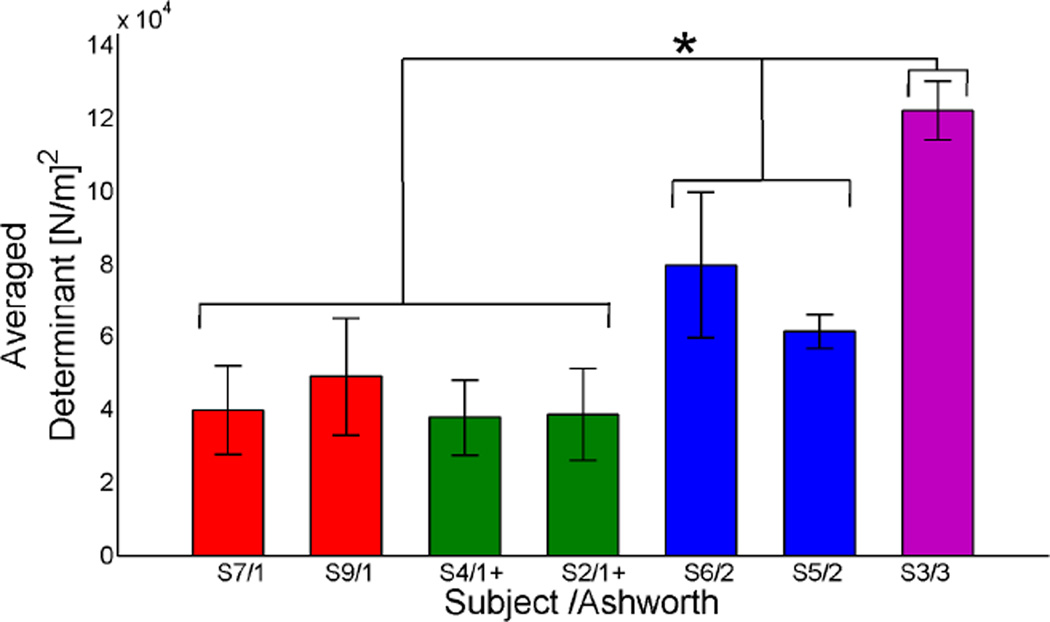
Impaired arm movements in stroke appear as a set of stereotypical kinematic patterns, characterized by abnormal joint coupling, which have a direct consequence on arm mechanics and can be quantified by the net arm stiffness at the hand. The current available measures of arm stiffness during functional tasks have limited clinical use, since they require several repetitions of the same test movement in many directions. Such procedure is difficult to obtain in stroke survivors who have lower fatigue threshold and increased variability compared to unimpaired individuals. The present study proposes a novel, fast quantitative measure of arm stiffness during movements by means of a Time-Frequency technique and the use of a reassigned spectrogram, applied on a trial-by-trial basis with a single perturbation. We tested the technique feasibility during robot mediated therapy, where a robot helped stroke survivors to regain arm mobility by providing assistive forces during a hitting task to 13 targets covering the entire reachable workspace. The endpoint stiffness of the paretic arm was estimated at the end of each hitting movements by suddenly switching of the assistive forces and observing the ensuing recoil movements. In addition, we considered how assistive forces influence stiffness. This method will provide therapists with improved tools to target the treatment to the individual's specific impairment and to verify the effects of the proposed exercises.
© 2011 IEEE
Figures
References
-
- Brunnstrom S. Movement Therapy in Hemiplegia: A Neuropsychological Approach. New York: Harper and Row; 1970.
-
- Liepert J, et al. Motor cortex plasticity during constraint-induced movement therapy in stroke patients. Neurosci Lett. 1998;250:5–8. - PubMed
-
- Taub E, et al. A placebo-controlled trial of constraint-induced movement therapy for upper extremity after stroke. Stroke. 2006;37:1045–1049. - PubMed
-
- Bohannon RW, et al. Rehabilitation Goals Of Patients With Hemiplegia. International Journal Of Rehabilitation Research. 1988;11:181–183.
-
- Casadio M, et al. Robot therapy of the upper limb in stroke patients: preliminary experiences for the principle-based use of this technology. Funct Neurol. 2009 Oct-Dec;24:195–202. - PubMed
Publication types
MeSH terms
Grants and funding
LinkOut - more resources
Full Text Sources
Other Literature Sources
Medical