


Discovery and validation of molecular biomarkers for colorectal adenomas and cancer with application to blood testing
- PMID: 22276102
- PMCID: PMC3261845
- DOI: 10.1371/journal.pone.0029059
Discovery and validation of molecular biomarkers for colorectal adenomas and cancer with application to blood testing
Abstract
Background & aims: Colorectal cancer incidence and deaths are reduced by the detection and removal of early-stage, treatable neoplasia but we lack proven biomarkers sensitive for both cancer and pre-invasive adenomas. The aims of this study were to determine if adenomas and cancers exhibit characteristic patterns of biomarker expression and to explore whether a tissue-discovered (and validated) biomarker is differentially expressed in the plasma of patients with colorectal adenomas or cancer.
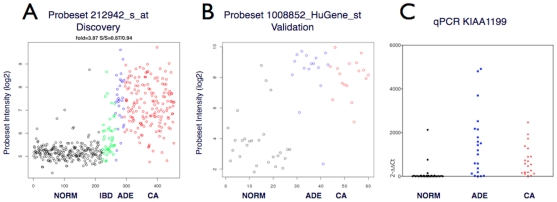
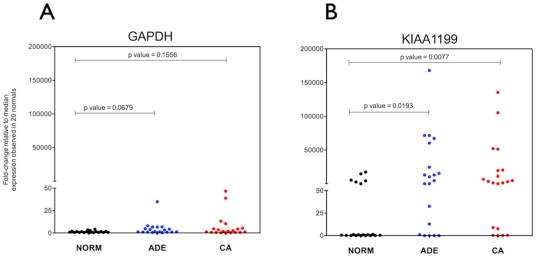
Methods: Candidate RNA biomarkers were identified by oligonucleotide microarray analysis of colorectal specimens (222 normal, 29 adenoma, 161 adenocarcinoma and 50 colitis) and validated in a previously untested cohort of 68 colorectal specimens using a custom-designed oligonucleotide microarray. One validated biomarker, KIAA1199, was assayed using qRT-PCR on plasma extracted RNA from 20 colonoscopy-confirmed healthy controls, 20 patients with adenoma, and 20 with cancer.
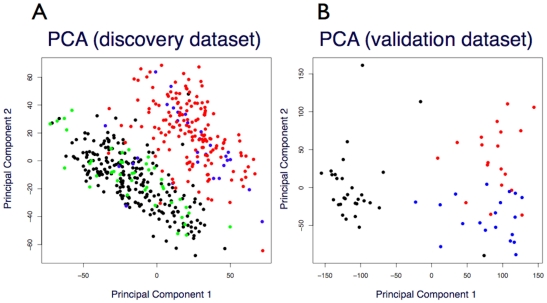
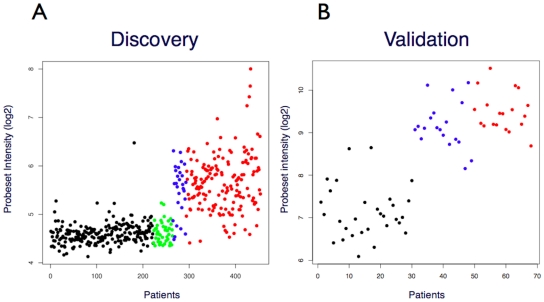
Results: Genome-wide analysis uncovered reproducible gene expression signatures for both adenomas and cancers compared to controls. 386/489 (79%) of the adenoma and 439/529 (83%) of the adenocarcinoma biomarkers were validated in independent tissues. We also identified genes differentially expressed in adenomas compared to cancer. KIAA1199 was selected for further analysis based on consistent up-regulation in neoplasia, previous studies and its interest as an uncharacterized gene. Plasma KIAA1199 RNA levels were significantly higher in patients with either cancer or adenoma (31/40) compared to neoplasia-free controls (6/20).
Conclusions: Colorectal neoplasia exhibits characteristic patterns of gene expression. KIAA1199 is differentially expressed in neoplastic tissues and KIAA1199 transcripts are more abundant in the plasma of patients with either cancer or adenoma compared to controls.
Conflict of interest statement
Figures
References
-
- Cunningham D, Atkin W, Lenz H, Lynch H, Minsky B, et al. Colorectal cancer. Lancet. 2010;375:1030–47. - PubMed
-
- Atkin W, Edwards R, Kralj-Hans I, Wooldrage K, Hart A R, et al. Once-only flexible sigmoidoscopy screening in prevention of colorectal cancer: a multicentre randomised controlled trial. Lancet. 2010;375:1624–33. - PubMed
-
- Mandel J, Church T, Bond J, Snover D, Bradley G, et al. The effect of fecal occult-blood screening on the incidence of colorectal cancer. The New England Journal of Medicine. 2000;343:1603–1607. - PubMed
-
- Levin B, Lieberman D, McFarland B, Andrews K, Brooks D, et al. Screening and surveillance for the early detection of colorectal cancer and adenomatous polyps, 2008: a joint guideline from the American Cancer Society, the US Multi-Society Task Force on Colorectal Cancer, and the American College of Radiology. Gastroenterology. 2008;134:1570–1595. - PubMed
-
- Lane J, Chow E, Young G, Good N, Smith A, et al. Interval Fecal Immunochemical Testing in a Colonoscopic Surveillance Program Speeds Detection of Colorectal Neoplasia. Gastroenterology. 2010;139:1918–26. - PubMed
Publication types
MeSH terms
Substances
LinkOut - more resources
Full Text Sources
Other Literature Sources
Medical
Molecular Biology Databases
