


High-resolution analysis of cytosine methylation in ancient DNA
- PMID: 22276161
- PMCID: PMC3261890
- DOI: 10.1371/journal.pone.0030226
High-resolution analysis of cytosine methylation in ancient DNA
Abstract
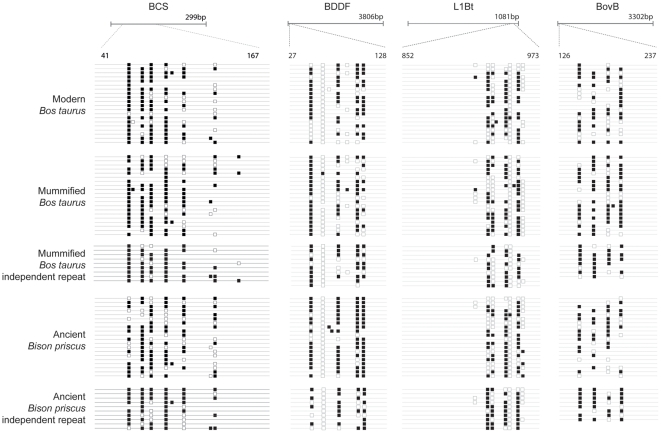
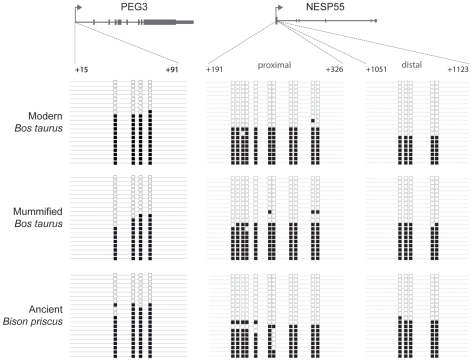
Epigenetic changes to gene expression can result in heritable phenotypic characteristics that are not encoded in the DNA itself, but rather by biochemical modifications to the DNA or associated chromatin proteins. Interposed between genes and environment, these epigenetic modifications can be influenced by environmental factors to affect phenotype for multiple generations. This raises the possibility that epigenetic states provide a substrate for natural selection, with the potential to participate in the rapid adaptation of species to changes in environment. Any direct test of this hypothesis would require the ability to measure epigenetic states over evolutionary timescales. Here we describe the first single-base resolution of cytosine methylation patterns in an ancient mammalian genome, by bisulphite allelic sequencing of loci from late Pleistocene Bison priscus remains. Retrotransposons and the differentially methylated regions of imprinted loci displayed methylation patterns identical to those derived from fresh bovine tissue, indicating that methylation patterns are preserved in the ancient DNA. Our findings establish the biochemical stability of methylated cytosines over extensive time frames, and provide the first direct evidence that cytosine methylation patterns are retained in DNA from ancient specimens. The ability to resolve cytosine methylation in ancient DNA provides a powerful means to study the role of epigenetics in evolution.
Conflict of interest statement
Figures
References
-
- Richards EJ. Inherited epigenetic variation–revisiting soft inheritance. Nature Reviews Genetics. 2006;7:395–401. - PubMed
-
- Richards EJ. Population epigenetics. Current Opinion in Genetics and Development. 2008;18:221–226. - PubMed
-
- Guerrero-Bosagna C, Sabat P, Valladares L. Environmental signaling and evolutionary change: can exposure of pregnant mammals to environmental estrogens lead to epigenetically induced evolutionary changes in embryos? Evolution & Development. 2005;7:341–350. - PubMed
-
- Jablonka E, Lamb MJ. The Inheritance of Acquired Epigenetic Variations. Journal of Theoretical Biology. 1989;139:69–83. - PubMed
Publication types
MeSH terms
Substances
LinkOut - more resources
Full Text Sources
