


Safety of dental extractions in coronary drug-eluting stenting patients without stopping multiple antiplatelet agents
- PMID: 22278596
- PMCID: PMC6652348
- DOI: 10.1002/clc.21960
Safety of dental extractions in coronary drug-eluting stenting patients without stopping multiple antiplatelet agents
Abstract
Background: The risk of excessive bleeding prompts physicians to stop multiple antiplatelet agents before minor surgery, which puts coronary stenting patients at risk for adverse thrombotic events.
Hypothesis: We hypothesized that most dental extractions can be carried out safely without stopping multiple antiplatelet agents.
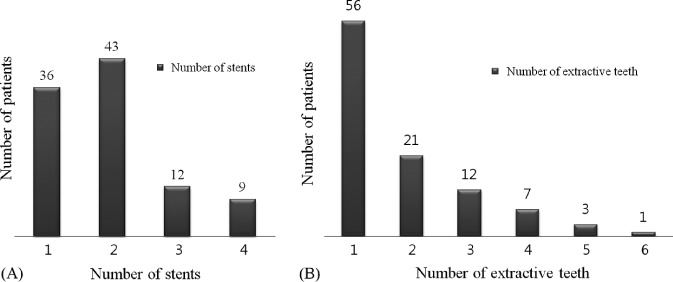
Methods: All dental extraction patients who had undergone coronary stenting and who were also on oral multiple antiplatelet agents therapy were enrolled. One hundred patients underwent dental procedures without stopping antiplatelet agents. All wounds were sutured and followed up at 24 hours, 1 week, and 1 month after the procedure. There were 2233 patients who had not taken oral antiplatelet agents from a health promotion center and had teeth extracted by the same method. After performing propensity-score matching for the entire population, a total of 100 matched pairs of patients were created. The primary outcome was a composite of excessive intraextraction blood loss, transfusion, and rehospitalization for bleeding, and the secondary outcome was a composite of death, nonfatal myocardial infarction, target lesion revascularization, and stent thrombosis within 1 month after the procedure.
Results: There were 2 excessive intraextraction bleeding cases that continued at the extraction site for 4 and 5 hours, respectively, in the coronary stenting patients, and 1 excessive intraextraction bleeding case that continued for 3 hours in the control patients. There were no cases of transfusion, rehospitalization for bleeding, or major cardiovascular events for the 2 propensity-matched groups.
Conclusions: We found that most dental extractions in coronary stenting patients can be carried out safely without stopping multiple antiplatelet agents.
© 2012 Wiley Periodicals, Inc.
Figures
References
-
- White HD, Gersh BJ, Opie LH. Antithrombotic agents: platelet inhibitors, anticoagulants, and fibrinolytics. In: Opie LH, Gersh BJ, eds. Drugs for the Heart. 5th ed. New Delhi, India: Saunders (Indian Edition); 2001:273–322.
-
- The Seventh ACCP Conference on Antithrombotic and Thrombolytic Therapy: evidence‐based guidelines. Chest. 2004;126:163S–696S. - PubMed
-
- Madan GA, Madan SG, Madan G, et al. Minor oral surgery without stopping daily low‐dose aspirin therapy: a study of 51 patients. J Oral Maxillofac Surg. 2005;63:1262–1265. - PubMed
-
- Conti CR. Aspirin and elective surgical procedures [editorial]. Clin Cardiol. 1992;15:709. - PubMed
-
- Speechley JA, Rugman FP. Some problems with anticoagulants in dental surgery. Dent Update. 1992;19:204–206. - PubMed
Publication types
MeSH terms
Substances
LinkOut - more resources
Full Text Sources
Medical
