


Antitumor activity of sorafenib-incorporated nanoparticles of dextran/poly(dl-lactide-co-glycolide) block copolymer
- PMID: 22283905
- PMCID: PMC3292832
- DOI: 10.1186/1556-276X-7-91
Antitumor activity of sorafenib-incorporated nanoparticles of dextran/poly(dl-lactide-co-glycolide) block copolymer
Abstract
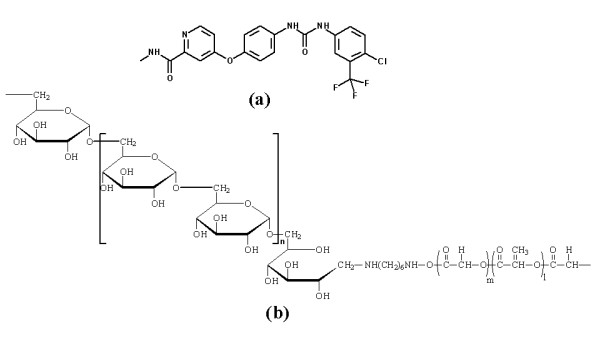
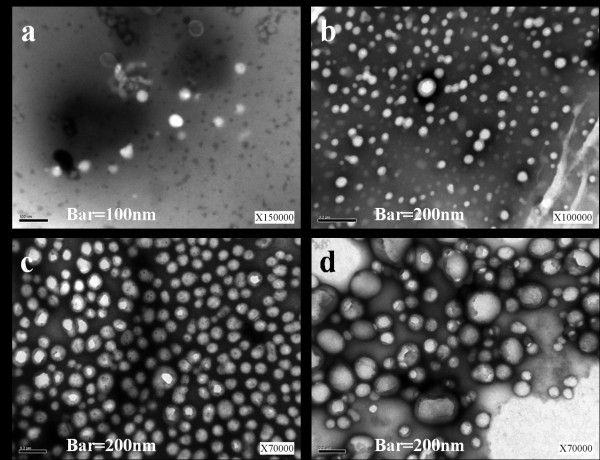
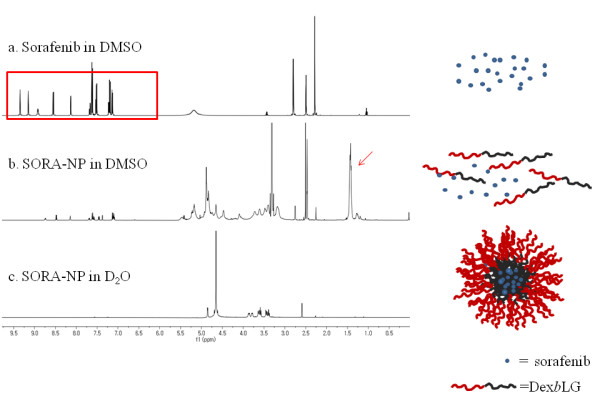
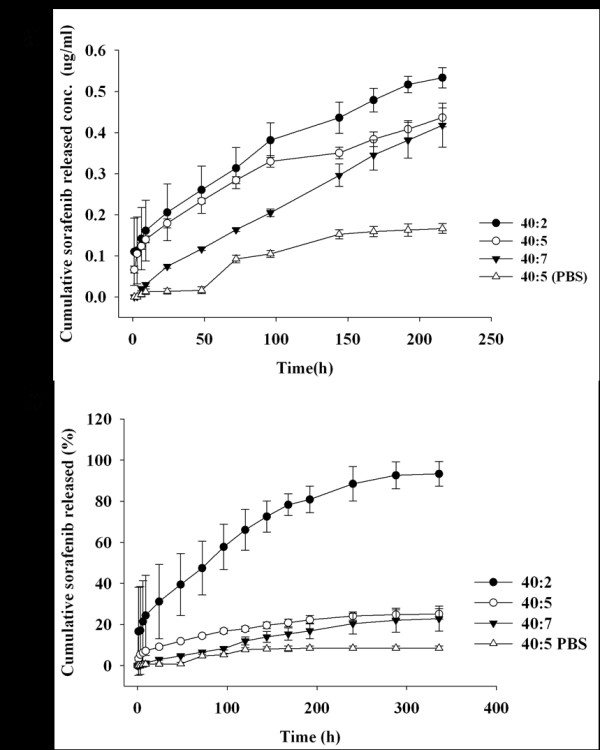
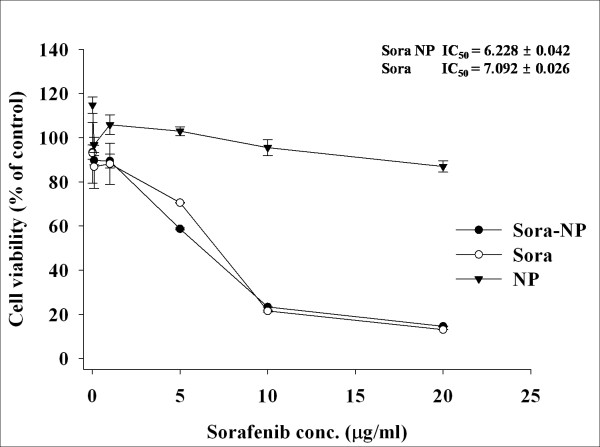
Sorafenib-incoporated nanoparticles were prepared using a block copolymer that is composed of dextran and poly(DL-lactide-co-glycolide) [DexbLG] for antitumor drug delivery. Sorafenib-incorporated nanoparticles were prepared by a nanoprecipitation-dialysis method. Sorafenib-incorporated DexbLG nanoparticles were uniformly distributed in an aqueous solution regardless of the content of sorafenib. Transmission electron microscopy of the sorafenib-incorporated DexbLG nanoparticles revealed a spherical shape with a diameter < 300 nm. Sorafenib-incorporated DexbLG nanoparticles at a polymer/drug weight ratio of 40:5 showed a relatively uniform size and morphology. Higher initial drug feeding was associated with increased drug content in nanoparticles and in nanoparticle size. A drug release study revealed a decreased drug release rate with increasing drug content. In an in vitro anti-proliferation assay using human cholangiocarcinoma cells, sorafenib-incorporated DexbLG nanoparticles showed a similar antitumor activity as sorafenib. Sorafenib-incorporated DexbLG nanoparticles are promising candidates as vehicles for antitumor drug targeting.
Figures
References
-
- Allemann E, Gurny R, Doelker E. Drug loaded poly(lactic acid) nanoparticles produced by a reversible salting-out process: purification of an injected dosage form. Eur J Pharm Biopharm. 1993;39:173–191.
-
- Kwon GS, Naito M, Yokoyama M. Micelles based on AB block copolymers of poly(ethylene oxide) and poly(β-benzyl L-aspartate) Langmuir. 1993;9:945–949. doi: 10.1021/la00028a012. - DOI
LinkOut - more resources
Full Text Sources
Other Literature Sources
