


Review
doi: 10.1016/j.placenta.2011.11.026.
Epub 2012 Jan 28.
Rat placentation: an experimental model for investigating the hemochorial maternal-fetal interface
Affiliations
- PMID: 22284666
- PMCID: PMC3288880
- DOI: 10.1016/j.placenta.2011.11.026
Item in Clipboard
Review
Rat placentation: an experimental model for investigating the hemochorial maternal-fetal interface
Placenta.
2012 Apr.
Abstract
The rat possesses hemochorial placentation with deep intrauterine trophoblast cell invasion and trophoblast-directed uterine spiral artery remodeling; features shared with human placentation. Recognition of these similarities spurred the establishment of in vitro and in vivo research methods using the rat as an animal model to address mechanistic questions regarding development of the hemochorial placenta. The purpose of this review is to provide the requisite background to help move the rat to the forefront in placentation research.
Copyright © 2011 Elsevier Ltd. All rights reserved.
Figures

Schematic diagram showing homologous structures within human and rat hemochorial placentation sites.

In the rat trophoblast stem cells can be directed toward distinct differentiated trophoblast cell lineages: trophoblast giant cells, spongiotrophoblast cells, glycogen cells, invasive trophoblast cells, and syncytial trophoblast.

The schematic diagram highlights the two waves of uterine spiral artery remodeling executed through the actions of natural killer cells (first wave) and invasive trophoblast cells (second wave).
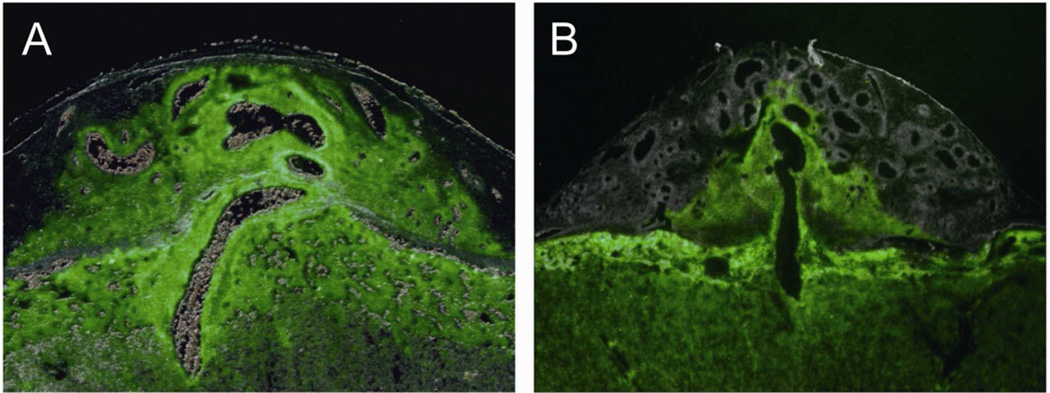
Rat strains exhibit striking differences in the depth and extent of intrauterine trophoblast invasion. Trophoblast cell invasion can be tracked by fluorescence in transgenic placentas constitutively expressing enhanced green fluorescence protein in a wild type uterus. Panel A, Holtzman Sprague-Dawley rat control outbred placentation site exhibiting extensive trophoblast invasion (Adapted from Ref. 81). Panel B, Brown Norway rat placentation site showing limited intrauterine trophoblast invasion.

Panel A) Schematic diagram of the procedure. Lentiviral gene constructs are delivered to zona pellucida free blastocysts, which are then transferred to pseudopregnant recipients, and placentation sites analyzed during various stages of gestation. Panel B) Rat blastocysts examined under phase or fluorescence microscopy following incubation with lentiviral constructs expressing EGFP under the control of the phosphoglycerate kinase promoter. Panel C) Trophoblast-specific lentiviral gene delivery assessed at gestation d13.5. Transduced blastocysts were transferred into uteri of pseudopregnant rats and harvested at gestation d13.5 and examined under bright field or fluorescence microscopy. (Adapted from Ref. 135).
References
-
- Pijnenborg R, Robertson WB, Brosens I, Dixon G. Trophoblast invasion and the establishment of haemochorial placentation in man and laboratory animals. Placenta. 1981;2:71–91. - PubMed
-
- Georgiades P, Ferguson-Smith AC, Burton GJ. Comparative developmental anatomy of the murine and human definitive placenta. Placenta. 2002;23:3–19. - PubMed
-
- Kaufmann P, Black S, Huppertz B. Endovascular trophoblast invasion: implications for the pathogenesis of intrauterine growth retardation and preeclampsia. Biol Reprod. 2003;69:1–7. - PubMed
-
- Pijnenborg R, Vercruysse L, Hanssens M. The uterine spiral arteries in human pregnancy: facts and controversies. Placenta. 2006;27:939–958. - PubMed
Publication types
MeSH terms
Grants and funding
LinkOut - more resources
Full Text Sources
