


The genetics of dyskeratosis congenita
- PMID: 22285015
- PMCID: PMC3269008
- DOI: 10.1016/j.cancergen.2011.11.002
The genetics of dyskeratosis congenita
Abstract
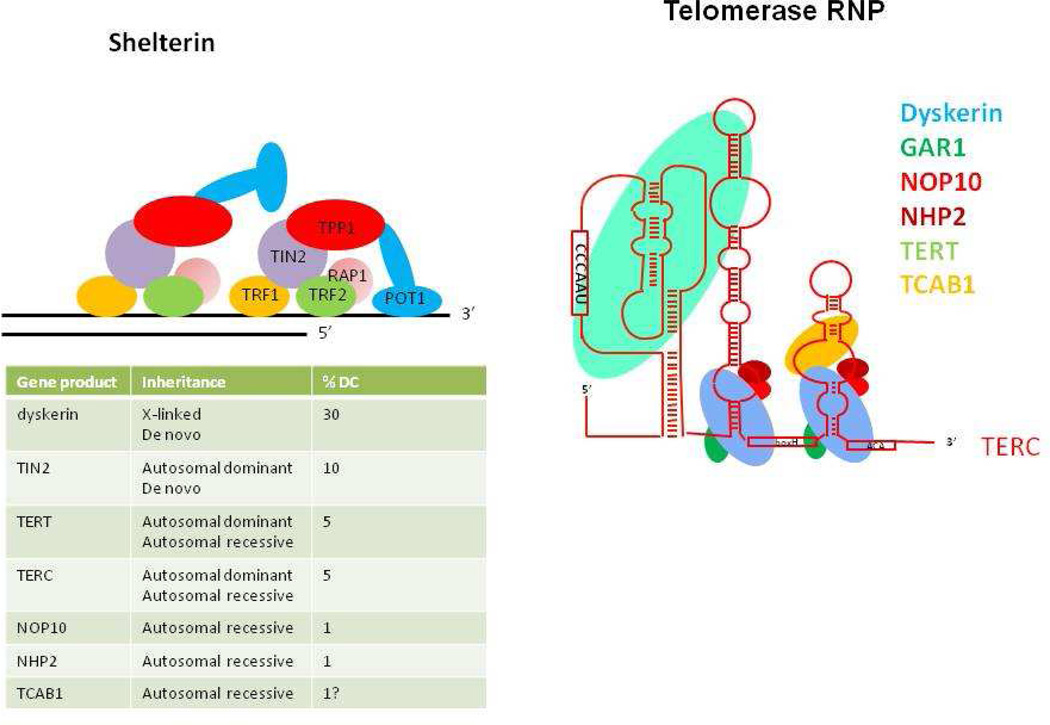
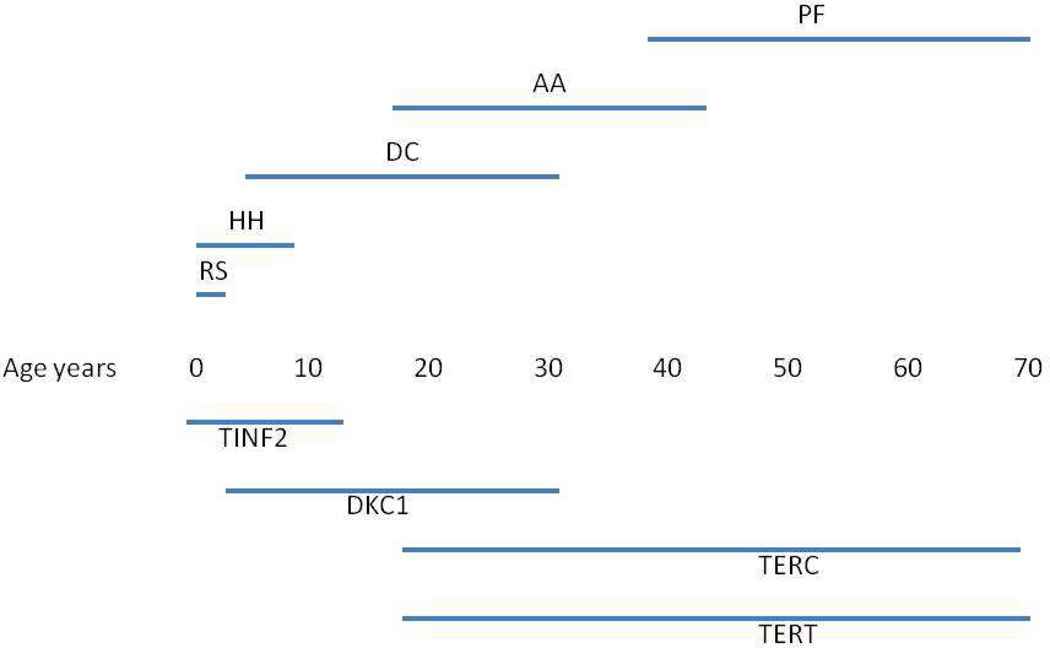
Dyskeratosis congenita (DC) is an inherited bone marrow failure syndrome associated with characteristic mucocutaneous features and a variable series of other somatic abnormalities. The disease is heterogeneous at the genetic and clinical levels. Determination of the genetic basis of DC has established that the disease is caused by a number of genes, all of which encode products involved in telomere maintenance, either as part of telomerase or as part of the shelterin complex that caps and protects telomeres. There is overlap at the genetic and clinical levels with other, more common conditions, including aplastic anemia (AA), pulmonary fibrosis (PF), and liver cirrhosis. Although part of the spectrum of disorders known to be associated with DC, it has emerged that mutations in telomere maintenance genes can lead to the development of AA and PF in the absence of other DC features. Here we discuss the genetics of DC and its relationship to disease presentation.
Copyright © 2011 Elsevier Inc. All rights reserved.
Figures

References
-
- Zinsser F. Atrophia cutis reticularis pigmentione, dystrophia unguium et leukoplakia oris (poikilodermia atrophicans vascularis Jacobi) Ikonogr Derm (Kyoto. 1906;5:219–223.
-
- Engman MA. A unique case of reticular pigmentation of the skin with atrophy. Arch Derm Syph Suppl. 1926;13:685–687.
-
- Cole H, Rauschkolb J, Toomey J. Dyskeratosis congenita with pigmentation, dystrophia unguis and leukokeratosis oris. Arch Derm Syph Suppl. 1930;21:71–95. - PubMed
-
- Drachtman RA, Alter BP. Dyskeratosis congenita. Dermatol Clin. 1995;13:33–39. - PubMed
-
- Dokal I. Dyskeratosis congenita in all its forms. Br J Haematol. 2000;110:768–779. - PubMed
Publication types
MeSH terms
Substances
Grants and funding
LinkOut - more resources
Full Text Sources
Other Literature Sources
Miscellaneous
