. 2012 Mar 30;143(1):85-91.
doi: 10.1016/j.imlet.2012.01.003. Epub 2012 Jan 21.

Selective binding of anti-DNA antibodies to native dsDNA fragments of differing sequence

Affiliations

Selective binding of anti-DNA antibodies to native dsDNA fragments of differing sequence

Melissa B Uccellini et al. Immunol Lett. .

Abstract

Systemic autoimmune diseases are characterized by the development of autoantibodies directed against a limited subset of nuclear antigens, including DNA. DNA-specific B cells take up mammalian DNA through their B cell receptor, and this DNA is subsequently transported to an endosomal compartment where it can potentially engage TLR9. We have previously shown that ssDNA-specific B cells preferentially bind to particular DNA sequences, and antibody specificity for short synthetic oligodeoxynucleotides (ODNs). Since CpG-rich DNA, the ligand for TLR9 is found in low abundance in mammalian DNA, we sought to determine whether antibodies derived from DNA-reactive B cells showed binding preference for CpG-rich native dsDNA, and thereby select immunostimulatory DNA for delivery to TLR9. We examined a panel of anti-DNA antibodies for binding to CpG-rich and CpG-poor DNA fragments. We show that a number of anti-DNA antibodies do show preference for binding to certain native dsDNA fragments of differing sequence, but this does not correlate directly with the presence of CpG dinucleotides. An antibody with preference for binding to a fragment containing optimal CpG motifs was able to promote B cell proliferation to this fragment at 10-fold lower antibody concentrations than an antibody that did not selectively bind to this fragment, indicating that antibody binding preference can influence autoreactive B cell responses.


Figures

Fig. 1
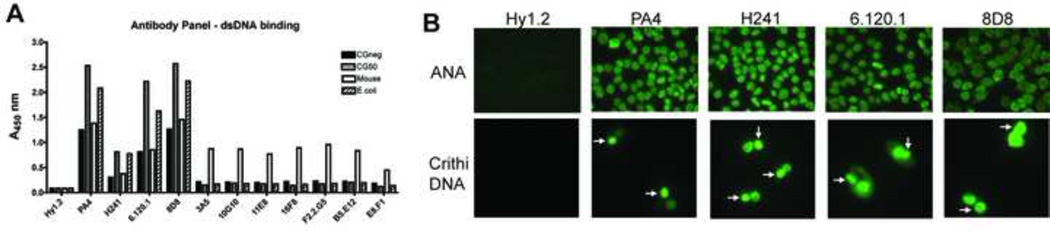
Fig. 1. Anti-DNA antibodies show binding preference for CpG-rich DNA fragments
(A) Plates were coated with anti-IgG2a, incubated with IgG2a antibodies derived from hybridomas, and the indicated biotinylated dsDNA was added at 300 ng/ml. Binding of DNA to antibody was detected with SA-HRP. Results are representative of 3 experiments. (B) Hep-2 or CrithiDNA slides were incubated with 2 µg/ml of the indicated IgG2a antibodies. Binding was detected with anti-IgG-FITC. Kinetoplast is indicated by white arrow.
Fig. 2
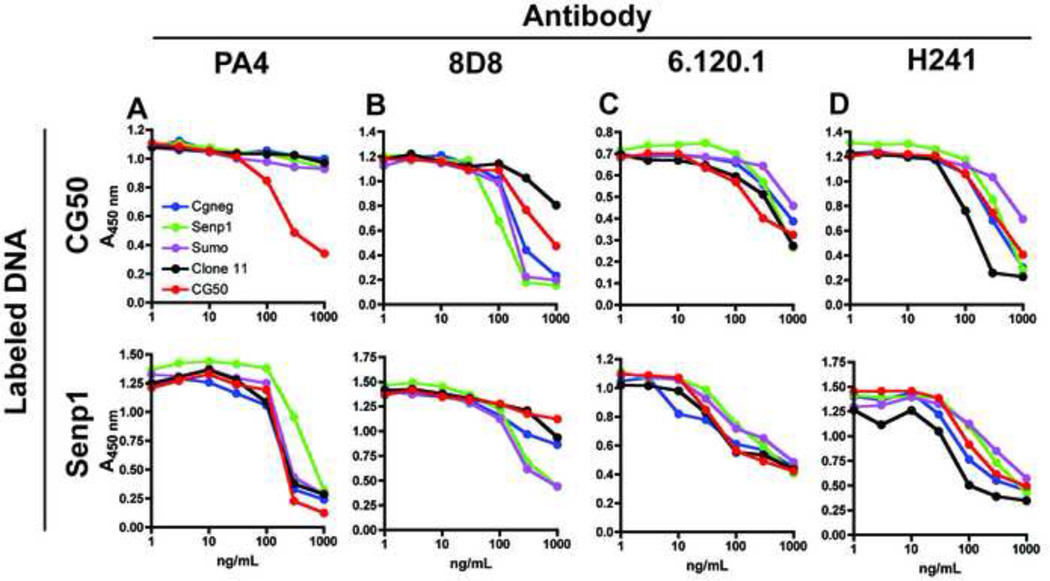
Fig. 2. Anti-DNA antibodies show distinct binding preferences
Plates were coated with 1–2 µg/ml antibody and the indicated concentration of unlabeled CGneg or CG50 was added in the presence of 20–30 ng/ml biotinylated CG50 (top) or Senp1 (bottom). Bound DNA was detected with SA-HRP. Results are representative of 3 experiments.
Fig. 3
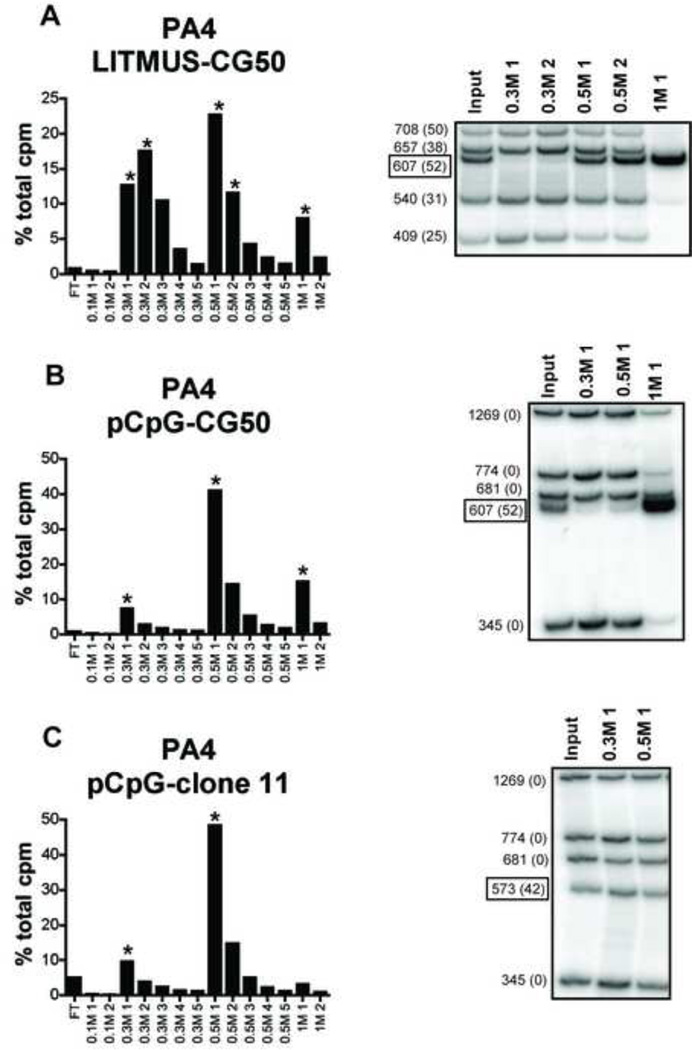
Fig. 3. Anti-DNA antibody PA4 preferentially binds CG50 fragment, but not CpG island clone 11 fragment
The anti-DNA antibody PA4 was immobilized on Protein G sepharose and incubated with 32P-labeled DNA fragments resulting from restriction enzyme digestion of LITMUS-CG50 (A), pCpG-mcs-CG50 (B), or pCpG-mcs-clone 11 (C). Sequential salt washes (shown on the x-axis) were used to elute bound DNA from anti-DNA antibodies. Selected fractions (*) were analyzed on a non-denaturing gel for DNA content. Boxed DNA fragment indicated is inserted (non-plasmid) DNA (CG50 or clone 11). DNA fragment size is indicated at the left and number of CpG dinucleotides is shown in parenthesis.
Fig. 4
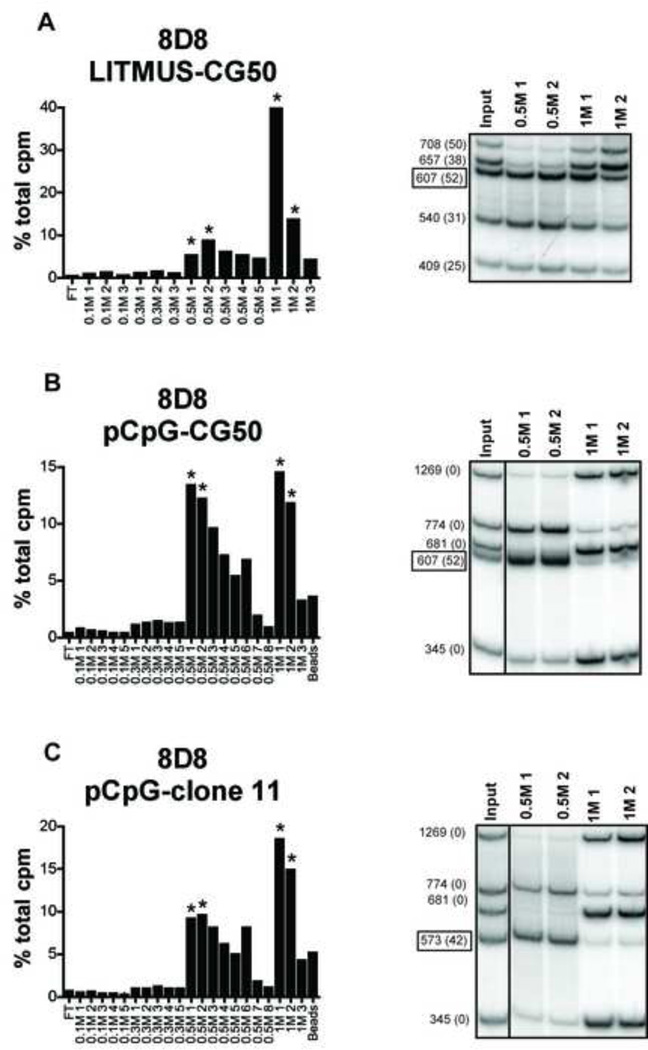
Fig. 4. Anti-DNA antibody 8D8 preferentially binds plasmid fragments, but not CG50 of CpG island clone 11 fragments
The anti-DNA antibody 8D8 was immobilized on Protein G sepharose and incubated with 32P-labeled DNA fragments resulting from restriction enzyme digestion of LITMUS-CG50 (A), pCpG-mcs-CG50 (B), or pCpG-mcs-clone 11 (C). Sequential salt washes (shown on the x-axis) were used to elute bound DNA from anti-DNA antibodies. Selected fractions (*) were analyzed on a non-denaturing gel for DNA content. Boxed DNA fragment indicated is inserted (non-plasmid) DNA (CG50 or clone 11). DNA fragment size is indicated at the left and number of CpG dinucleotides is shown in parenthesis.
Fig. 5
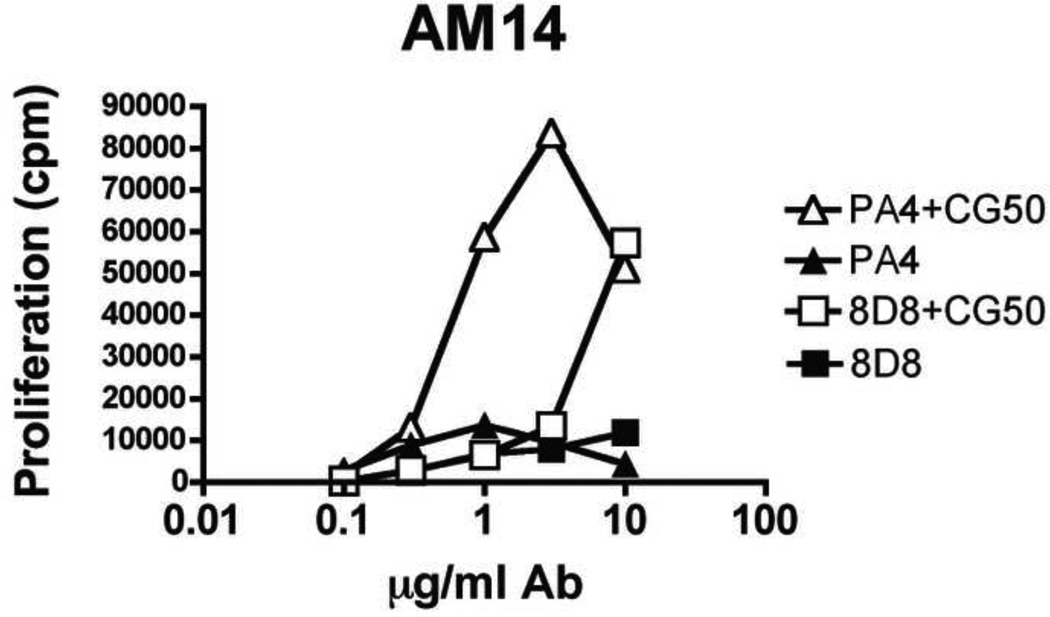
Fig. 5. Anti-DNA antibody PA4 induces proliferation to CG50 at lower antibody doses than 8D8
Purified AM14 B cells were stimulated with the indicated concentration of PA4 or 8D8 in the presence or absence of 300 ng/ml CG50 and proliferation was measured. Results are representative of 2 experiments.

References

    1. Plotz PH. The autoantibody repertoire: searching for order. Nat Rev Immunol. 2003;3:73–78. - PubMed
    1. Christensen SR, Shlomchik MJ. Regulation of lupus-related autoantibody production and clinical disease by Toll-like receptors. Semin Immunol. 2007;19:11–23. - PMC - PubMed
    1. Leadbetter EA, Rifkin IR, Hohlbaum AM, Beaudette BC, Shlomchik MJ, Marshak- Rothstein A. Chromatin-IgG complexes activate B cells by dual engagement of IgM and Toll-like receptors. Nature. 2002;416:603–607. - PubMed
    1. Boule MW, Broughton C, Mackay F, Akira S, Marshak-Rothstein A, Rifkin IR. Toll-like receptor 9-dependent and -independent dendritic cell activation by chromatinimmunoglobulin G complexes. J Exp Med. 2004;199:1631–1640. - PMC - PubMed
    1. Shlomchik MJ, Zharhary D, Saunders T, Camper SA, Weigert MG. A rheumatoid factor transgenic mouse model of autoantibody regulation. Int Immunol. 1993;5:1329–1341. - PubMed

Publication types