


Pneumococcal genome sequencing tracks a vaccine escape variant formed through a multi-fragment recombination event
- PMID: 22286217
- PMCID: PMC3303117
- DOI: 10.1038/ng.1072
Pneumococcal genome sequencing tracks a vaccine escape variant formed through a multi-fragment recombination event
Abstract
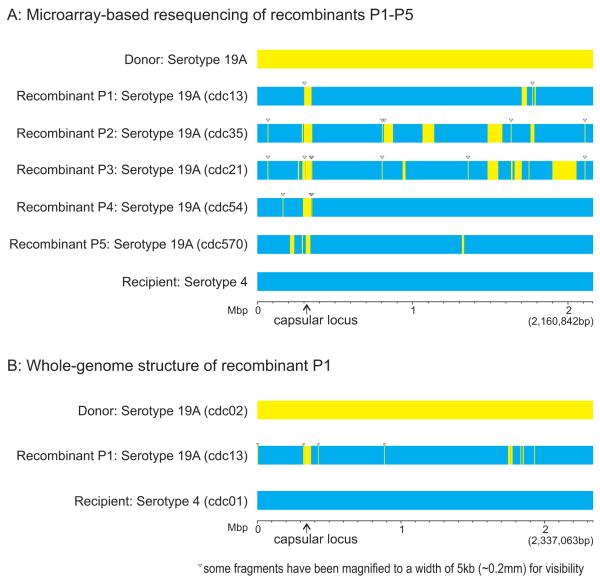
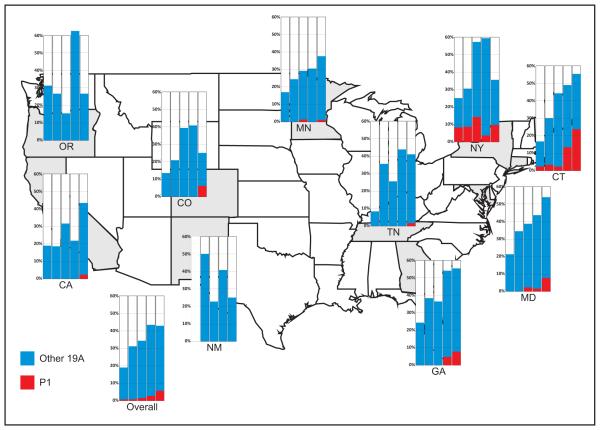
Streptococcus pneumoniae ('pneumococcus') causes an estimated 14.5 million cases of serious disease and 826,000 deaths annually in children under 5 years of age(1). The highly effective introduction of the PCV7 pneumococcal vaccine in 2000 in the United States(2,3) provided an unprecedented opportunity to investigate the response of an important pathogen to widespread, vaccine-induced selective pressure. Here, we use array-based sequencing of 62 isolates from a US national monitoring program to study five independent instances of vaccine escape recombination(4), showing the simultaneous transfer of multiple and often large (up to at least 44 kb) DNA fragments. We show that one such new strain quickly became established, spreading from east to west across the United States. These observations clarify the roles of recombination and selection in the population genomics of pneumococcus and provide proof of principle of the considerable value of combining genomic and epidemiological information in the surveillance and enhanced understanding of infectious diseases.
Figures
References
-
- O’Brien KL, et al. Burden of disease caused by Streptococcus pneumoniae in children younger than 5 years: global estimates. Lancet. 2009;374:893–902. - PubMed
-
- Whitney CG, et al. Decline in invasive pneumococcal disease after the introduction of protein-polysaccharide conjugate vaccine. N Engl J Med. 2003;348:1737–46. - PubMed
-
- Pilishvili T, et al. Sustained reductions in invasive pneumococcal disease in the era of conjugate vaccine. J Infect Dis. 2010;201:32–41. - PubMed
-
- Eskola J, et al. A randomized, prospective field trial of a conjugate vaccine in the protection of infants and young children against invasive Haemophilus influenzae type b disease. N Engl J Med. 1990;323:1381–7. - PubMed
Publication types
MeSH terms
Substances
Grants and funding
LinkOut - more resources
Full Text Sources
Other Literature Sources
Medical
