. 2012 Jan 28;68(4):1029-1051.
doi: 10.1016/j.tet.2011.11.089.

Synthesis of sansalvamide A peptidomimetics: triazole, oxazole, thiazole, and pseudoproline containing compounds

Affiliations

Synthesis of sansalvamide A peptidomimetics: triazole, oxazole, thiazole, and pseudoproline containing compounds

Melinda R Davis et al. Tetrahedron. .

Abstract

Peptidomimetic-based macrocycles typically have improved pharmacokinetic properties over those observed with peptide analogs. Described are the syntheses of 13 peptidomimetic derivatives that are based on active Sansalvamide A structures, where these analogs incorporate heterocycles (triazoles, oxazoles, thiazoles, or pseudoprolines) along the macrocyclic backbone. The syntheses of these derivatives employ several approaches that can be applied to convert a macrocyclic peptide into its peptidomimetic counterpart. These approaches include peptide modifications to generate the alkyne and azide for click chemistry, a serine conversion into an oxazole, a Hantzsch reaction to generate the thiazole, and protected threonine to generate the pseudoproline derivatives. Furthermore, we show that two different peptidomimetic moieties, triazoles and thiazoles, can be incorporated into the macrocyclic backbone without reducing cytotoxicity: triazole and thiazole.


Figures
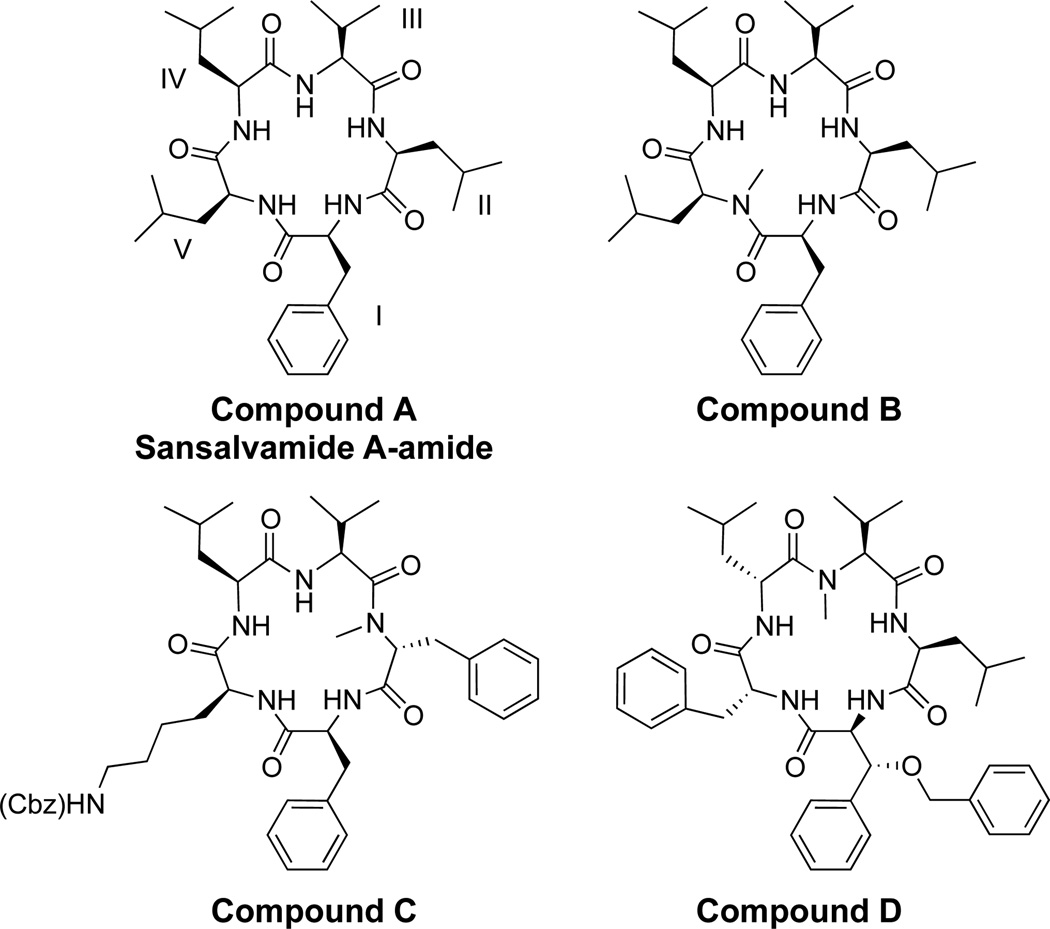
Figure 1
Figure 1
San A compounds
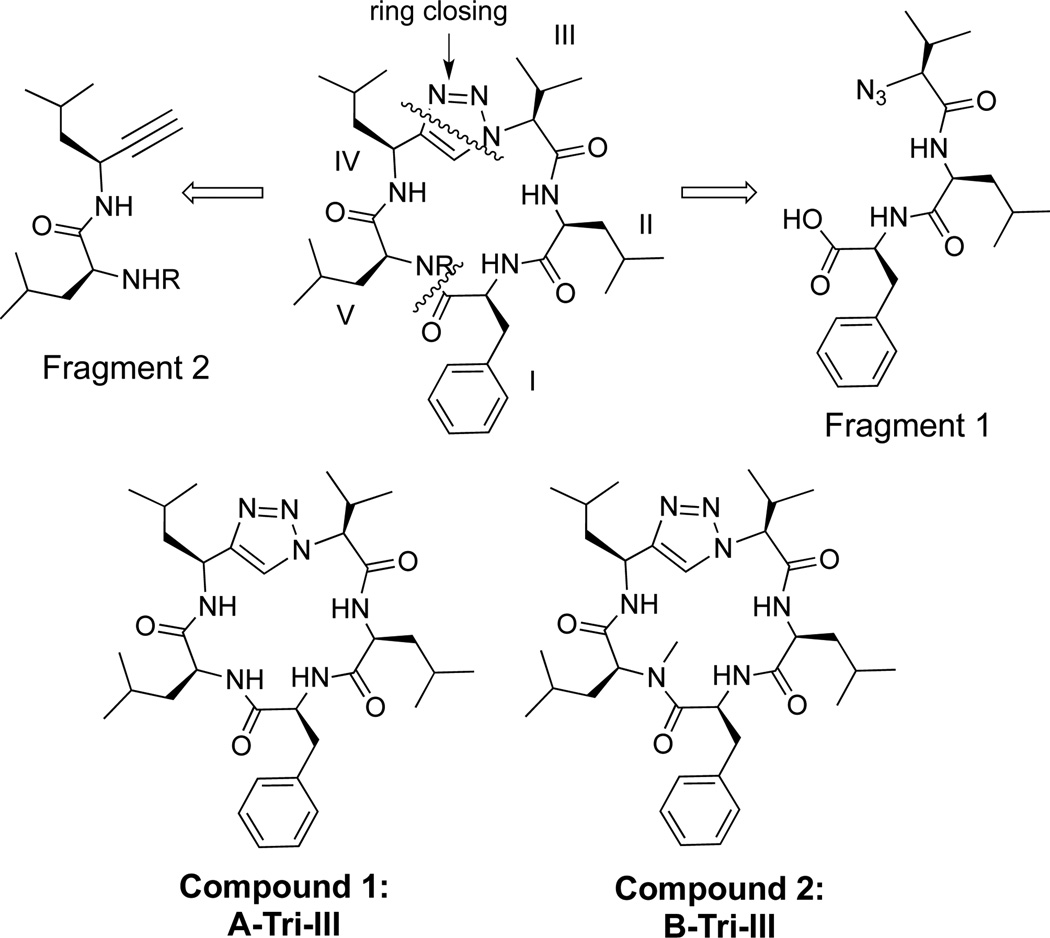
Figure 2
Figure 2
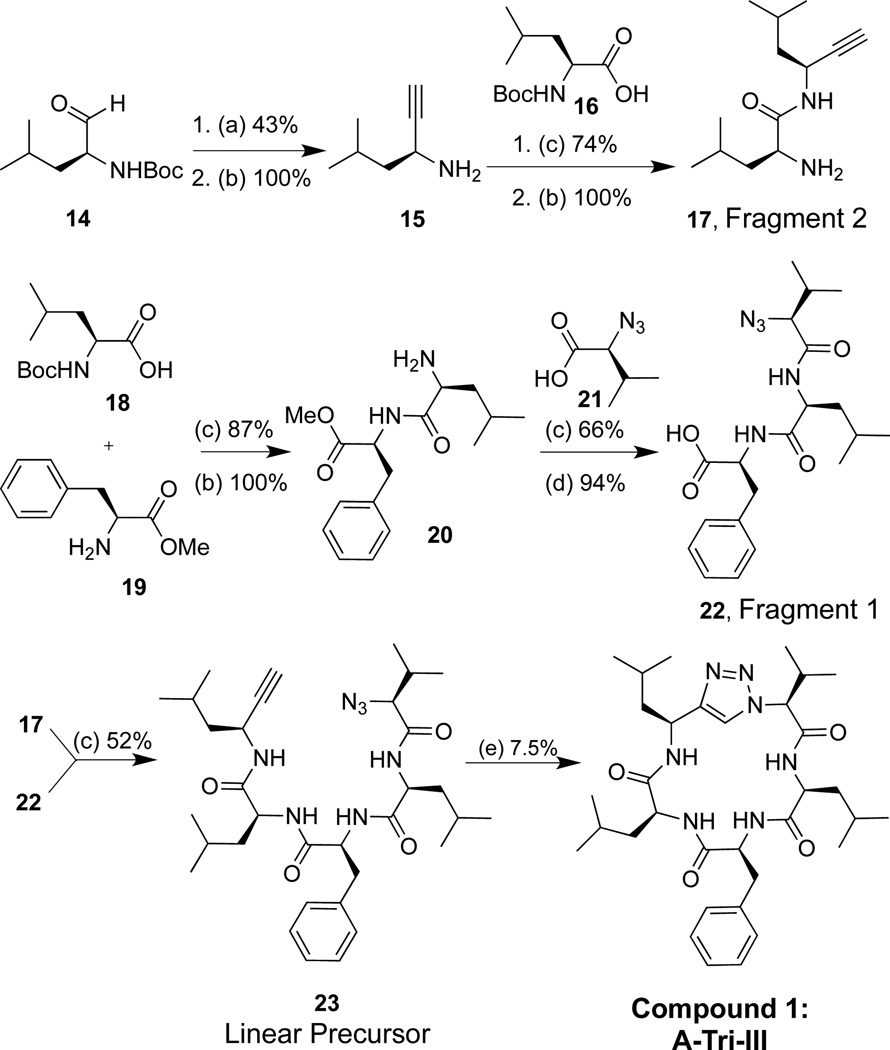
Triazole synthetic strategy and compounds synthesized
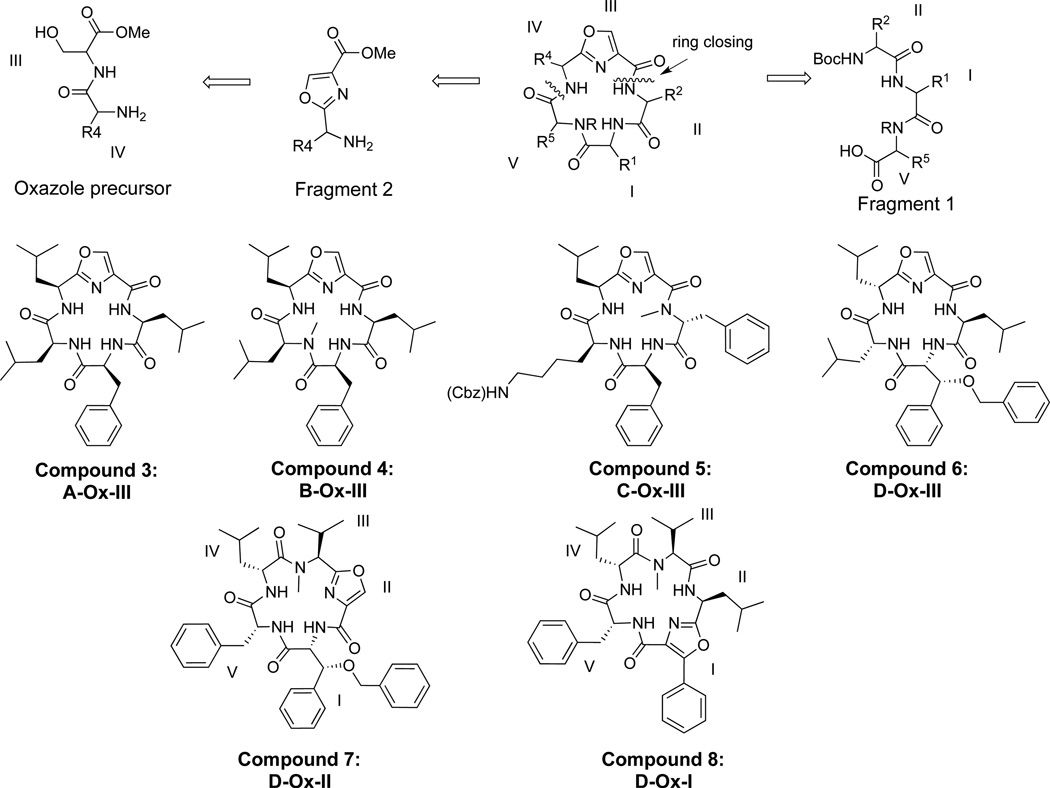
Figure 3
Figure 3
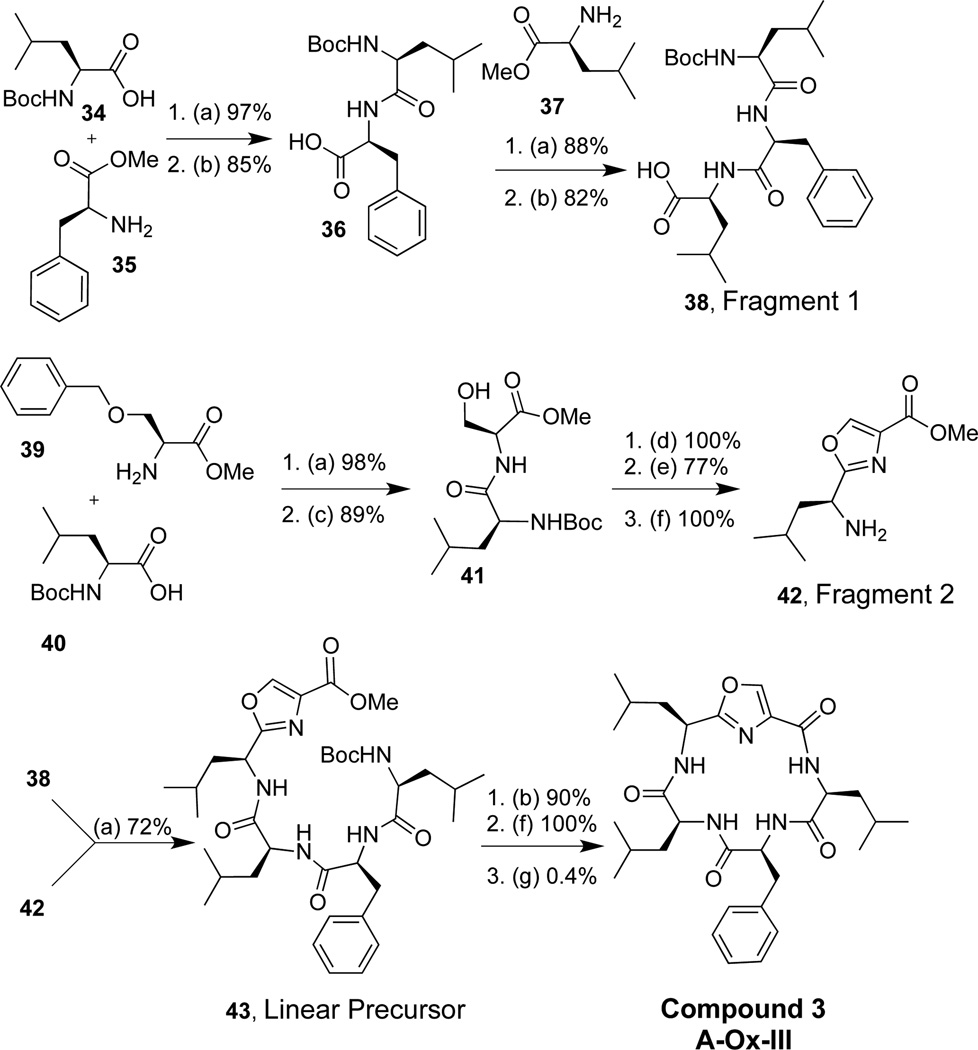
Oxazole peptidomimetic compounds
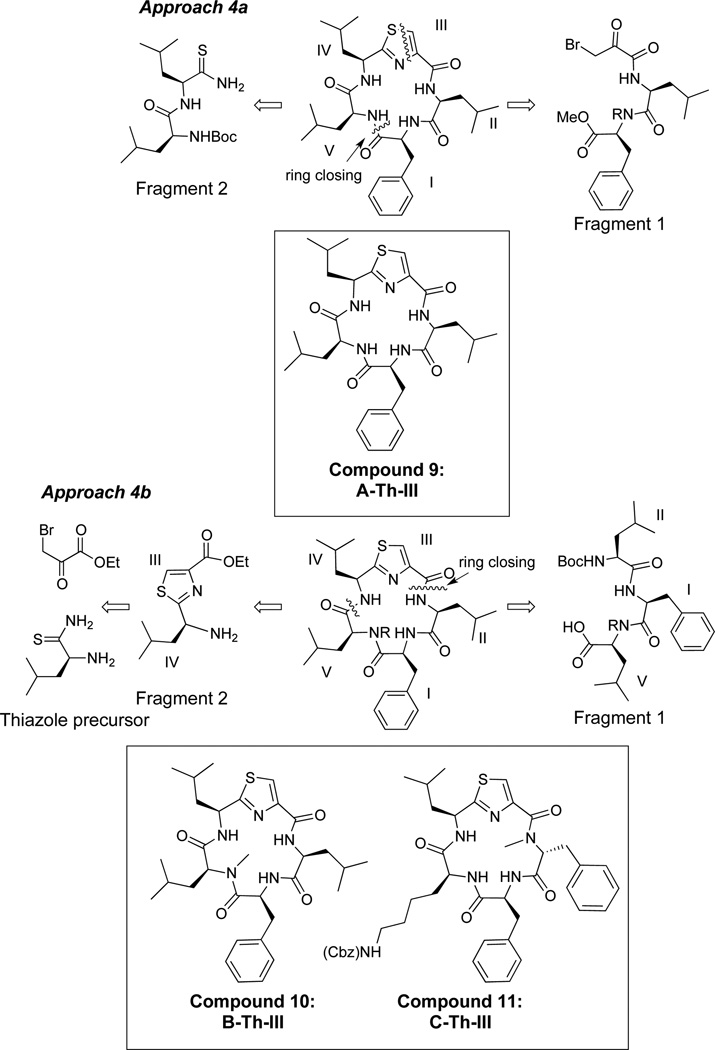
Figure 4
Figure 4
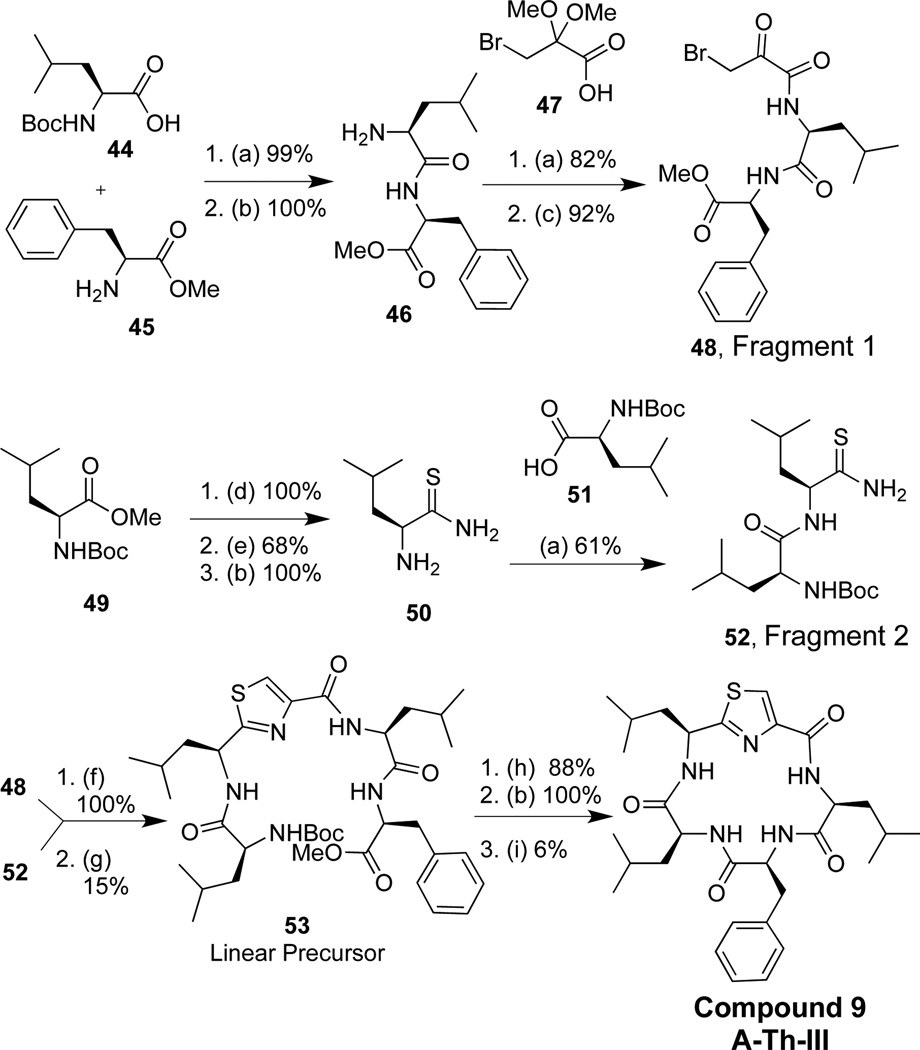
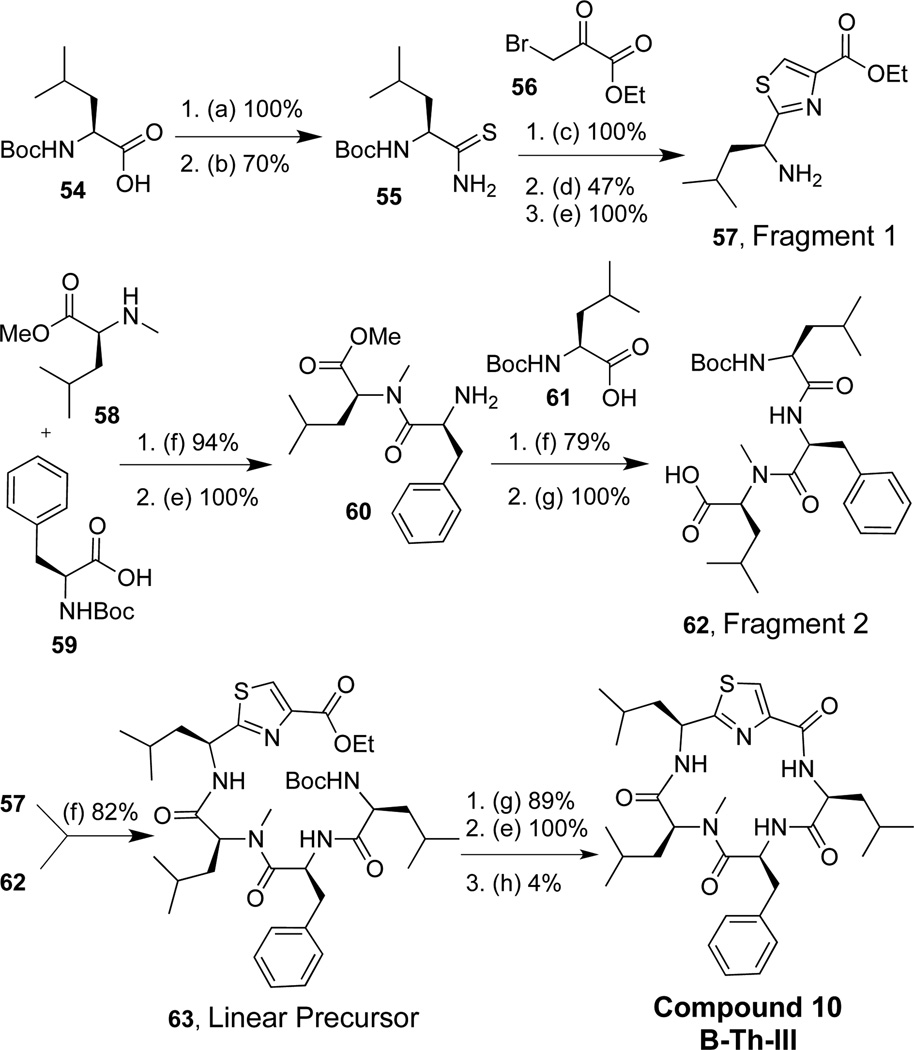
Thiazole peptidomimetic compounds: 2 approachs
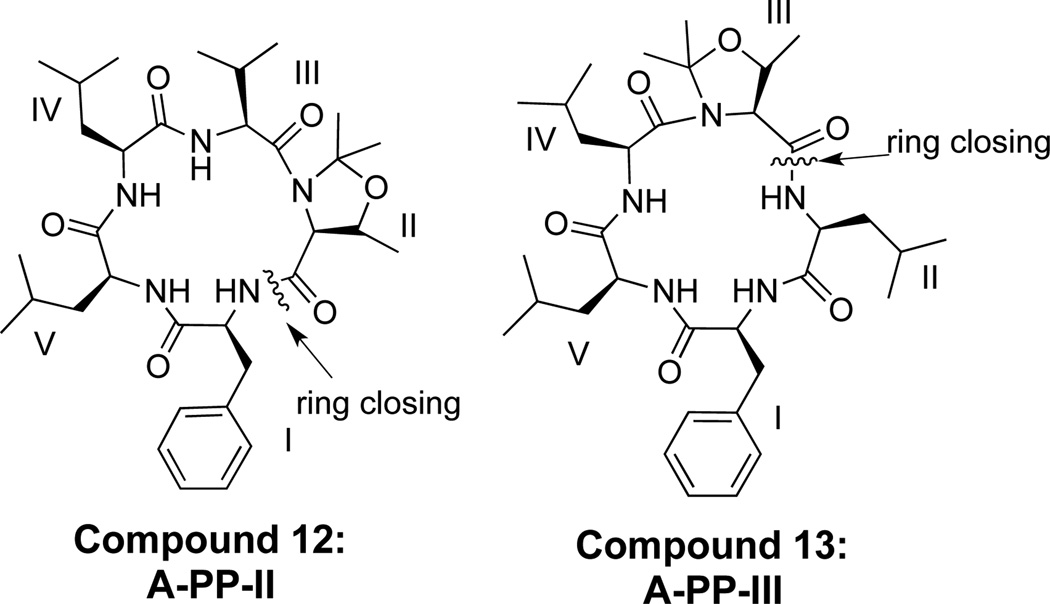
Figure 5
Figure 5
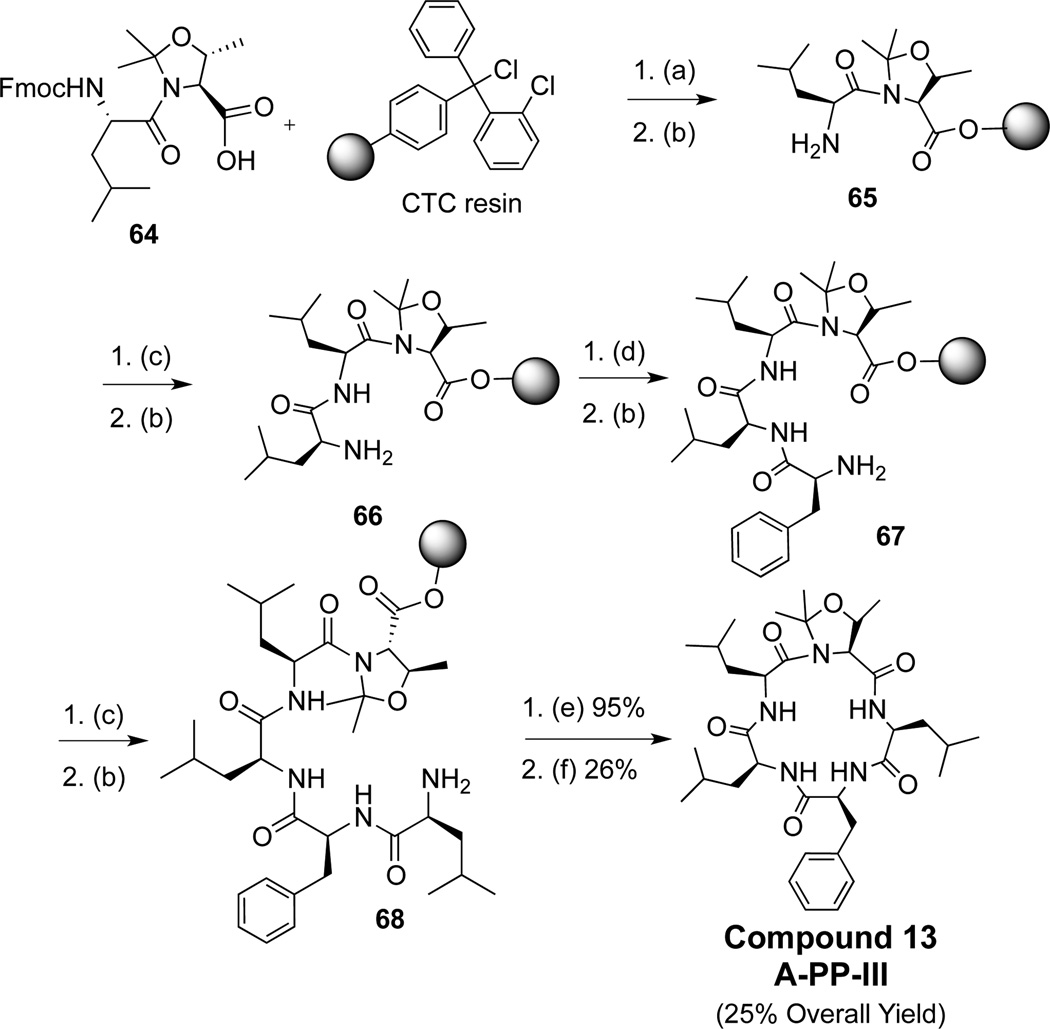
Pseudoproline compounds
Figure 6
Figure 6
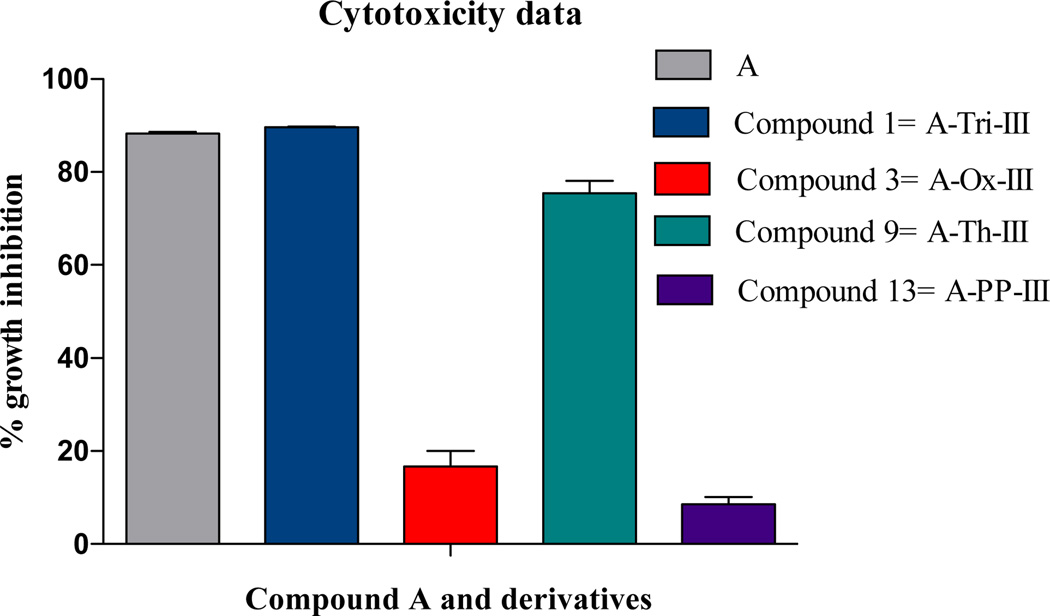
Peptidomimetic compounds run at 25 µM against HeLa cervical cancer cell lines. Each data point is an average of four wells run in three separate assays using HeLa cancer cell lines. Inhibition is relative to 1% DMSO control.
Figure 7
Figure 7
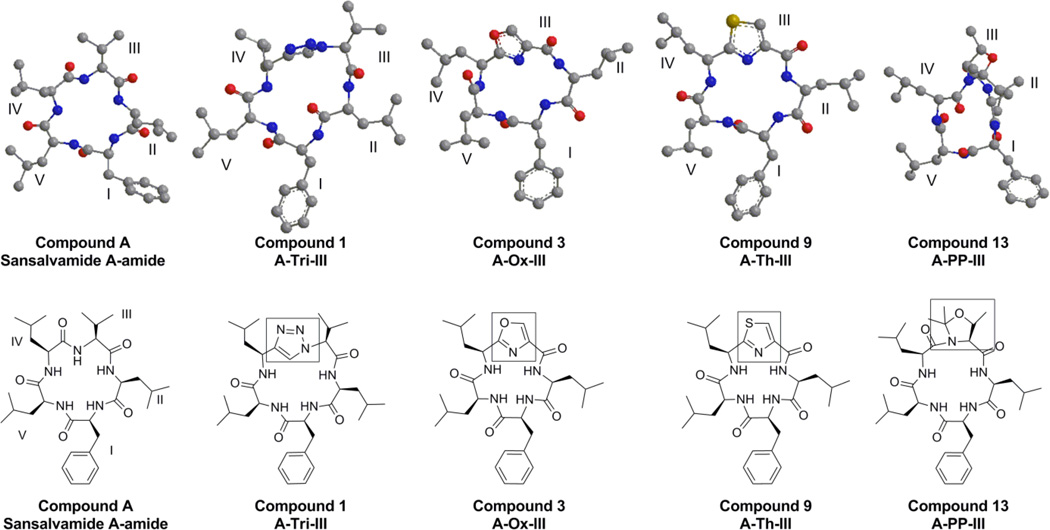
Molecular models of peptidomimetic compounds. Energy was miminized using the Merck Molecular Force Field 94 (MMFF94) with ChemBio3D Ultra (version 12.0) available form CambridgeSoft. Convergence criteria: atomic root mean square force 0.01 kcal/mol; static energy 82.250–115.726 kcal/mol; 500 iterations.
Scheme 1
Scheme 1
Synthesis of 1. (a) p-toluenesulfonyl azide (3 equiv), dimethyl (2-oxopropyl) phosphonate (3 equiv), potassium carbonate (3 equiv), 0.25 M in acetonitrile/methanol (1:1); (b) 20% trifluoroacetic acid/dichloromethane (0.1 M); (c) TBTU (1.2 equiv), DIPEA (8 equiv), methylene chloride (0.1 M); (d) LiOH (2 equiv), H2O2 (3.4 equiv), methanol (0.1 M), 0 °C; (e) L-ascorbic acid (9 equiv), NaHCO3 (9 equiv), CuSO4·H2O (0.3 equiv), 0.007 M in methanol/water (1:1)
Scheme 2
Scheme 2
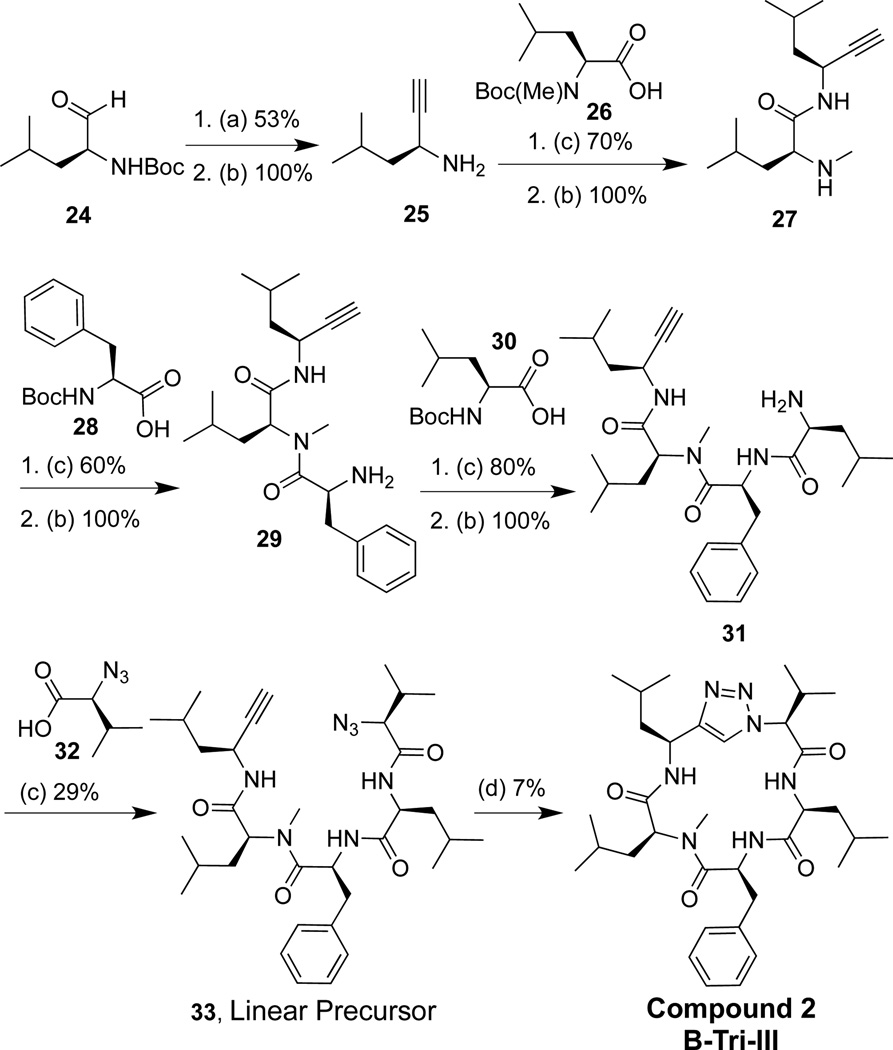
Synthesis of 2. (a) p-toluenesulfonyl azide (3 equiv), dimethyl (2-oxopropyl) phosphonate (3 equiv), potassium carbonate (3 equiv), 0.25 M in acetonitrile/methanol (1:1); (b) 20% trifluoroacetic acid/dichloromethane (0.1 M); (c) TBTU (1.2 equiv), DIPEA (8 equiv), methylene chloride (0.1 M); (d) L-ascorbic acid (9 equiv), NaHCO3 (9 equiv), CuSO4·H2O (0.3 equiv), 0.007 M in methanol/water (1:1)
Scheme 3
Scheme 3
Synthesis of 3. (a) TBTU (1.2 equiv.), DIPEA (8 equiv), methylene chloride (0.1 M); (b) LiOH (2 equiv), H2O2 (3.4 equiv), methanol (0.1 M), 0 °C; (c) H2/Pd (0.03 equiv), ethanol (0.1 equiv); (d) DAST (1.1 equiv), K2CO3 (2 equiv), methylene chloride (0.01 M), −78 °C; (e) DBU (2 equiv), BrCCl3 (2 equiv), methylene chloride (0.2 M), −47 °C; (f) 20% trifluoroacetic acid/methylene chloride (0.1 M); (g) TBTU (0.7 equiv), O-(7-Azabenzotriazol-1-yl)-N,N,N',N'-tetramethyluronium hexafluorophosphate (HATU) (0.6 equiv), 3-(Diethylphosphoryloxy)-1,2,3-benzotriazin-4(3H)-one (DEPBT) (0.7 equiv), DIPEA (10 equiv), 0.007 M in methylene chloride/acetonitrile (1:1)
Scheme 4
Scheme 4
Synthesis of 9. (a) TBTU (1.1 equiv), DIPEA (4 equiv), methylene chloride (0.1 M); (b) 20% trifluoroacetic acid/methylene chloride (0.1 M); (c) formic acid (0.1M) (d) (1:1) ammonium hydroxide/methanol (0.1 M);(e) Lawesson’s Reagent (1 equiv), 1,2-dimethoxyethane (.15 M); (f) KHCO3 (8 equiv), 1,2-dimethoxyethane (0.1 M); (g) pyridine (9 equiv), TFAA (4 equiv), TEA (2 equiv), 1,2-dimethoxyethane (0.1 M) 0 °C; (h) LiOH (2 equiv), H2O2 (3.4 equiv), methanol (0.1 M), 0 °C; (i) TBTU (0.7 equiv), HATU (0.7 equiv), DEPBT (0.7 equiv), DIPEA (6 equiv), methylene chloride (0.007 M).
Scheme 5
Scheme 5
Synthesis of 10. (a) (1:1) ammonium hydroxide/methanol (0.1 M); (b) Lawesson’s Reagent (1 equiv), 1,2-dimethoxyethane (0.15 M); (c) KHCO3 (8 equiv), 1,2-dimethoxyethane (0.1 M); (d) pyridine (9 equiv), TFAA (4 equiv), TEA (2 equiv), 1,2-dimethoxyethane (0.1 M) 0 °C; (e) 20% trifluoroacetic acid/methylene chloride (0.1 M); (f) TBTU (1.1 equiv), DIPEA (4 equiv), methylene chloride (0.1 M); (g) LiOH (2 equiv), H2O2 (3.4 equiv), methanol (0.1 M), 0 °C; (h) TBTU (0.7 equiv), HATU (0.7 equiv), DEPBT (0.7 equiv), DIPEA (6 equiv), methylene chloride (0.007 M).
Scheme 6
Scheme 6
Syntheisis of 13. (a) 3 mL/g resin of N-Methylpyrrolidone (NMP), DIPEA (6 equiv), methylene chloride (10 mL/g AA); (b) 20% piperidine/dimethylformamide (0.2 M); (c) Fmoc-Leu-OH (1.2 equiv), HOBt (3 equiv), DIC (6 equiv), dimethylformamide (0.2M); (d) Fmoc-Phe-OH (1.2 equiv), HOBt (3 equiv), DIC (6 equiv), dimethylformamide (0.2M); (e) TFE/methylene chloride (1:1) (0.2 M); (f) HATU (0.7 equiv), TBTU (0.7 equiv), DEPBT (0.6 equiv), DIPEA (8 equiv), methylene chloride/acetonitrile (1:1) (0.007 M)

References

    1. Sellers RP, Alexander LD, Johnson VA, Lin C-C, Savage J, Corral R, Moss J, Slugocki TS, Singh EK, Davis MR, Ravula S, Spicer JE, Oelrich JL, Thornquist A, Pan C-M, McAlpine SR. Bioorg. &Med. Chem. 2010;18:6822–6856. - PMC - PubMed
    1. Otrubova K, Lushington G, Vander Velde D, McGuire KL, McAlpine SR. Journal of Medicinal Chemistry. 2008;51:530–544. - PubMed
    1. Belofsky GN, Jensen PR, Fenical W. Tetrahedron Lett. 1999;40:2913–2916.
    1. Pan P-S, Vasko RC, Lapera SA, Johnson VA, Sellers RP, Lin C-C, Pan C-M, Davis MR, Ardi VC, McAlpine SR. Bioorganic & Medicinal Chemistry. 2009;17:5806–5825. - PMC - PubMed
    1. Otrubova K, Lushington GH, Vander Velde D, McGuire KL, McAlpine SR. J. Med. Chem. 2008;51:530–544. - PubMed

LinkOut - more resources