Review
doi: 10.2174/138161212799315786.
Transgenic mouse models of Alzheimer disease: developing a better model as a tool for therapeutic interventions
Affiliations
- PMID: 22288400
- PMCID: PMC4437619
- DOI: 10.2174/138161212799315786
Item in Clipboard
Review
Transgenic mouse models of Alzheimer disease: developing a better model as a tool for therapeutic interventions
Curr Pharm Des.
2012.
Abstract
Alzheimer disease (AD) is the leading cause of dementia among elderly. Currently, no effective treatment is available for AD. Analysis of transgenic mouse models of AD has facilitated our understanding of disease mechanisms and provided valuable tools for evaluating potential therapeutic strategies. In this review, we will discuss the strengths and weaknesses of current mouse models of AD and the contribution towards understanding the pathological mechanisms and developing effective therapies.
Figures
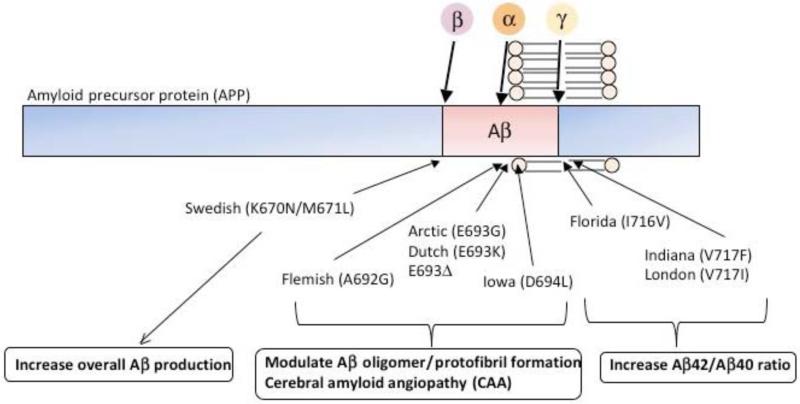
Amyloid precursor protein (APP) is a type I transmembrane protein, and within its sequence, amyloid-β(Aβ) resides. APP is proteolytically cleaved by α-, β-, and γ-secretase activities, and α-secretase cleavage precludes toxic Aβ to be produced. FAD-linked genetic mutations on APP exhibit different effects on APP processing and amyloidogenic properties of Aβ peptides. Please refer main text for detailed explanation.
References
-
- Hebert LE, Scherr PA, Bienias JL, Bennett DA, Evans DA. Alzheimer disease in the US population: prevalence estimates using the 2000 census. Arch Neurol 2003. 60:1119–22. - PubMed
-
- Querfurth HW, LaFerla FM. Alzheimer's disease. N Engl J Med. 2010;362:329–44. - PubMed
-
- Selkoe DJ, Schenk D. Alzheimer's disease: molecular understanding predicts amyloid-based therapeutics. Annu Rev Pharmacol Toxicol. 2003;43:545–84. - PubMed
Publication types
MeSH terms
Grants and funding
LinkOut - more resources
Full Text Sources
Other Literature Sources
Medical