


Endocannabinoids at the synapse a decade after the dies mirabilis (29 March 2001): what we still do not know
- PMID: 22289914
- PMCID: PMC3424745
- DOI: 10.1113/jphysiol.2011.220855
Endocannabinoids at the synapse a decade after the dies mirabilis (29 March 2001): what we still do not know
Abstract
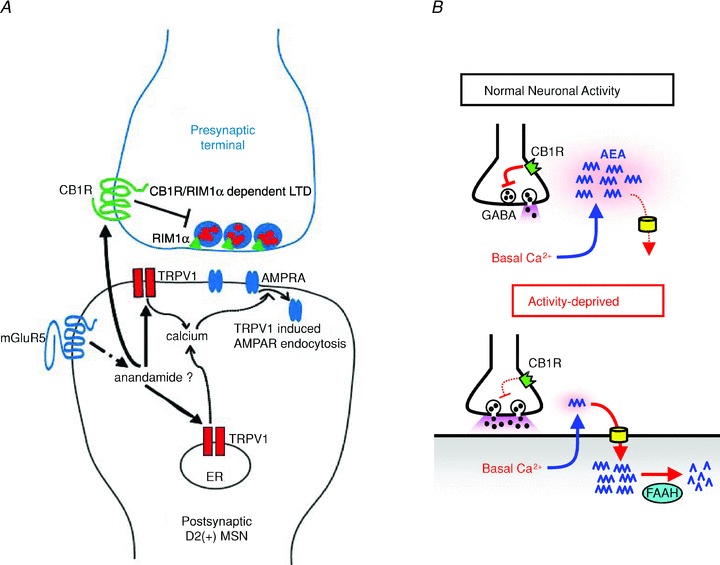
Endogenous cannabinoids (endocannabinoids, eCBs) are ubiquitous regulators of synaptic transmission in the brain, mediating numerous forms of short- and long-term plasticity, and having strong influences on synapse formation and neurogenesis. Their roles as retrograde messengers that suppress both excitatory and inhibitory transmission are well-established. Yet, despite intensive investigation, many basic aspects of the eCB system are not understood. This brief review highlights recent advances, problems that remain unresolved, and avenues for future exploration. While 2-arachidonoylglycerol (2-AG) is probably the major eCB for intercellular CB1R-dependent signalling, anandamide (AEA) has come to the forefront in several novel contexts, both as a dual endovanilloid/endocannabinoid that regulates synaptic transmission acutely and as the source of a steady eCB tone in hippocampus. Complexities in the cellular processing of 2-AG are receiving renewed attention, as they are increasingly recognized as major determinants of how 2-AG affects cells. Long-standing fundamental issues such as the synthesis pathway for AEA and the molecular mechanism(s) underlying cellular uptake and release of eCBs remain problematical.
Figures
References
Publication types
MeSH terms
Substances
Grants and funding
LinkOut - more resources
Full Text Sources
