


Cethromycin versus clarithromycin for community-acquired pneumonia: comparative efficacy and safety outcomes from two double-blinded, randomized, parallel-group, multicenter, multinational noninferiority studies
- PMID: 22290969
- PMCID: PMC3318370
- DOI: 10.1128/AAC.05596-11
Cethromycin versus clarithromycin for community-acquired pneumonia: comparative efficacy and safety outcomes from two double-blinded, randomized, parallel-group, multicenter, multinational noninferiority studies
Abstract
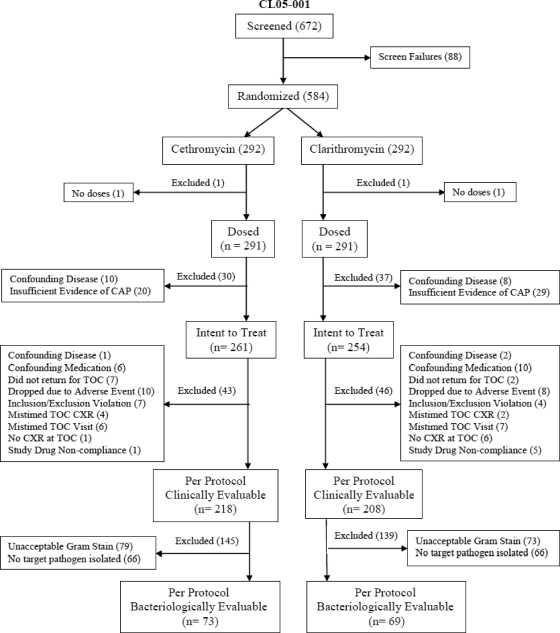
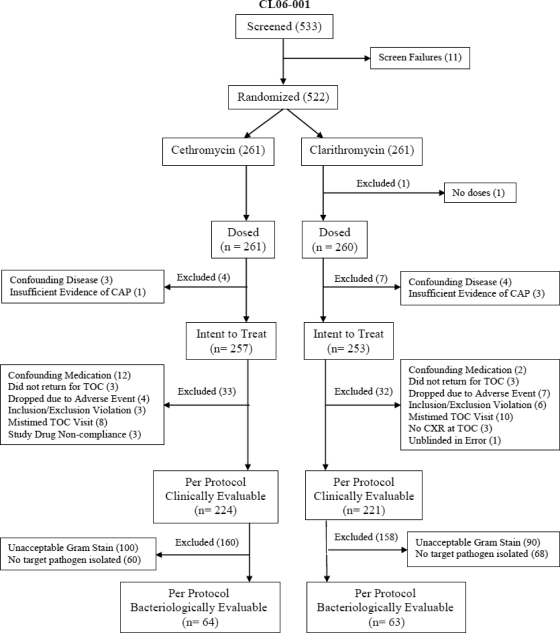
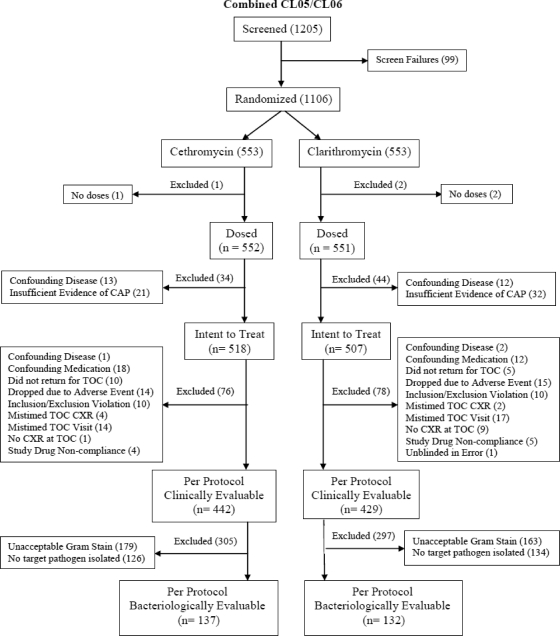
Community-acquired pneumonia (CAP) continues to be a major health challenge in the United States and globally. Factors such as overprescribing of antibiotics and noncompliance with dosing regimens have added to the growing antibacterial resistance problem. In addition, several agents available for the treatment of CAP have been associated with serious side effects. Cethromycin is a new ketolide antibiotic that may provide prescribing physicians with an additional agent to supplement a continually limited armamentarium. Two global phase III noninferiority studies (CL05-001 and CL06-001) to evaluate cethromycin safety and efficacy were designed and conducted in patients with mild to moderate CAP. Study CL05-001 demonstrated an 83.1% clinical cure rate in the cethromycin group compared with 81.1% in the clarithromycin group (95% confidence interval [CI], -4.8%, +8.9%) in the intent to treat (ITT) population and a 94.0% cethromycin clinical cure rate compared with a 93.8% clarithromycin cure rate (95% CI, -4.5%, +5.1%) in the per protocol clinical (PPc) population. Study CL06-001 achieved an 82.9% cethromycin clinical cure rate in the ITT population compared with an 88.5% clarithromycin cure rate (95% CI, -11.9%, +0.6%), whereas the clinical cure rate in the PPc population was 91.5% in cethromycin group compared with 95.9% in clarithromycin group (95% CI, -9.1%, +0.3%). Both studies met the primary endpoints for clinical cure rate based on predefined, sliding-scale noninferiority design. Therefore, in comparison with clarithromycin, these two noninferiority studies demonstrated the efficacy and safety of cethromycin, with encouraging findings of efficacy in subjects with Streptococcus pneumoniae bacteremia. No clinically significant adverse events were observed during the studies. Cethromycin may be a potential oral therapy for the outpatient treatment of CAP.
Figures
References
-
- Advanced Life Sciences, Inc. 2009. FDA Anti-Infective Drugs Advisory Committee held on June 2, 2009 to discuss NDA 22-398 for cethromycin oral tablets. http://www.fda.gov/downloads/AdvisoryCommittees/CommitteesMeetingMateria... Accessed 14 December 2010
-
- Douthwaite S, Champney WS. 2001. Structures of ketolides and macrolides determine their mode of interaction with the ribosomal target site. J. Antimicrob. Chemother. 48(Suppl 2):1–8 - PubMed
Publication types
MeSH terms
Substances
LinkOut - more resources
Full Text Sources
Medical
Miscellaneous
