


Use of biosensors as alternatives to current regulatory methods for marine biotoxins
- PMID: 22291571
- PMCID: PMC3260648
- DOI: 10.3390/s91109414
Use of biosensors as alternatives to current regulatory methods for marine biotoxins
Abstract
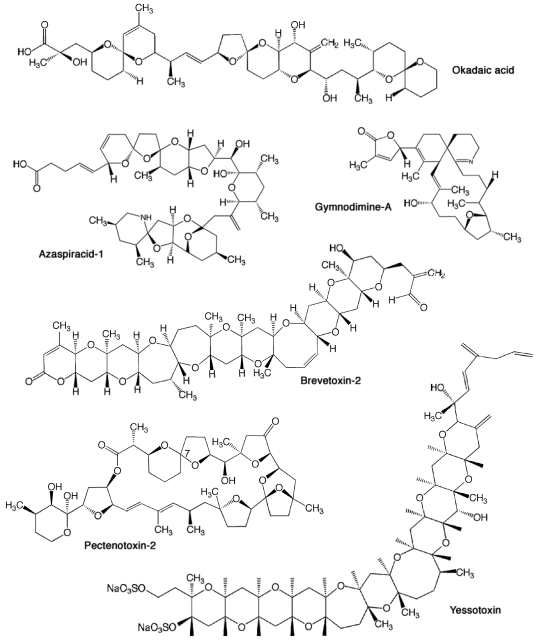
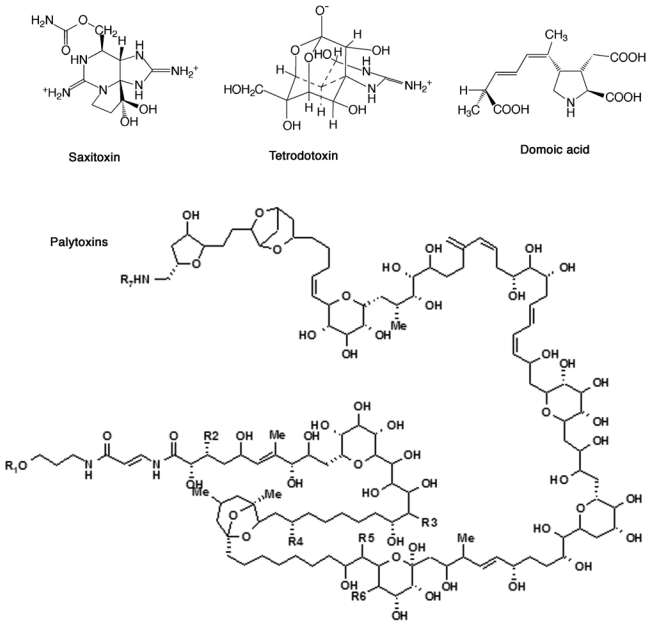
Marine toxins are currently monitored by means of a bioassay that requires the use of many mice, which poses a technical and ethical problem in many countries. With the exception of domoic acid, there is a legal requirement for the presence of other toxins (yessotoxin, saxitoxin and analogs, okadaic acid and analogs, pectenotoxins and azaspiracids) in seafood to be controlled by bioassay, but other toxins, such as palytoxin, cyclic imines, ciguatera and tetrodotoxin are potentially present in European food and there are no legal requirements or technical approaches available to identify their presence. The need for alternative methods to the bioassay is clearly important, and biosensors have become in recent years a feasible alternative to animal sacrifice. This review will discuss the advantages and disadvantages of using biosensors as alternatives to animal assays for marine toxins, with particular focus on surface plasmon resonance (SPR) technology.
Keywords: biosensor; marine toxins; seafood; shellfish poisoning; surface plasmon resonance.
Figures
References
-
- Hallegraeff G.M. A review of harmful algal blooms and their apparent global increase. Phycologia. 1993;32:79–99.
-
- Rodriguez-Velasco M.L. Toxin monitoring programs and regulatory review. In: Botana L.M., editor. Seafood and freshwater toxins: pharmacology, physiology and detection. 2nd ed. CRC Press; Boca Raton, FL, USA: 2008. pp. 919–932.
-
- Hoagland P, Scatasta S. The economic effects of harmful algal blooms. In: Graneli E, Turner J., editors. Ecology of harmful algae. Springer-Verlag; Dordrecht, The Netherlands: 2006. (Ecology Studies Series).
-
- Vieites J.M., Cabado A.G. Incidence of marine toxins on industrial activity. In: Botana L.M., editor. Seafood and freshwater toxins. Pharmacology, physiology and detection. CRC Press (Taylor and Francis Group); Boca Raton, FL, USA: 2008. pp. 899–916.
-
- Sauer U.G. Animal vs. non-animal tests for the monitoring of marine biotoxins in the EU. Altex. 2005;22:19–24. - PubMed
LinkOut - more resources
Full Text Sources
