


Identification and characterization of a spore-like morphotype in chronically starved Mycobacterium avium subsp. paratuberculosis cultures
- PMID: 22292005
- PMCID: PMC3265505
- DOI: 10.1371/journal.pone.0030648
Identification and characterization of a spore-like morphotype in chronically starved Mycobacterium avium subsp. paratuberculosis cultures
Abstract
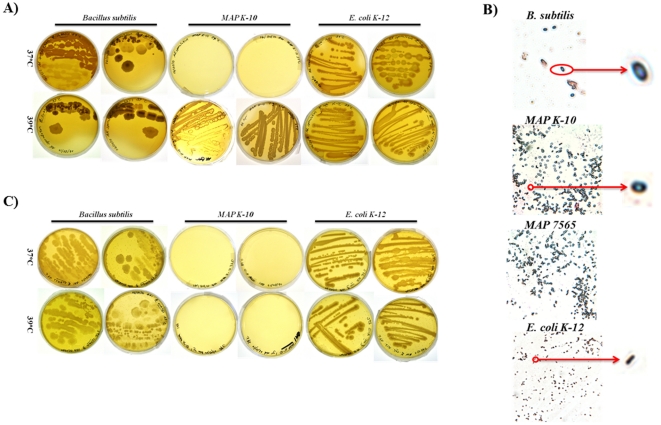
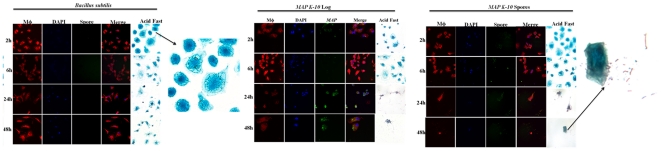
Mycobacteria are able to enter into a state of non-replication or dormancy, which may result in their chronic persistence in soil, aquatic environments, and permissive hosts. Stresses such as nutrient deprivation and hypoxia provide environmental cues to enter a persistent state; however, a clear definition of the mechanism that mycobacteria employ to achieve this remains elusive. While the concept of sporulation in mycobacteria is not novel, it continues to spark controversy and challenges our perceptions of a non-replication. We investigated the potential role of sporulation in one-year old broth cultures of Mycobacterium subsp. paratuberculosis (MAP). We show that dormant cultures of MAP contain a mix of vegetative cells and a previously unknown morphotype resembling a spore. These spore-like structures can be enriched for using sporulating media. Furthermore, purified MAP spore forms survive exposure to heat, lysozyme and proteinase K. Heat-treated spores are positive for MAP 16SrRNA and IS900. MAP spores display enhanced infectivity as well as maintain acid-fast characteristics upon germination in a well-established bovine macrophage model. This is the first study to demonstrate a new MAP morphotype possessing spore-like qualities. Data suggest that sporulation may be a viable mechanism by which MAP accomplishes persistence in the host and/or environment. Thus, our current understanding of mycobacterial persistence, pathogenesis, epidemiology and rational drug and vaccine design may need to be reevaluated.
Conflict of interest statement
Figures


References
-
- Bloom BR, McKinney JD. The death and resurrection of tuberculosis. Nat Med. 1999;5:872–874. - PubMed
-
- Gumber S, Taylor DL, Marsh IB, Whittington RJ. Growth pattern and partial proteome of Mycobacterium avium subsp. paratuberculosis during the stress response to hypoxia and nutrient starvation. Vet Microbiol. 2009;133:344–357. - PubMed
-
- Russell DG. Mycobacterium tuberculosis: here today, and here tomorrow. Nat Rev Mol Cell Biol. 2001;2:569–577. - PubMed
Publication types
MeSH terms
LinkOut - more resources
Full Text Sources
