. 2012 May;5(3):258-66.
doi: 10.1038/mi.2012.2. Epub 2012 Feb 1.

Essential role of IL-6 in protection against H1N1 influenza virus by promoting neutrophil survival in the lung

Affiliations

Essential role of IL-6 in protection against H1N1 influenza virus by promoting neutrophil survival in the lung

O Dienz et al. Mucosal Immunol. 2012 May.

Abstract

Influenza virus infection is considered a major worldwide public health problem. Seasonal infections with the most common influenza virus strains (e.g., H1N1) can usually be resolved, but they still cause a high rate of mortality. The factors that influence the outcome of the infection remain unclear. Here, we show that deficiency of interleukin (IL)-6 or IL-6 receptor is sufficient for normally sublethal doses of H1N1 influenza A virus to cause death in mice. IL-6 is necessary for resolution of influenza infection by protecting neutrophils from virus-induced death in the lung and by promoting neutrophil-mediated viral clearance. Loss of IL-6 results in persistence of the influenza virus in the lung leading to pronounced lung damage and, ultimately, death. Thus, we demonstrate that IL-6 is a vital innate immune cytokine in providing protection against influenza A infection. Genetic or environmental factors that impair IL-6 production or signaling could increase mortality to influenza virus infection.


Conflict of interest statement

CONFLICT OF INTEREST:

The authors declare no conflict of interest.

Figures
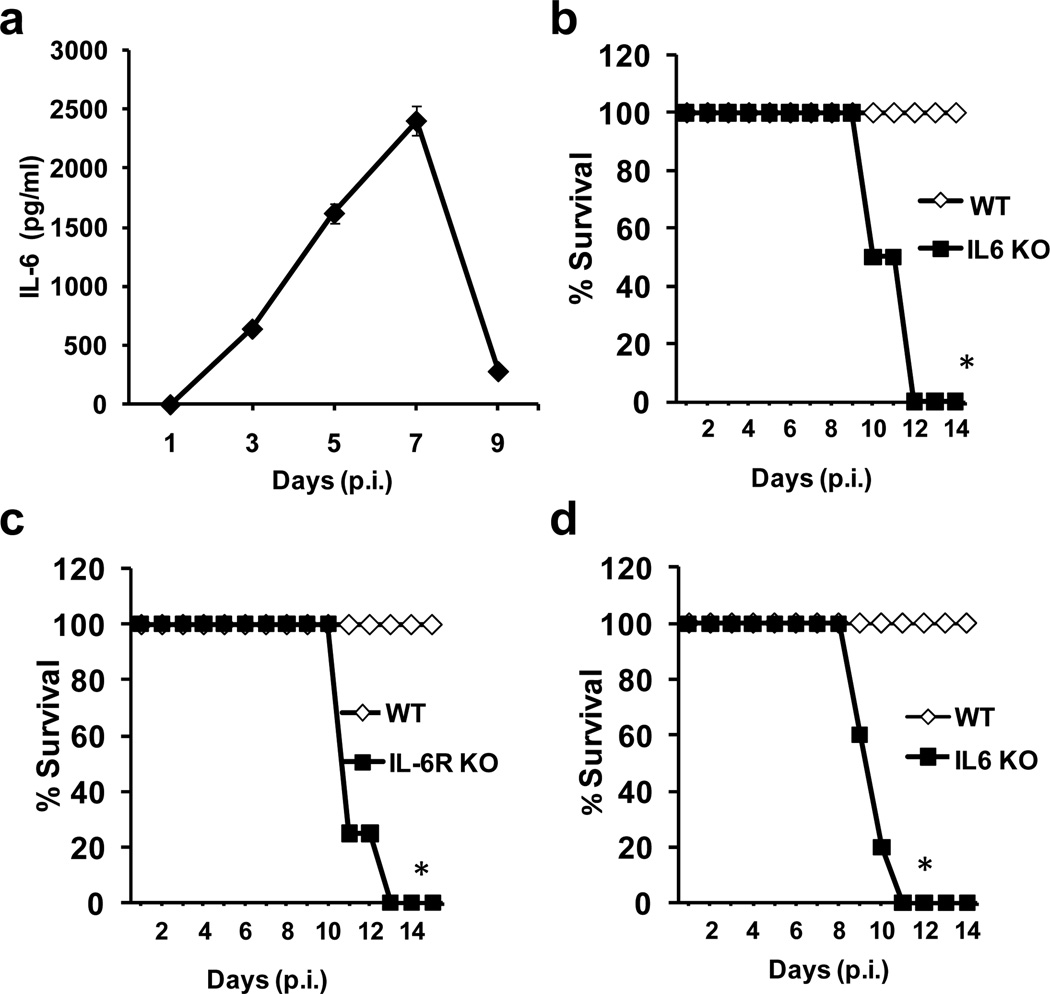
Figure 1
Figure 1. IL-6 and IL-6R are essential to survive infections with sublethal doses of influenza H1N1 virus
(a) Wildtype mice (n=4) were infected with a sublethal dose of H1N1 PR8 virus (3×10³ EIU) intranasal (i.n.). IL-6 levels in bronchoalveolar lavage fluid (BALF) of infected mice were determined at the indicated periods of time p.i. by Luminex. Values represent mean +/− sd. (b) Kaplan-Meier survival curve of wildtype mice (WT) and IL-6 KO mice (n=4) following i.n. infection with H1N1 PR8 virus (3×10³ EIU). (c) Kaplan-Meier survival curve of WT and IL-6R KO mice (n=5) infected with H1N1 PR8 virus as described in (a). (d) Kaplan-Meier survival curve of WT and IL-6 KO mice (n=5) infected with a sublethal dose of A/California/7/2009 H1N1 influenza virus (3×10³ EIU). * denotes p<0.05. Statistical significance was determined by log-rank test (b, c and d).
Figure 2
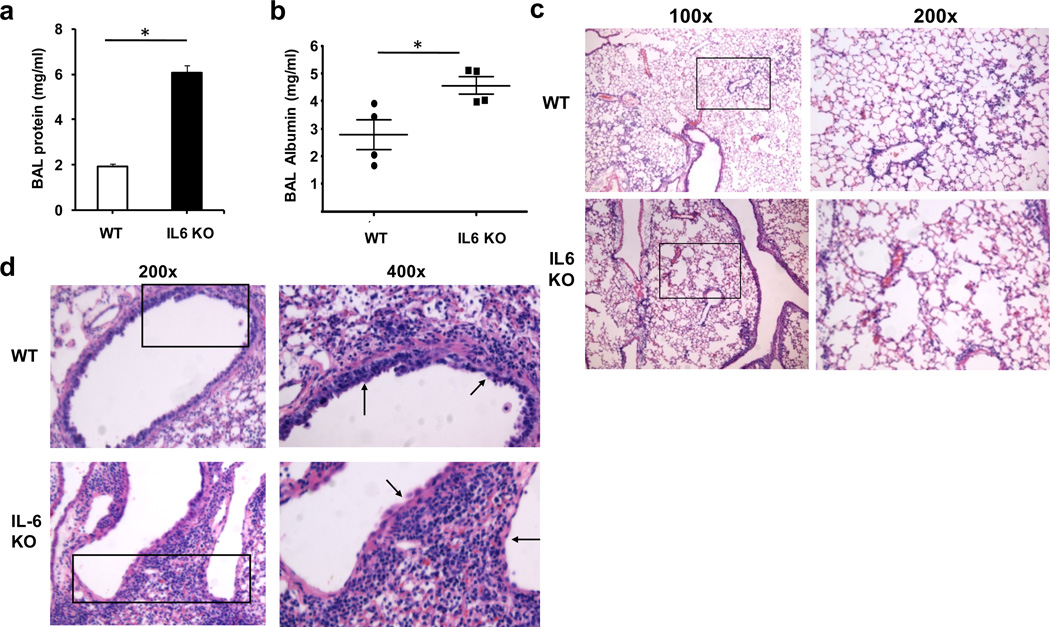
Figure 2. Severe lung damage in IL-6 deficient mice caused by H1N1 influenza virus infection
(a & b) Wildtype mice (n=4) and IL-6 KO mice (n=4) were infected with a sublethal dose of H1N1 PR8 virus (3×10³ EIU) intranasal (i.n.). Total protein (a) and albumin (b) concentrations in BALF were determined at day 9 p.i.. (c and d) Histopathology of lungs from WT and IL-6 KO mice at day 9 p.i. with PR8 H1N1. 100x and 200x (c) or 200x and 400x (d) magnifications of H&E stained lung sections are shown. Arrows in (d) point to the epithelium of the airways. * denotes p<0.05. Statistical significance was determined by student’s t test (a and b). Results are representative of at least 2 independent experiments.
Figure 3
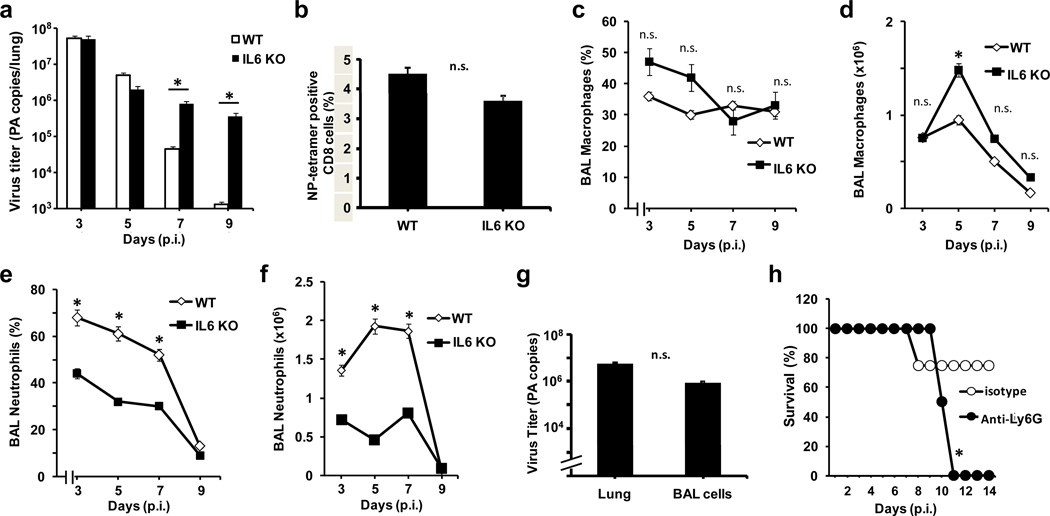
Figure 3. IL-6 deficiency results in insufficient neutrophils in the lung during influenza H1N1 virus infection and inability to clear the virus
(a) Virus titers determined by the number of influenza polymerase A (PA) RNA copies by real time RT-PCR in total lung of WT and IL-6 KO mice (n=5) at different days p.i. with H1N1 PR8 virus (3×10³ EIU). (b) Percentage of CD8 T cells that were positive for nucleoprotein (NP)-tetramers within the mediastinal lymph node from WT and IL-6 KO mice (n=4) 9 days p.i., as determined by flow cytometry analysis. (c-f) Percentage (c and e) and total number (d and f) of macrophages (c and d) and neutrophils (e and f) in BAL from WT and IL-6 KO mice (n=5) at different days p.i. with H1N1 PR8 virus. (g) Virus titers determined by the number of influenza PA RNA copies in total lung and in cells from BAL of WT mice (n=4) 5 days p.i. with PR8 virus. (h) Kaplan-Meier survival curve of WT mice (n=5) infected with H1N1 PR8 virus that received an intraperitoneal administration (500 μg/mouse) of an anti-Ly6G Ab or an isotype control one day prior to infection and another administration at day 3 p.i. * denotes p<0.05. n.s. denotes not significant. Statistical significance was determined by 2-way ANOVA (a, c-f), student’s t test (b and g), or log-rank test (h). Results are representative of 2 to 4 independent experiments.
Figure 4
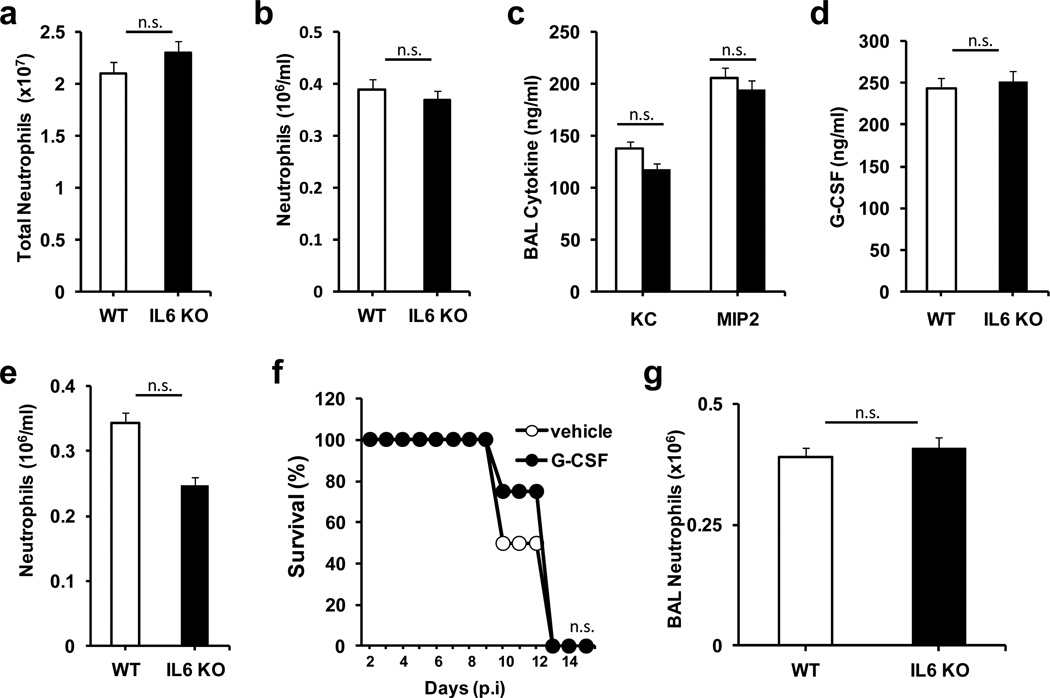
Figure 4. IL-6 deficiency does not interfere with neutrophil release or recruitment to the lung
(a) Neutrophil numbers in total bone marrow from non-infected WT and IL-6 KO mice (n=3). (b) Frequency of neutrophils (cell number/ml) in peripheral blood of non-infected WT and IL-6 KO mice (n=3). (c) Levels of KC and MIP-2, in BALF from WT and IL-6 KO mice (n=5) 3 days p.i. with H1N1 PR8 virus. (d) Levels of G-CSF in BALF from WT and IL-6 KO mice (n=5) 3 days p.i. with H1N1 PR8 virus. (e) Frequency of neutrophils (cell number/ml) in peripheral blood of WT and IL-6 KO mice (n=4) 3 days p.i. with H1N1 PR8 virus. (f) Survival curve of IL-6 KO mice (n=4) administered i.p. with G-CSF (5 μg/mouse) or PBS control a day prior to infection and at day 3 p.i. (g) Neutrophils in BAL from WT and IL-6 KO mice (n=3) 24 hours after administration of nebulized LPS. * denotes p<0.05, n.s. denotes “not significant”. Statistical significance was determined by student’s t test (a-e and g), or log-rank test (f). Results are representative of at least 2 independent experiments.
Figure 5
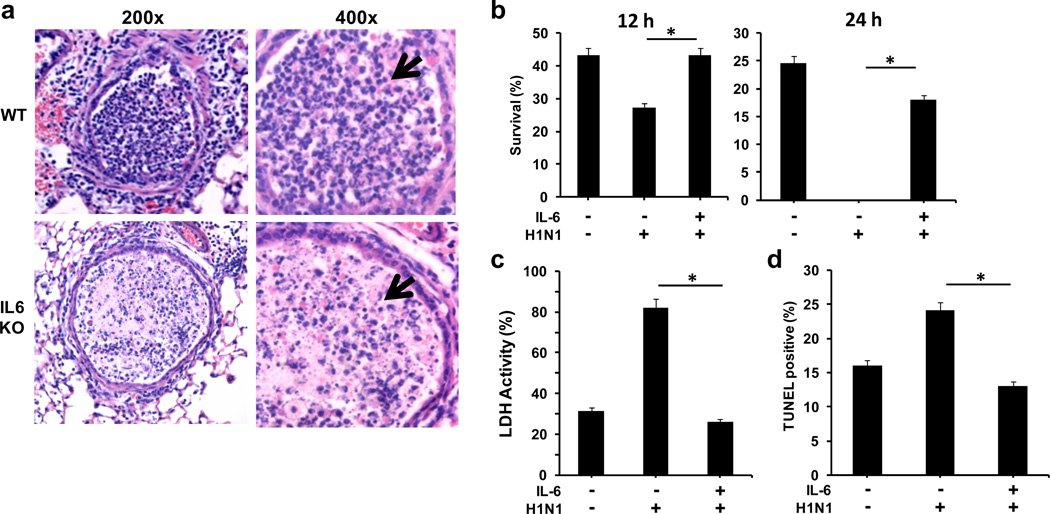
Figure 5. IL-6 protects neutrophils from H1N1 virus-mediated apoptosis
(a) Histopathology of lungs (H&E staining) from WT and IL-6 KO mice at day 5 p.i. with PR8 H1N1 virus. 200x and 400x magnifications of airways are shown. Arrows point to well-defined polymorphonuclear neutrophil in WT airways, and apoptotic nucleus in IL-6 KO airways. (b) Neutrophils from WT mice were cultured in the presence or absence of PR8 H1N1 virus at 1:10 neutrophil:virus (EIU) ratio with or without IL-6 (20 ng/ml). After 12 h and 24 h, live cells were counted by trypan blue staining. Values (mean +/− SD, n=3) represent the frequency of live cells recovered relative to the initial number. (c) LDH activity in supernatants from neutrophils cultured as described in (b). (d) Neutrophils were cultured as in (b) and apoptosis was determined by TUNEL assay and flow cytometry analysis. Values show the percentage of TUNEL positive cells (mean +/− SD, n=3). * denotes p<0.05. Statistical significance was determined by student’s t test. Results are representative of 2–3 independent experiments.
Figure 6
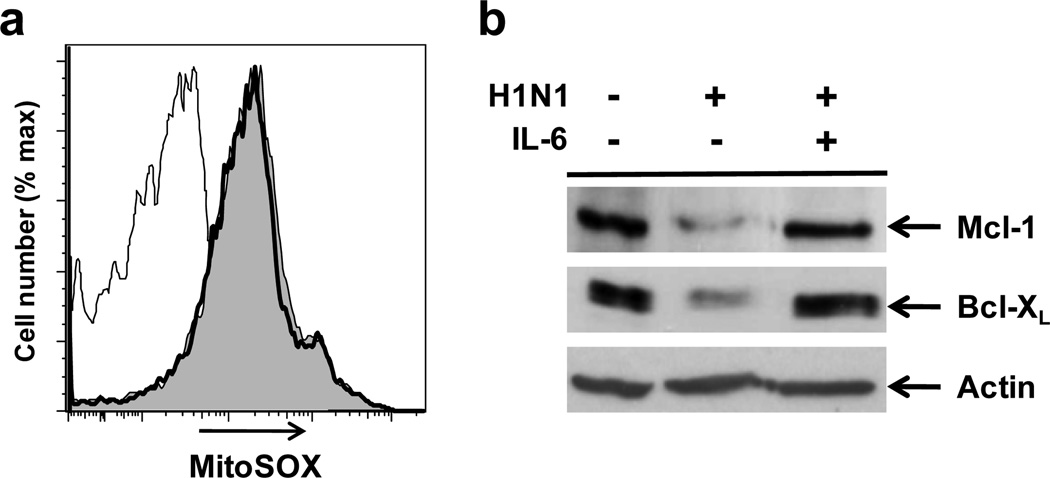
Figure 6. IL-6 prevents downregulation of anti-apoptotic molecules by influenza virus in neutrophils
(a) Neutrophils from WT mice were cultured in the presence or absence of PR8 H1N1 virus at 1:10 neutrophil:virus (EIU) ratio with or without IL-6 (20 ng/ml). After 18 h, mitochondrial ROS was examined by staining with MitoSox-Red dye and flow cytometry analysis. Histogram profiles for neutrophils cultured in medium (thin line), with H1N1 virus (thick line) or H1N1 virus and IL-6 (filled) are shown. (b) Western blot analysis for Mcl-1 and Bcl-XL in neutrophils from WT mice treated as in (a). Actin was used as loading control.

References

    1. Monto AS. The risk of seasonal and pandemic influenza: prospects for control. Clin Infect Dis. 2009;48(Suppl 1):S20–S25. - PubMed
    1. Shiley KT, Nadolski G, Mickus T, Fishman NO, Lautenbach E. Differences in the epidemiological characteristics and clinical outcomes of pandemic (H1N1) 2009 influenza, compared with seasonal influenza. Infect Control Hosp Epidemiol. 2010;31(7):676–682. - PMC - PubMed
    1. Quinn SC, Kumar S, Freimuth VS, Musa D, Casteneda-Angarita N, Kidwell K. Racial disparities in exposure, susceptibility, and access to health care in the US H1N1 influenza pandemic. Am J Public Health. 2011;101(2):285–293. - PMC - PubMed
    1. Epstein SL, Lo CY, Misplon JA, Bennink JR. Mechanism of protective immunity against influenza virus infection in mice without antibodies. J Immunol. 1998;160(1):322–327. - PubMed
    1. Graham MB, Braciale TJ. Resistance to and recovery from lethal influenza virus infection in B lymphocyte-deficient mice. J Exp Med. 1997;186(12):2063–2068. - PMC - PubMed

Publication types

MeSH terms